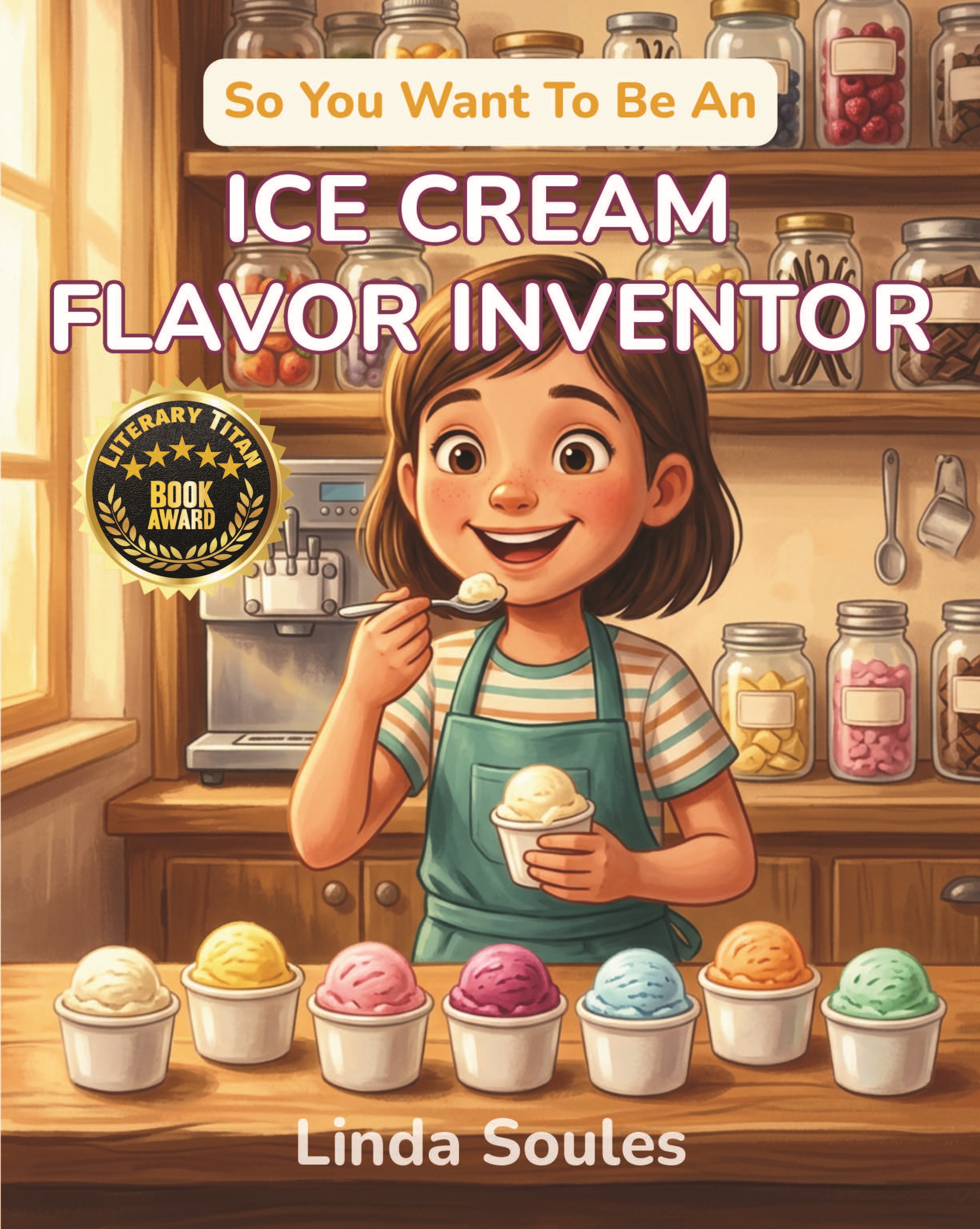
So You Want To Be An Ice Cream Flavor Inventor
by Linda Soules
Key Takeaways
Summary
An ice cream flavor is not something the tongue experiences alone. The tongue detects five basic tastes—sweet, salty, sour, bitter, and savory—but the nose supplies about 80 percent of what people perceive as flavor. Pinch your nose and eat a jelly bean, and its taste seems mostly sweet; release your nose, and its identity—cherry, grape, or root beer—suddenly becomes clear. Smell is doing the work of telling the brain what that sweetness means.
The rest of the experience depends on more than taste and aroma. Texture and temperature matter, as does appearance. Cold dulls sweetness, so an ice cream mix may need to taste a little too sweet before freezing; once cold, its sweetness will be toned down. Sound joins in, too: the crunch of a waffle cone or the snap of a chocolate shell helps make eating feel satisfying. A flavor inventor has to design for all these senses together, aiming not merely for something delicious but for an experience people remember.
That sensory challenge is especially clear with fruit and spices. Cold and rich cream can mute fruit’s brightness, leaving strawberry faint and washed out. Inventors may use cooked-down fruit concentrate, freeze-dried fruit, or a small pinch of citric acid to restore its tang. Cold can also suppress the heat of chili, so a spice may need to be stronger than expected. Yet simply adding more is not always the answer: a flavor must work as the ice cream melts and warms in the mouth, when an adjustment that seemed necessary while frozen might taste artificial.
Flavor creation happens in a test kitchen equipped for both cooking and frozen-dessert production. A batch freezer runs during development, turning liquid mix into ice cream by freezing and churning it at the same time. Freezer drawers hold reference samples—saved tubs of earlier flavors that inventors can compare with new batches. Ingredients for the day’s experiments, from fruit and extracts to mix-ins, cover the counter.
Behind each smooth scoop is food science. Fat and water do not naturally blend, so inventors work to combine them into a stable cream rather than a greasy or icy mixture. They also try to keep ice crystals small: large crystals feel grainy, while small ones make the texture silky. The amount of air churned in affects the result as well. More air makes ice cream light and fluffy; less makes it dense and rich.
The inventor’s most important tool, however, is a trained palate. It means being able to separate a flavor into its parts, notice what is missing, and sometimes predict how a change will taste before making it. A palate develops through deliberate, systematic tasting and comparison. Like a muscle, it grows stronger with practice. Visits to farms and markets, and meals at restaurants, provide new ingredients and combinations to remember; curiosity about food in every form builds the mental library that makes test-kitchen decisions possible.
Other tools help turn that judgment into precise experiments. A refractometer measures dissolved sugar by passing light through a drop of liquid and measuring how much it bends. Sugar affects both sweetness and how soft the ice cream stays when frozen: too little can make it rock-hard, while too much can keep it from freezing properly. A precision pipette allows inventors to add tiny measured amounts of concentrated flavor compounds. These compounds are stored in a flavor library: rows of bottles containing notes such as vanilla, toasted almond, ripe strawberry, or roasted coffee. A drop or two can change a batch. The word “note” is borrowed from music, because a flavor, like a song, is built from individual parts balanced until they work together.
Development is an iterative craft, with each batch offering information for the next. A mango chili ice cream inspired by Mexican street fruit might begin with a batch that is too sweet and barely registers the chili. In a later version, the chili becomes noticeable but overpowers the mango. By batch seven—or ten or twenty-one—the mango may arrive first, bright and tropical, followed by a warm chili tingle and a clean lime finish. The inventor tastes carefully, records observations, and adjusts again until the elements are in balance.
The pleasures of the work come from this combination of freedom and attention. No idea is too strange to try, and anything edible might become an ingredient. Inventors learn to listen to what ingredients seem to need: bright mango can lead, while delicate lavender may disappear beside a bold partner. They also listen to the ice cream itself. Is the sweetness right? Does the aroma arrive? Does the finish linger? A taster’s expression can answer questions a survey cannot. Wide eyes, a growing smile, or a quiet “Oh!” may say more than a form filled with ratings.
The reward is the moment when every part of a flavor finds its place. Imagine deep, slightly bitter chocolate, followed as it melts by soft lavender. Honey links the two with warmth; a blackberry piece adds a small crunch and a sudden burst of fruit. The finish lingers with chocolate and honey as the lavender fades. Customers make the work tangible: a child returns to ask for the flavor’s name, someone says they will think about a taste all week, or a scoop disappears so fast that its owner looks surprised.
But most ideas do not work on the first try. Flavors behave differently when cold, and texture can carry them in unexpected ways. A balance that succeeds in a fruit sorbet may fail when cream is added. Many batches prove educational rather than delicious before the right one emerges. Seasonal deadlines add pressure: a summer flavor may need to be ready by March, with development finished in January and promising ideas already taking shape in October. Inspiration does not always arrive on the calendar’s schedule.
Another surprise is that an unexpected color can make a flavor seem worse, even when its taste has not changed. What people see shapes what they think they taste. And the history of ice cream itself holds surprises. Before mechanical refrigeration arrived in the nineteenth century, ice had to be cut from frozen lakes and stored in underground ice houses. Keeping desserts cold was so difficult and costly that ice cream was a luxury for the wealthy. Refrigeration transformed it into a treat available to nearly everyone. Vanilla, now the world’s most popular ice cream flavor, has its own remarkable history: the orchid’s flowers open for only about a day, and in most places they must be pollinated by hand. In 1841, twelve-year-old Edmond Albius, who was enslaved on Réunion, worked out how to pollinate the flower by hand, a method still used by growers today.
A flavor inventor’s day is shaped by what happened the day before, what customers are asking for, and what ingredients are available. At 8:30 in the morning, the first task is to taste four test batches that have hardened overnight. The inventor begins with the lightest flavor and moves toward the most intense, taking sips of water between samples. Two batches are clearly not right. One is intriguing, and one is unexpectedly excellent. Each gets detailed notes, because even a failed batch can reveal what to change next.
By 10:00, attention turns to the intriguing flavor: brown butter toasted oat. The brown butter tastes right, but the oat pieces are too large. The inventor tries grinding them more finely and also tests oat extract. One version of each goes into the freezer, to be judged once it has frozen. At 1:00, work shifts from the test kitchen to a meeting with the consumer insights team. Their survey shows that people are interested in tropical flavors for summer, while classic chocolate is beginning to feel familiar and customers are curious about unexpected combinations. The inventor makes a note for the next development cycle.
At 2:30, an ingredient meeting brings a different challenge: the supply of passion fruit has run short. Two alternative flavor compounds are offered, but after smelling and tasting them, the inventor rejects both. Neither captures the fruit faithfully enough. Rather than settle for an imitation, the inventor starts looking for another tropical direction. At 4:30, one more adjusted batch goes into the freezer. Tomorrow, after the cold has had its say, the inventor will taste it and decide whether it has moved closer to the right flavor.
This work depends on many people, because a promising idea has to become a product that tastes good, can be made reliably, and appeals to customers. A food scientist works out the chemistry of freezing, helping the ice cream stay smooth and last on the shelf. A trained sensory panel tastes new flavors and gives careful, honest feedback. The marketing team gathers information about what people are craving. A packaging designer shapes the look and name that may catch someone’s attention in a store. Production specialists work out how to make 10,000 pints taste like the first successful spoonful.
The inventor helps carry the idea between these different worlds. Each teammate speaks a kind of professional language: chemistry, data, machinery, or art. A suggestion that sounds straightforward in one language may need translating before the rest of the team can act on it. The inventor helps everyone understand what matters about the flavor, so the original idea is not lost as it passes from one person to another. And the customers remain the real judges. They are the people who see a name on a pint, decide whether to take it home, and eventually find out whether it is worth buying again.
The work can also bring people closer to cultures and memories. Food is one way a culture shares who it is, and a flavor inventor can bring a heritage to people who might never otherwise encounter it. A bright, tangy West African hibiscus can become sorbet; Japanese yuzu can become citrus ice cream with ginger-snap crumble; Mexican street fruit can inspire a scoop that carries the flavors of fruit, chili, and lime. When a new flavor gives someone a sense of discovery, it offers delight as well as dessert. When it carries a tradition to a new table, it can honor the culture behind it and invite others to appreciate it.
That purpose calls for more than a good imagination. Inventors need a systematic creative process. Understanding how flavor families behave helps them narrow the possibilities before experimentation begins. Knowledge sets useful boundaries; intuition can then play within them. Their palate must be trained across many kinds of food, not only sweets. A broad mental library of tastes, including savory ones, gives an inventor more material to work with and helps reveal what a new combination is missing.
Consumer empathy matters just as much. An inventor’s personal favorite is not the measure of success. The question is whether other people will enjoy the flavor enough to return to it. That means thinking about the feeling a scoop should create and listening to feedback, not simply making something the inventor likes. Flavor balance is another essential craft. A flavor that is too sweet can become dull, while one that is too intense may not invite a second scoop. The goal is harmony: a combination that remains interesting throughout, rather than delivering all its impact in the first bite.
Inventors also need nerve. Some excellent ideas sound unlikely before anyone tastes them, so it takes courage to make a batch others doubt and to judge the result with an open mind. The willingness to be surprised can lead somewhere unexpected. Curiosity alone is not enough, though; it has to be paired with patience and careful testing.
Some useful knowledge may seem far removed from ice cream. Understanding the five basic tastes—sweet, salty, sour, bitter, and savory—helps inventors build flavors by balancing and amplifying elements. A little salt can make sweetness more vivid, while a touch of bitterness can give chocolate complexity. These tastes work together rather than sitting in isolation, so a flavor can be composed from them much as a musician builds chords.
Food memory matters too. A flavor can recall a childhood summer, a grandparent’s kitchen, or a particular birthday. Smell and memory are closely linked in the brain, which helps explain why a taste can suddenly return someone to a moment from years ago. Inventors who pay attention to these associations are not only creating a flavor; they may be opening a doorway into a memory.
And then there is the patience to be wrong. Most new flavors fail before one finally works. A recipe may need four batches, nine, or even more; the freezer fills with near-misses and almost-right versions. The inventors who keep going are not necessarily the ones who succeed on their first try. They are the ones who continue to taste, take notes, and adjust, treating each imperfect batch as information rather than a reason to stop.
The people who have shaped ice cream show that inventing flavors can be a serious craft, a scientific pursuit, and a way of sharing knowledge. John Harrison spent three decades as Dreyer’s and Edy’s official taste tester, helping create more than a hundred flavors and often receiving credit for Cookies ’n Cream. His taste buds were insured for a million dollars. He could taste as many as sixty samples in a day, using a gold spoon because it left no aftertaste, and he rarely swallowed. He even avoided onions, garlic, and coffee to protect his palate. His care made tasting a disciplined profession, not simply an excuse to eat dessert.
Pastry chef and ice cream scientist Dana Cree brought the same spirit of curiosity to her book, Hello, My Name Is Ice Cream, explaining how fat, sugar, and temperature shape a scoop. Augustus Jackson, a former White House chef working in Philadelphia in the 1830s, developed a lighter, eggless recipe and improved the freezing process by packing salt into the ice. He made several popular flavors and built a successful confectionery business. Rather than keeping his methods to himself, he shared them with other Black confectioners in Philadelphia, helping the whole community thrive. His name may not appear on an ice cream carton, but his influence remains in the way ice cream is made.
Some of the stories behind familiar flavors reveal how much detail can hide inside a taste. Artificial banana flavor is usually based on one compound, isoamyl acetate, while a real banana’s taste comes from hundreds of compounds working together. It is like a cartoon drawing: recognizable, but without the fine detail. A pinch of salt can make sweet flavors seem sweeter and rounder, which is why it can deepen caramel, chocolate, or brown-butter ice cream. Even the cone has a story: at the 1904 St. Louis World’s Fair, an ice cream seller ran out of dishes, and a neighboring waffle vendor rolled warm waffles into cones. And the body’s alarm at very cold food has a formidable name, sphenopalatine ganglioneuralgia—better known as brain freeze.
Anyone who wants to explore flavor invention can begin with simple experiments. Pinch your nose while tasting a jelly bean, then release it and notice how its distinct flavor appears. Taste an apple and a pear with your eyes closed, paying attention to sweetness, acidity, and texture rather than appearance. A frozen mixture of mashed banana or berries, yogurt, and honey offers another lesson: without churning, large ice crystals form, making it icy. Each small experiment turns an ordinary snack into a chance to investigate.
A flavor journal can hold combinations you have tasted, imagined, or want to test. It need not be a collection of polished recipes; its purpose is to preserve ideas and observations. Choose two foods that are not usually eaten together, taste them as a pair, and ask why the combination works—or why it does not. The guiding questions are simple but demanding: What pairing might be wonderful despite sounding unlikely? What should the texture contribute? What feeling should the first lick create? Such questions encourage experimentation while keeping the experience of the person tasting in view.
The career can grow from either a kitchen or a laboratory. Some inventors train as cooks or pastry chefs; others study food science or chemistry. The strongest preparation may combine both approaches. Science helps explain what happens to ingredients as they freeze, biology clarifies how the senses work, and math supports measurement and scaling. Art contributes ideas about color and design, while cooking gives practical experience with ingredients. The essential starting equipment, though, is already at hand: a tongue, a nose, and the willingness to slow down and notice.
The language of the profession gives names to the details behind a scoop. An aroma compound is a scent molecule that contributes to smell and therefore to flavor. Brix measures sugar concentration, while a refractometer measures it; sugar affects both sweetness and how firmly the mixture freezes. Emulsification stabilizes fat and water together, and ice crystal size helps determine whether the texture feels smooth or grainy. Overrun is the amount of air churned into ice cream, shaping its density and mouthfeel. A flavor note is one concentrated taste, and a flavor profile is the complete sensory experience, from sweetness and richness to acidity and finish. A palate is a trained sense of taste; a sensory panel is a group of trained tasters. Retronasal olfaction describes aromas traveling from the mouth toward the nose, and vanillin is the single compound responsible for vanilla’s familiar smell in many less expensive products. A test batch is a small trial, the beginning of a process that may take many attempts.
For those ready to learn more, Edible Science: Experiments You Can Eat connects kitchen activities with emulsions and crystals, while The Science Chef offers food experiments involving chemistry and freezing. Mistakes That Worked celebrates inventions that emerged from unexpected attempts, and Dana Cree’s Hello, My Name Is Ice Cream takes a deeper look at the science of the scoop. The Ben & Jerry’s Flavor Graveyard offers a playful record of retired flavors, while the International Dairy Foods Association shares information about the industry. America’s Test Kitchen Kids and the Institute of Food Technologists provide experiments and educational resources. More hands-on opportunities can come from making ice cream in a bag, comparing how the same scoop tastes straight from the freezer and after softening, or weighing two ice creams to discover how air changes their weight. The Penn State Ice Cream Short Course offers professional training, and 4-H provides food-science and nutrition projects for young people.
The author’s final encouragement is that the inventor’s most important skill is not a sweet tooth but attention: learning to notice how a flavor arrives, how cold changes it, and what memories it carries. That kind of noticing can be practiced anywhere, with food, music, seasons, or people. A flavor can preserve a summer or a grandparent’s kitchen, and carrying a heritage to new tables can keep a memory alive. Inventors may spend months perfecting a scoop for people they will never meet, then send it into the world to brighten an ordinary day. The flavor a generation will cherish may not exist yet; it could begin with someone who pays close attention, keeps experimenting, and makes that first batch.
Chapter Summaries
The Sensory World of Ice Cream
The book opens by asking readers to remember a memorable scoop and imagine that someone deliberately created that experience. Flavor is not just what the tongue detects: the tongue registers sweet, salty, sour, bitter, and savory, while smell supplies much of the detail that identifies a food. The jelly-bean test—pinching the nose while tasting, then releasing it—shows how aroma helps distinguish one flavor from another. Temperature, texture, and sound also contribute. Cold suppresses sweetness, so an ice cream mix may need to taste slightly too sweet before freezing. A crunchy cone or crisp chocolate shell adds sounds and textures that help make a scoop memorable. Flavor ideas can come from seasonal produce, global food traditions, customer wishes, or unusual combinations; the inventor’s challenge is to turn those inspirations into something people will want to taste again.
The Craft, Workplace, and Tools
Flavor invention is presented as a puzzle solved through repeated testing. The book’s mango-chili example draws on Mexican street fruit: an inventor might need several batches to make mango lead, chili provide warmth without overwhelming the fruit, and lime bring a bright finish. Cold changes how ingredients behave, so a combination that works at room temperature—or in a sorbet—may need to be rebalanced in a creamy frozen dessert. A test kitchen brings together commercial-kitchen equipment and specialized tools. A batch freezer freezes and churns small trials while controlling air and ice crystals; inventors also use refractometers to measure sugar and pipettes to add tiny amounts of concentrated flavor. A flavor library supplies individual “notes” to combine, while saved reference samples help maintain consistency. Beyond the kitchen, visits to farms, markets, and restaurants help inventors build the practiced palate needed to recognize what a flavor is missing.
Creative Rewards, Difficulties, and Surprises
The most satisfying part of the work is discovering a flavor that feels complete and seeing how people respond. Inventors learn to listen—to ingredients, to the changing taste of each batch, and to tasters’ expressions. A flavor may unfold in stages, such as dark chocolate followed by lavender, honey, and blackberry; the order and lingering finish are part of its design. A customer’s smile, surprise, or request for another taste can provide valuable feedback beyond a survey. The work also involves many failures and real deadlines. Seasonal products must be developed months before the season arrives, and an idea that tastes balanced at room temperature may become muted or artificial when frozen. The book also highlights the role of appearance: color can influence how people judge taste. Its historical and ingredient surprises include the transition from luxury ice desserts to widely available ice cream after mechanical refrigeration, the labor-intensive production of vanilla, and Edmond Albius’s hand-pollination technique, which helped make vanilla cultivation possible beyond Mexico.
A Workday and a Team Effort
A sample day shows how varied the job can be. The inventor starts by tasting batches that hardened overnight, comparing them in order from mild to intense and taking notes. A brown-butter toasted-oat flavor may need smaller pieces or an oat extract; later, consumer research may point toward tropical flavors or fresh chocolate combinations. An ingredient shortage can force the inventor to reject substitutes that do not taste authentic and explore another direction. The day ends with a revised batch in the freezer, ready for evaluation the next morning. A finished flavor is the product of many people’s work. Food scientists address freezing behavior and shelf stability, trained sensory panels give careful feedback, marketers bring consumer research, packaging designers shape the product’s name and appearance, and production teams work to reproduce the test-kitchen result at scale. The inventor helps translate among chemistry, data, machinery, and creative ideas. Ultimately, customers are the final judges: the flavor must work not just in a small test batch but in the hands of someone choosing a pint or cone.
Purpose, Personal Qualities, and Unexpected Knowledge
The book describes delight as a meaningful contribution, not a frivolous extra. By bringing flavors such as West African hibiscus, Japanese yuzu, or Mexican street fruit to new audiences, inventors can share culinary heritage as well as create pleasure. A scoop can introduce someone to a tradition, prompt curiosity, or evoke a memory. Strong inventors use systematic creativity: they understand flavor families, develop a broad palate, balance a flavor so it remains enjoyable, and empathize with the people who will eat it. They also need nerve to test combinations others might doubt. Helpful knowledge extends beyond recipes: understanding how the five basic tastes balance one another, how aroma connects food with memory, and why repeated attempts are necessary all help turn an idea into a successful flavor.
People and Stories Behind the Scoop
Profiles of flavor professionals show that the field draws on both sensory skill and technical understanding. John Harrison, a longtime Dreyer’s/Edy’s taste tester, helped develop more than 100 flavors and was associated with Cookies ’n Cream. His careful habits—using a gold spoon to avoid aftertaste, tasting slowly, and protecting his palate—illustrate how professional tasting involves discipline rather than simply eating lots of ice cream. Pastry chef and ice cream scientist Dana Cree likewise demonstrates how knowledge of fat, sugar, and temperature can deepen both making and enjoying ice cream. The book also recognizes Augustus Jackson, a Black confectioner in 1830s Philadelphia who improved freezing methods and developed popular flavors, sharing his methods with other Black confectioners. Fun facts broaden the picture: artificial banana flavor uses a simplified version of the complex taste of real bananas; salt can make sweet flavors seem richer; the waffle cone became popular after a vendor improvised at the 1904 World’s Fair; and brain freeze has a scientific name. The Ben & Jerry’s Flavor Graveyard offers a playful reminder that discontinued ideas are part of the process too.
Practicing Flavor Invention and Exploring the Career
Readers are given practical ways to begin developing an inventor’s attention. They can try the jelly-bean smell test, taste foods with their eyes closed, make a simple frozen treat and notice its icy texture, or keep a journal of flavor ideas rather than just recipes. Testing two unexpected foods together helps build the habit of asking what works, what clashes, and why. These activities make clear that careful observation is a skill anyone can start practicing. The book suggests that school subjects can support the career: science explains food chemistry and the senses, math helps with measuring and scaling, art contributes to color and design, and cooking builds practical experience. Career paths may come through kitchens and pastry training, food science or chemistry study, or a combination of both. Questions such as what combination has not been tried, how texture changes the experience, and what feeling a first lick should create help turn curiosity into a method.
Glossary, Further Learning, and the Author’s Message
A glossary explains key terms, including aroma compounds, Brix, emulsification, flavor notes, flavor profiles, ice-crystal size, overrun, palate, refractometer, retronasal olfaction, sensory panel, sorbet, test batch, and vanillin. Together, these concepts show how flavor invention joins sensory judgment with measurable properties: sugar affects sweetness and freezing, air affects density, and small ice crystals contribute to a smooth texture. The closing material points readers toward books, websites, organizations, and hands-on experiments, including making ice cream in a bag and comparing the weight of different ice creams to observe overrun. The author’s note returns to the central idea that attention is the real skill: noticing how a taste develops, how cold changes it, and what memories it evokes. The book frames invention as both careful work and an act of generosity—creating small moments of happiness for people the inventor may never meet.
Notable Quotes
“Somebody invented that moment.”
“The goal is never only to make something delicious. The goal is to make something you will never forget.”
“I’ve never tasted anything like this.”
“The palate works like a muscle.”
“A great flavor is a team sport.”
“No flavor anybody loves was ever batch one. Somebody kept going anyway.”
