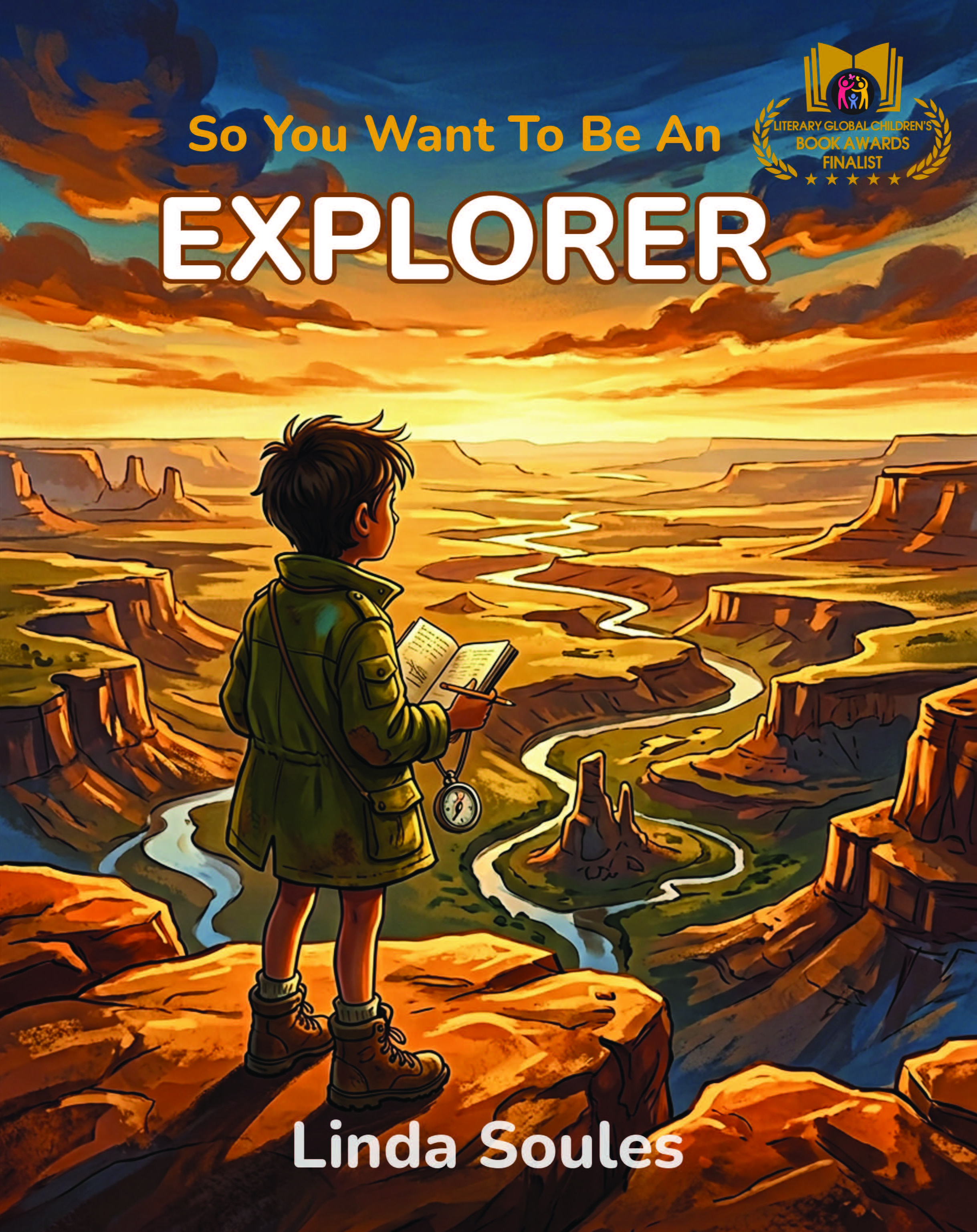
So You Want To Be An Explorer
by Linda Soules
Key Takeaways
Summary
The world is not finished being discovered. More than 70 percent of the ocean floor has never been properly mapped; as of 2026, only 28.7 percent has been charted to modern standards. An international project is working to map it by 2030, adding an area the size of India each year, but still will not finish the job on time. We have better maps of Mars than of the bottom of our own ocean.
The living world is just as full of unknowns. One estimate puts the number of animal, plant, and fungal species on Earth at about 8.7 million, but humans have named only roughly 2 million. Millions of species are alive right now without ever having been described, and bacteria are not even included in that estimate. No one has a reliable count of them. The Amazon still holds regions that have never received a scientific survey, while deep-sea ecosystems around hydrothermal vents—volcanic cracks on the ocean floor—were unknown until 1977. Entire communities thrive there without sunlight.
The blank spaces are not only in distant wildernesses. They lie beneath the ocean, inside caves, high in forests, under ice, and in microscopic worlds all around us. The soil in a backyard may contain species no one has catalogued; a nearby creek may never have been completely surveyed. No one may have recorded what lives under the third rock from a back door. A frontier is not necessarily somewhere far away. It can be a familiar place transformed by careful attention. The explorer’s mindset joins curiosity to patience: a willingness to live with not knowing and follow a question without knowing where it will lead.
On Earth, modern exploration extends across at least five frontiers. The deep ocean covers 71 percent of the planet, and most of it lies in cold, dark water beyond the reach of sunlight. Underground, caves can stretch for hundreds of miles, with the deepest dropping more than a mile into rock. Crystals grow in darkness, rivers run beneath the surface, and some cave animals evolved without eyes. The forest canopy, 100 to 150 feet above the ground, was barely studied until the 1980s; insects, frogs, birds, and plants live there without ever touching the earth below. Antarctic and Greenland ice sheets preserve climate records from hundreds of thousands of years ago, much of this frozen library still unread. And the micro-frontier—microbial life too small to see—reaches from soil and ocean water to the surface of rocks and inside the human gut. Each frontier holds questions, and each answer can reveal more unknown territory.
An explorer’s work begins long before setting out. Teams research what is already known, choose questions worth answering, gather equipment and expertise, and make practical plans for functioning in remote places. An average expedition spends about ten hours planning for every hour in the field. The exciting part is small beside the preparation, and many people who abandon exploration do so while still planning.
Exploration also demands a record. Seeing something without documenting it is travel; observing closely, measuring precisely, describing what happened, and bringing the knowledge back turns a journey into useful discovery. Explorers work in deep oceans where pressure is crushing, in caves that run for miles underground, in incompletely mapped jungle interiors, and in polar regions where harsh conditions restrict how long people can stay. Light varies from one workplace to another: in the deepest caves and ocean, headlamps provide the only view, while deserts, rainforests, and Arctic ice offer stars, green-gold sunlight, or blue-white expanses rarely seen by most people.
The equipment depends on the setting, but navigation may involve a GPS device that can pinpoint a position to within meters, a satellite communicator for messages and emergency signals beyond cell coverage, and a topographic map that shows changes in elevation. Reading one well takes practice. Survival supplies can include a fire steel that sparks even when matches are wet, a pump or chemical tablets for making river water safe to drink, and a fist-sized emergency bivy shelter for sudden storms.
Documentation and science require their own tools: a field journal for observations and conditions, water-sampling kits, supplies for collecting specimens, cameras that tag photographs with GPS locations, and lightweight weather instruments. The journal matters especially because it makes observations available to others; field data is what turns an adventure into a contribution to knowledge. More important than any device, however, is the explorer: a prepared person able to judge risk, read terrain and weather, endure physical demands, and adapt when conditions change. No equipment can replace sound judgment in an unfamiliar environment.
The reward is not simply adventure. Explorers sometimes get to see a place no human eyes have seen, leaving the first footprints and noticing what others missed. The experience may be quiet rather than dramatic: standing somewhere unknown and understanding that it is your responsibility to tell others what is there. Exploration also develops the ability to manage fear, make decisions while tired, and stay curious when conditions are difficult.
In April 2000, miners Juan and Pedro Sánchez were drilling a tunnel a thousand feet beneath a silver mine in Naica, Mexico, when their drill broke through into an empty chamber. The air coming back through the opening was unusually hot and wet. They widened the hole and looked inside, finding immense crystal beams, some 37 feet long, grown in darkness over hundreds of thousands of years. The miners could have continued their work, but they stopped and reported what they had found. The chamber became known as the Cueva de los Cristales, home to the largest natural crystals ever measured. Its temperature reaches 136 degrees, and people can last only about ten minutes inside. The discovery depended on two workers noticing that something was different and choosing to look.
The work can also be uncomfortable and disappointing. Explorers may spend days wet, covered in mud, bitten by insects, chilled until their fingers stop working, or so hot that thinking becomes slow. Cave passages can force them to crawl on their stomachs through spaces where helmets and elbows scrape the rock, while every instinct urges them to turn back. Expeditions may last weeks or months, and six months of preparation can produce nothing more than observations that lead nowhere. A dive may reveal only empty seafloor; a cave passage may end at solid rock.
Isolation can be as difficult as the terrain. Remote expeditions may keep people away from loved ones for weeks or months, sometimes with little or no communication. Explorers miss birthdays, ordinary dinners, and the small conversations that sustain close relationships. They may be unable to make a phone call or learn bad news for weeks, while missing a child’s new word or another moment that cannot be recovered. The people at home carry part of the expedition too, though in a different way.
Once an expedition is underway, a day in the field follows a rhythm shaped by the landscape and its risks. At five in the morning, camp is packed and the team moves out, often before dawn. Early starts are not a romantic tradition: on expeditions where the weather or other challenges make the second half of the day impossible, getting moving early can matter. As the team crosses unfamiliar terrain, explorers read the ground itself, noticing how it drains and where vegetation thickens. They take coordinates every thirty minutes and mark features in their notes, making sure their route can be understood later.
By half past ten, the team may encounter something that changes its understanding of the landscape: perhaps a canyon system missing from the regional maps. The discovery is not complete just because someone has reached it. Explorers photograph it, measure it, and write down what they observe with precision. That careful record is what makes the find useful. At one o’clock comes a pause to rest and review navigation. The morning’s route is plotted against the expedition’s broader goal, and the team decides where to go next. As they travel, the map changes with them.
By four, they choose a place to camp before they are forced to stop. A suitable site is flat, protected, drains well, and lies near water; selecting it is a safety decision, not merely a matter of comfort. After dinner, field notes are written by headlamp. Photographs show what was there, while notes help explain what it meant. Together, these records may eventually become a map of a place that did not have one before.
The visible explorers are only part of the work. Co-explorers share the physical demands, while scientists bring expertise and help gather data. A logistics coordinator arranges the many details before and during the expedition, and sponsors provide funding. Far away, a base support team monitors the expedition and helps it function. A modern team of ten people in the field may depend on forty people who never leave home. The name attached to an expedition may belong to one person, but the work is collective. It is worth asking who is missing from the photograph.
Local guides and Indigenous experts bring knowledge of a region that no amount of preparation by outsiders can replace. Their understanding of the environment may be the difference between success and failure. The best explorers seek this knowledge respectfully and recognize that receiving it carries responsibility. Exploration is not simply a matter of arriving somewhere and looking around; it depends on learning from people who know the place already.
The purpose of the work reaches beyond a particular map or specimen. People have always wanted to know what lies on the other side, or around the next corner; without those who asked, the world might have remained a series of isolated communities. Today, exploration takes place on the ocean floor, in deep caves, and among ice-covered mountains. And the blank spaces are not simply disappearing. Each newly explored cave may open into more passages. A newly named species may depend on other species that have not yet been documented. Every answer gives rise to more questions. The map cannot be completed once and for all; it can only be extended.
Explorers also carry back something less measurable than facts: a reminder that the world is larger and more surprising than daily life can make it seem. Their work invites others to notice what is still unknown and to care about it. The unknown is not only a problem waiting to be solved. It is something worth encountering with curiosity and wonder.
That work calls for a particular set of qualities. First is comfort with the unknown: a willingness to enter a place without knowing what will be found, even when the map ends before the journey does. This is not uncertainty that can be neatly managed in advance. In genuine discovery, there may be no clear answer waiting at the end. An explorer must be willing to continue asking questions without knowing where they will lead.
Rigorous documentation is just as essential. A record turns an experience into knowledge others can use, and keeping one demands discipline, especially when the explorer is exhausted. Observations must be made carefully rather than trusted to memory. Without that record, an expedition may serve only the person who took it; with it, others can learn from what was seen and measured.
Adaptability matters because plans cannot anticipate everything. When things go wrong, explorers need to improvise and find creative solutions with the resources available, rather than dwell on what they wish they had brought. But flexibility in the field rests on preparation beforehand. Real expeditions begin months or even years before departure, with research, planning, and thought about what could go wrong. Preparation is not the opposite of adventure. It is what helps make adventure survivable.
Finally, explorers need endurance of both body and mind. Expeditions are long, and the body may become cold, wet, tired, or injured. The mind, too, can begin inventing reasons to turn back. Physical fitness matters, but mental resilience matters even more: the ability to persist through difficulty and uncertainty when other people might stop. These qualities work together, from the first decision to set out to the careful choices made in the field. And the explorer’s work also depends on skills that may not seem essential until the journey begins.
The people who changed what the world knew did not all work in the same way, and their stories reveal that exploration depends on more than reaching a destination. Sacagawea was a Lemhi Shoshone teenager living among the Hidatsa when the Lewis and Clark Expedition arrived in the winter of 1804. The following spring, she traveled with the party for thousands of miles, carrying her newborn son. She translated between languages no one else in the group could bridge, recognized landmarks in country she had been taken from as a child, and found edible plants when supplies ran low. Her presence also mattered diplomatically: a young woman traveling with a baby signaled that the party had not come to fight, helping it approach communities that might otherwise have turned it away. Historians still debate how best to describe her role, but without her, the expedition very likely would have failed.
Ernest Shackleton’s expedition to Antarctica in 1914 became a different kind of test when ice crushed his ship, the Endurance. For two years, Shackleton worked to bring all 27 of his men home. They crossed 800 miles of dangerous ocean in a small lifeboat, traversed unmapped mountains, and eventually returned to rescue those left behind. Every man survived. Their story shows how discovery can hinge not on pressing onward toward a planned goal, but on judgment, persistence, and caring for a team when the plan has collapsed.
Matthew Henson’s contribution to Arctic exploration was also long obscured. On Robert Peary’s 1909 team, Henson was the only member who spoke Inuktitut, knew how to drive a dog team as Inuit drivers did, and could build a snow shelter suited to a storm. He had learned these skills from Inuit families during eighteen years in the North, and was almost certainly the first of the party to reach its northernmost point. Yet Henson was Black, and the honors went to Peary: medals, lecture tours, and honorary degrees. Henson received formal recognition in 1944, thirty-five years later, and was buried at Arlington in 1988. The record was corrected, but it took most of a century.
Meg Lowman found a frontier by questioning the way scientists worked. In the 1970s, she noticed that biologists had spent two hundred years studying rainforests from the ground, without climbing into the canopy. Using climbing gear, she hauled herself into an Australian rainforest and found an ecosystem that had not yet been described. Then she designed the first canopy walkways, rope-and-plank bridges about a hundred feet above the forest floor, allowing other researchers to study the canopy too. The unknown had been overhead all along.
Some explorers crossed enormous distances. Ibn Battuta left Morocco in 1325 intending to make a pilgrimage to Mecca, then spent 29 years traveling roughly 75,000 miles across North Africa, Arabia, East Africa, Persia, India, the Maldives, and, by his account, China. He served as a judge in Delhi, survived shipwrecks and robberies, and later dictated his travels from memory. Zheng He commanded seven Indian Ocean voyages between 1405 and 1433, leading fleets of hundreds of ships and tens of thousands of sailors. His expeditions reached Arabia and the east coast of Africa, and one brought a giraffe to the emperor. When China’s court turned away from the sea, the fleet was left to rot: exploration depends not only on those who go, but also on the decisions of those who support or abandon it.
Sylvia Earle has spent more than 7,000 hours underwater. In 1970, she led the first all-female team of aquanauts, living for two weeks in a habitat on the ocean floor. In 1979, wearing an armored diving suit, she walked untethered on the seafloor off Hawaii at 1,250 feet, a record that still stands. Now in her nineties, she continues to dive and to argue that the ocean is Earth’s least explored space. Her work joins exploration to communication: she goes where others have not, brings back what she finds, and helps others care about it.
You don’t need an expedition to begin learning to see. Start a field notebook: date each entry, go outside, and write or sketch what you notice, including colors, sizes, locations, and weather. Walk the same neighborhood route repeatedly, looking for different things each time. Notice where rainwater flows, which birds use which trees, and where insects gather. A field guide can help you identify birds, trees, rocks, or insects; giving something a name makes it easier to recognize what is new. Follow a stream and ask where it begins, where it goes, and what lives in it. Visit a natural history museum, where labeled rocks, pressed plants, and animal specimens carry the records of people who found, documented, and brought them back. And practice navigating without GPS: learn paper maps, find north by the sun, and explore how stars have guided travelers for thousands of years.
Questions can keep that learning moving: What lies beyond what I can see? What do people who live here already know? How can I investigate without becoming lost or causing harm? You can watch NOAA’s Okeanos Explorer stream robotic dives, take part in real research by classifying images and records through Zooniverse, or explore parks through the National Park Service’s Junior Ranger activities. The point is not to imitate a distant expedition, but to keep asking better questions and to share careful observations.
That sharing carries responsibility. Exploration has a complicated history: many places described as “discovered” were already known to the people who lived there. Reaching a place, naming what is found, and publishing an account can change it. A cave may attract visitors; a named species may become something others want to possess; a community may be turned into a subject in someone else’s story. So explorers must ask who benefits from the discovery, who might pay for it, and who should have access to the information. They should learn from Indigenous people and local experts with humility, document thoughtfully, and leave a place no worse than they found it. A discovery is not simply a prize for the person who arrives first. It brings obligations to the people, creatures, and places involved.
The unknown remains close at hand: beneath a rock, in a stream, on a leaf, or in the soil under grass. Exploration begins with attention, grows through patient learning, and becomes useful when knowledge is brought back responsibly. The explorer’s task is not only to see what others have missed, but to remember that every place was already someone’s home, habitat, or mystery. Go looking carefully, and allow what you find to change how you understand the world.
Chapter Summaries
The Unknown Is Still Here
The book opens by challenging the idea that exploration belongs to the past. As of the book’s 2026 account, only 28.7 percent of the seafloor had been mapped to modern standards, and an estimated 6.5 million animal, plant, and fungal species had yet to be described. The Amazon, deep ocean, and other supposedly familiar environments contain places and life forms that have not been comprehensively studied. Even hydrothermal vents—deep-sea ecosystems that thrive without sunlight—were not discovered until 1977. The author defines exploration as a mindset of curiosity and patience: being willing to face uncertainty and follow a question without knowing where it leads. That outlook can begin close to home. A backyard, school creek, or patch of soil may contain something no one has carefully documented. The practical invitation is to stop treating exploration as an activity reserved for distant expeditions and start paying attention wherever you are.
What Explorers Do and Where They Work
Modern Earth exploration takes place across several frontiers: the deep ocean, underground cave systems, rainforest canopies, polar ice, and the microscopic world. These settings differ dramatically, from sunless depths and narrow caves to treetops more than a hundred feet above the ground and ice sheets that preserve ancient climate records. Their common feature is that important parts remain unseen, unmapped, or poorly understood. An explorer’s work begins well before arriving in the field. Teams research existing knowledge, choose questions worth investigating, assemble equipment and expertise, and plan how to operate safely in remote conditions. The book emphasizes that preparation can consume far more time than fieldwork, and that careful documentation is what distinguishes exploration from travel. Seeing something is only a beginning: explorers record, measure, describe, and share what they find so others can learn from it.
Tools, Rewards, and Difficulties
Explorers use tools suited to navigation, survival, and research. GPS units, satellite communicators, and topographic maps help teams locate themselves and communicate beyond cell coverage. Fire starters, water filters, and emergency shelters support survival, while field notebooks, cameras, water-sampling kits, specimen supplies, and weather instruments preserve observations and data. Yet the book identifies the explorer’s own judgment and preparation as the most important equipment, since no device can replace sound decisions in unfamiliar terrain. The rewards include the rare experience of seeing a place or phenomenon no one on the team has witnessed before, and the satisfaction of contributing knowledge to others. The story of miners Juan and Pedro Sánchez illustrates this spirit: after drilling into the immense crystal-filled chamber at Naica, Mexico, they reported what they had found rather than simply continuing their work. But exploration also means mud, cold, heat, cramped passages, empty results, and long periods away from family. The book presents endurance and curiosity as essential, while acknowledging that isolation and the costs borne by loved ones are real parts of the job.
A Day in the Field, a Team Behind the Work
A sample expedition day shows how discovery emerges from routine and discipline. An early start allows the team to travel before weather worsens; explorers read terrain, record coordinates, and make notes as they move. When they encounter an unmapped canyon system, the meaningful work is not merely finding it but photographing, measuring, and documenting it. Later, the team reviews its route, chooses a safe camp near water, and writes field notes that connect photographs to context and meaning. Exploration is collaborative, even when a single person’s name becomes associated with an expedition. Co-explorers share the physical work, scientists collect and interpret data, logistics coordinators organize the operation, sponsors provide funding, and base teams monitor events from afar. Local guides and Indigenous experts contribute place-based knowledge that outside preparation cannot replace. The book urges readers to notice the people missing from expedition photographs and to approach local knowledge respectfully, recognizing both its value and the responsibilities that come with it.
The Purpose and Qualities of an Explorer
Exploration expands knowledge, but it also reminds people that the world is more varied and surprising than daily routines suggest. Its questions continually multiply: a cave leads to more passages, a newly named species depends on other organisms, and an answer opens new lines of investigation. The map is therefore never simply finished; it is extended as explorers develop new questions and methods. The book highlights comfort with uncertainty, rigorous documentation, adaptive problem-solving, obsessive preparation, and physical and mental endurance as core qualities. It also stresses skills that may be less obvious: writing and storytelling help communicate discoveries, ethical understanding helps explorers recognize prior knowledge and potential harm, and the ability to live with oneself matters during extended isolation. Exploration is not only about going somewhere; it is about making careful choices and bringing back knowledge responsibly.
Explorers Who Changed What We Know
Profiles of explorers illustrate that discovery depends on many kinds of expertise and courage. Sacagawea contributed translation, knowledge of landmarks, food-gathering skills, and diplomacy to the Lewis and Clark expedition. Matthew Henson’s Arctic experience and Inuit-learned skills were crucial to the 1909 expedition associated with Robert Peary, though Henson received far less recognition at the time. Meg Lowman challenged the assumption that rainforest research could be done from the ground, climbing into the canopy and creating walkways that enabled further study. Other stories show the varied scale and consequences of exploration. Ernest Shackleton’s Antarctic expedition became a story of leadership and survival after the Endurance was crushed in ice; all 27 men survived. Ibn Battuta traveled widely across the medieval world, Zheng He led enormous Indian Ocean voyages, and Sylvia Earle’s underwater work helped reveal the ocean’s frontier. Together, these examples show that exploration can involve navigation, science, cultural knowledge, survival, and advocacy—and that recognition has not always been distributed fairly.
Start Exploring Where You Are
The book turns its larger ideas into practical activities for young readers. Start a dated field notebook and record observations, sketches, measurements, colors, and weather. Walk a familiar neighborhood route repeatedly and notice how water moves, where birds gather, or which insects appear. A field guide can help identify local birds, trees, rocks, or insects; following a stream can reveal a changing miniature ecosystem; and a natural history museum can show how specimens and records preserve earlier fieldwork. Readers are also encouraged to practice navigation without relying entirely on GPS by learning paper maps, finding north from the sun, and exploring basic star navigation. The book’s guiding questions—what lies beyond a boundary, what local people already know, and how to explore safely—help turn curiosity into a plan. A reader may be suited to exploration if they enjoy wild places and unanswered questions and can tolerate uncertainty, but the first step does not require a career decision or a distant trip: it requires attention and a willingness to write down what is noticed.
Responsible Discovery and Continuing Learning
The author’s note adds an ethical dimension to the book’s invitation. Exploration has a complicated history because places and species described as “discovered” were often already known to the people who lived there or understood their environments. Publishing information can change a place by attracting visitors, exposing a community, or making a species vulnerable to exploitation. The modern explorer must therefore ask who benefits from a discovery, who may bear its costs, and who should have access to the resulting information. The closing resources help readers keep learning through books, museums, national parks, live deep-sea broadcasts, and citizen-science projects. The glossary defines terms such as biodiversity, frontier, expedition, and Leave No Trace, while the “How We Know” section points to sources for key figures and discoveries. The final message is to explore with preparation and wonder, but also with humility: learn who was there before, respect the place and its knowledge, document thoughtfully, and try to leave it no worse than you found it.
Notable Quotes
The frontier is not a place far away that you have to earn your way to. The frontier is a way of paying attention, and you can start this afternoon.
If you see something and don’t document it, you are a tourist. If you see it, measure it, describe it, and bring the knowledge back, you are an explorer.
The exciting part is the smallest part. Almost everyone who quits, quits during the planning.
The frontier isn't just geography anymore. It's the new question, asked in an old place, with a tool no previous explorer could carry.
The map cannot be completed. It can only be extended.
Preparation is not the opposite of adventure. Preparation is what makes adventure survivable.
Exploration is not about being first. It is about being responsible for what you find.
The unknown is not a problem to be solved. It is a gift to be explored.
