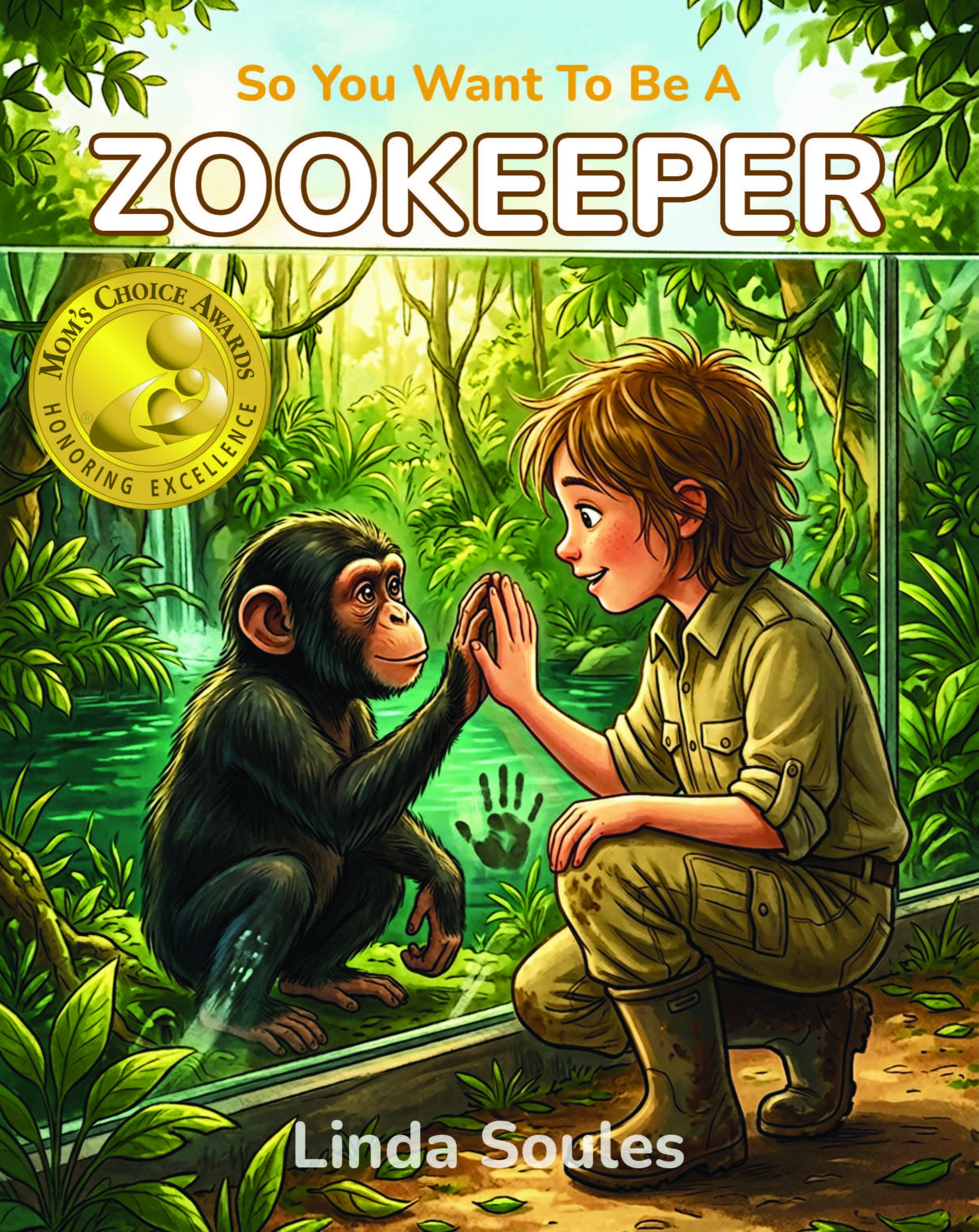
So You Want To Be A Zookeeper
by Linda Soules
Key Takeaways
Summary
For a zookeeper, the day can begin before most visitors are awake. The paths are quiet, the enclosures catch the early light, and the zoo’s sounds rise around the keeper: birds calling from the aviary, a low rumble from the elephant yard, the sharp smell of the big cat house. The animals are already there, and their care cannot wait for the gates to open. A keeper might prepare breakfast for penguins or help train a four-thousand-pound rhinoceros to walk calmly into a medical chute. The work is not about playing with animals. It is about protecting them.
Over time, animals come to recognize the people who care for them. An elephant may hear a familiar keeper’s footsteps from two hundred yards away and answer with a low rumble, a greeting she does not give to every keeper. That recognition grows from months or years of consistent, patient, respectful contact. Keepers build trust through positive reinforcement: when an animal cooperates with a care activity, such as presenting a foot for inspection, holding still for a blood draw, or moving between spaces on cue, the keeper offers a reward. Punishment, force, and coercion have no place in this relationship. If an animal does not want to participate, the keeper waits and tries again another day. The animal gets a choice, and its pace matters.
This approach allows animals to take part voluntarily in their own care. It also reflects what modern zoos are trying to do: protect animals whose species are disappearing from the wild, help populations continue through breeding, and work with scientists to improve conservation. An animal in a habitat is not only an individual in a keeper’s care; that animal represents a species with a future that may depend on people speaking up for it.
A surprising amount of the job is cleaning. Zookeepers handle enormous quantities of waste; an elephant produces roughly three hundred pounds of dung each day. But cleaning is not merely a chore. Droppings can offer early clues about an animal’s health, stress, diet, or even pregnancy. A change in their appearance may show a problem before other symptoms become obvious. In that sense, a keeper reads droppings much as a doctor reads a blood test.
The rest of the daily work is physical and continuous. Keepers clean enclosures, prepare diets shaped around each species’ nutritional needs, and provide enrichment: objects, puzzles, scents, and changes to the environment that encourage animals to stay mentally active and behave in healthy, natural ways. They also spend long stretches watching. The goal is to notice anything that has shifted since the day before, even a small difference that might matter.
That kind of observation depends on knowing each animal as an individual. A keeper learns an animal’s personality, habits, appetite, posture, and usual behavior so thoroughly that a subtle change can stand out. One animal may rest in a different place, eat slightly less, or move in an unfamiliar way. Such a change may be the first indication that something is medically wrong. But it is only visible as a change to someone who knows what “normal” looks like for that particular animal. Familiarity is not a substitute for science; it is one of the foundations of good care.
A keeper’s workplace is spread throughout the zoo, but the daily environment is usually centered on an assigned section. The surroundings can change dramatically from one assignment to another. A keeper working with large primates may spend the day in dense, humid warmth. Someone responsible for desert reptiles works in a dry environment where temperature is carefully controlled. A marine mammal keeper works beside large tanks, in a space that is perpetually damp and smells of fish and salt.
Behind the exhibits are the areas that make daily care possible. Holding spaces allow animals to be separated for feeding or medical attention. Food-preparation rooms have refrigerators organized around the needs of different species, while storage rooms hold enrichment materials and equipment. These working spaces may be out of sight of visitors, but they are central to the animals’ routines and the keepers’ responsibilities.
Food is among the keeper’s most constant tools. It meets a practical need, but it can also support training. With positive reinforcement, keepers teach animals to participate willingly in health checks, remain still for veterinary procedures, or move from one area to another when asked. The reward gives the animal a reason to cooperate without taking away its choice.
Another useful tool is the target stick, a rod that an animal learns to touch with its nose or body. A keeper can use it to guide an animal into a particular position without touching or physically moving it. The stick becomes a point of communication: the keeper indicates a desired place, and the animal chooses to follow the target.
The everyday equipment is less specialized but no less important. Long-handled brushes, shovels, and rakes help with cleaning and waste management; hoses wash down surfaces. Log books give keepers a place to record observations, building a record that helps track each animal over time. Radios connect colleagues across the zoo, allowing them to coordinate quickly when an animal needs attention or an emergency demands an immediate response.
Keepers also use binoculars to observe animals from a distance. Being nearby can sometimes affect an animal’s behavior, so watching from farther away may give a more honest picture of how it is doing. From across a habitat, a keeper may be able to spot a limp or notice that an animal is not eating as usual, while allowing the animal to carry on without the stress of close human presence. The tools may vary, but they all serve the same purpose: to help keepers care for animals attentively, safely, and on the animals’ terms.
For many keepers, the greatest reward is knowing the animals as individuals. A snow leopard may greet one familiar keeper in a way she never greets anyone else; an orangutan may carry decades of history in the way she moves and responds. When a baby animal takes its first steps, the keeper watches from a respectful distance, quietly thrilled. Such moments come from years of attention, and they give keepers the sense that their work matters.
That meaning reaches beyond the animals themselves. Many are members of species at risk of disappearing, and daily care makes keepers part of a wider effort to protect them. Keepers also help visitors understand why an animal matters. A conversation with a curious child can turn a familiar-looking giraffe into a creature whose body, habits, and needs invite fresh wonder. When a young visitor leaves seeing more than they did when they arrived, the keeper has helped create a connection with the living world.
The same attachment that makes the work rewarding also makes it painful. Animals become ill and die, and a keeper who has known one for years feels the loss deeply. The silence of an enclosure after an animal is gone can remain vivid long afterward. Knowing that loss is part of the work does not make it easy; the bond is real, and caring means feeling it when an animal suffers or dies. Keepers return the next morning because the animals still need feeding and care, even when grief comes with them.
The physical demands are less visible to visitors. Cleaning large habitats, preparing diets, assisting with health checks, and maintaining the spaces animals depend on can mean lifting heavy feed bags, pushing loaded wheelbarrows, and spending long hours on one’s feet. The work takes place in heat, cold, and weather that does not follow a convenient schedule. Much of it happens before the gates open or after they close, away from the public’s view.
The zoo itself has changed, too. Modern zoos are not simply places where people look at animals behind concrete barriers; they can serve as refuges for endangered species and partners in efforts to return them to the wild. The California condor fell to just 22 birds on Earth. Zoos bred the birds, raised young, and released them; today, more than 500 exist. The Arabian oryx had vanished from the wild by 1972, but zoos kept the species alive until animals could be returned to nature. Black-footed ferrets, red wolves, and whooping cranes have also been pulled back from the brink. These recoveries show how routine care can contribute to a much larger conservation effort.
A modern zoo also pays close attention to whether its animals can express natural behaviors. Puzzles, new foods, scents, and varied structures give animals things to explore and solve. Without stimulation, some may develop repetitive behaviors such as pacing or swaying. Enrichment is therefore not decoration or a diversion: it is part of animal welfare, designed to encourage the instincts and skills animals would use in the wild.
A keeper’s day follows the needs of the animals, not the hours visitors spend at the zoo. At 6:30 in the morning, the first rounds begin: each animal must be checked for changes in posture, alertness, or eating. By 8:30, keepers are preparing habitats and presenting carefully planned meals in ways that encourage foraging. At 10:00, a keeper may speak with schoolchildren on the African savanna, explaining a giraffe’s cardiovascular system, the purpose of zebra stripes, or conservation in terms a seven-year-old can act on. At noon, a veterinarian may conduct a routine check on a young hippo, while the keeper supplies context about the animal and helps with movement and equipment. Before leaving, the keeper records observations so the next morning’s keeper can continue care with a clear record of what happened.
No keeper works alone. Fellow keepers share responsibility and knowledge about individual animals’ personalities, histories, and habits. Veterinarians depend on keepers’ observations as an early source of information about possible health problems. Curators guide the science and daily leadership; nutritionists advise on diets; behaviorists focus on welfare and enrichment; educators develop visitor programs; and conservation scientists connect zoo work with field projects. Visitors are part of the wider purpose as well. Every conversation can help someone, especially a young person, feel curiosity and concern for animals they may never encounter in the wild.
Doing this work well requires more than loving animals. It means learning each one as an individual. An elephant is not simply an elephant: Sukari is thirty-three, wary of yellow buckets for reasons no one has worked out, and still becoming comfortable with a new keeper. Knowing such details helps a keeper provide care that no general handbook could prescribe. Safety demands constant awareness, too: keepers must know where an animal is, read its body language, and never let familiar routines become an excuse for carelessness.
Patience matters because an animal’s trust cannot be hurried. So does a sense of wonder that survives routine: a keeper who still pauses to watch a sea lion move underwater or an octopus explore remains attentive to the animal rather than merely completing tasks. And keepers must be willing to speak up when they see something that could improve an animal’s welfare.
Observation and record-keeping are essential forms of knowledge. An animal may eat a little less, rest in an unusual place, or move differently before any obvious symptom appears. The keeper who notices and records the change can alert the veterinary team early. Keepers also need to make science understandable, explaining what threatens a species and why it matters in ways visitors can carry with them. Understanding ecology and conservation biology helps connect an animal in a zoo habitat with the health of its wild home—and with the choices people make beyond the zoo.
Attention to an individual animal can matter far beyond noticing a change in appetite or movement. In a zoo, knowledge of each animal’s personality and history also contributes to decisions about the future of its species. A keeper’s observations are part of a wider body of care and research, connecting the animal in one habitat to others in zoos around the world.
For endangered animals, that wider effort may be organized through a Species Survival Plan, or SSP. Zoos coordinate breeding and management so populations remain genetically healthy. A studbook records the ancestry of animals in a managed population and helps guide those decisions, preventing inbreeding. These tools make clear that conservation breeding is not simply a matter of hoping animals have babies. It depends on detailed records and cooperation among institutions, with keepers’ day-to-day understanding of the animals contributing to decisions made across a much larger network.
The work still rests on the condition of each animal. A breeding plan can only serve its purpose if the animals receiving care are healthy, and the keeper is among the first to notice when something may be wrong. What appears to be a small variation in an animal’s usual behavior can become useful information when recorded and shared. The notes help build a history that colleagues and other specialists can use; an individual observation is not isolated from the larger work of protecting the population.
Careful management begins even before an animal joins a zoo’s collection. Every animal arriving at a zoo goes through quarantine, a period of isolation meant to prevent disease from spreading. The term zoonotic disease refers to an illness that can pass between animals and humans. Understanding such illnesses helps explain why quarantine and careful hygiene are important parts of animal care. These precautions may be less visible to visitors than a feeding or training session, but they help protect animals and the people working around them.
A zoo’s conservation work also depends on helping the public understand what is at stake. Many visitors, especially children, may never travel to a rainforest or savanna. A zoo can be their first close encounter with the variety of animal life on Earth, and a keeper can help make that encounter meaningful. The task is not only to name an animal or describe what it eats. It is to explain why the animal matters, what threatens it in the wild, and how its life is connected to a larger natural world.
That takes a particular kind of communication. A keeper may need to explain a complicated idea in vivid, approachable terms, so a visitor who arrived simply to look leaves wanting to help. A tiger in an exhibit, for example, can be connected to the health of South Asian forests. When visitors see that relationship, the animal is no longer only a striking creature in front of them; it also represents a habitat and the living systems that sustain it. The keeper’s explanation can carry the visitor’s attention beyond the zoo’s walls.
The same effort applies to questions about an animal’s body, behavior, or needs. A keeper who can explain why an animal is shaped a certain way, or eats the food it does, gives visitors more than an interesting fact. The explanation can help them see the animal as a living being adapted to a particular way of life. For a child encountering an elephant for the first time, that meeting may alter what “animal” means. Education creates a connection; conservation gives that connection a direction.
The public-facing work and the scientific work support each other. Conservation biology and ecology help keepers understand how the animal in their care fits into a broader environment. That knowledge can inform the stories they share with visitors, while visitors’ growing interest can help build support for protecting species and habitats. A keeper’s influence therefore does not end with the fence around an exhibit. It can reach people who will carry new knowledge into their own choices and conversations.
This responsibility also requires keepers to advocate for welfare. They must notice when something in an animal’s care could be improved and speak up for that improvement. Advocacy may begin with close attention to the animal, but it also means making sure the observation leads to action. A keeper’s knowledge is most useful when it is communicated clearly to the colleagues responsible for care, veterinary decisions, or the animal’s environment.
The animals remain individuals, not symbols or statistics, even when their species is at risk. A population plan cannot replace knowing the particular animal: its preferences, its temperament, and the patterns that are normal for it. In turn, knowing the individual helps the wider effort stay grounded in real lives. The keeper’s work connects these scales of responsibility—one animal’s daily welfare, a population’s long-term health, and the public’s understanding of why both matter.
That connection is one reason records, cooperation, and communication are so important. Keepers share knowledge with veterinarians and other members of the zoo team, while conservation scientists connect the institution to field work beyond it. The zoo’s role is not carried by one person or one animal. It depends on people who can care for the animal in front of them and also understand the larger challenge that animal represents. Each new observation, each carefully considered breeding decision, and each conversation with a visitor becomes part of that continuing effort.
The people who shaped modern animal care show how many forms a keeper’s influence can take. Gerald Durrell grew up in Corfu, Greece, turning his family’s home into a small zoo filled with creatures he collected. He later founded the Durrell Wildlife Conservation Trust to save species from extinction. His books introduced millions of children to animals through humor, stories, and wonder. Durrell believed that people who truly fall in love with animals are more likely to protect them, and the species his organization helped save became evidence of the power of that conviction.
Joan Embery became a keeper at the San Diego Zoo as a teenager, when women in animal care were rarely seen or celebrated. She went on to bring cheetahs, elephants, and orangutans onto television talk shows, letting audiences across America encounter animals they might never see up close. Rather than relying on lectures, she helped people understand wild animals as individuals through calm, direct contact. Lawrence Anthony, who ran a wildlife reserve in South Africa, demonstrated another kind of commitment. He managed to calm a herd of elephants considered impossible to handle; after his death, the elephants walked to his home and remained there for two days. In 2003, he also traveled into war-torn Baghdad to rescue starving animals trapped in the city’s bombed zoo. His work showed that caring for animals can demand both courage and persistence.
Some details of zoo life are surprising even to people who already know how much care animals require. Keepers working with lions and tigers use protected contact: a barrier separates keeper and animal, and they are not placed together in the same physical space. Elephant care includes daily pedicures, because healthy feet are crucial, and caring for feet on such a large scale can take hours. Giant pandas can be particular about their food, so keepers track the bamboo species each panda prefers and rotate the varieties. A panda may eat twenty to forty pounds of bamboo a day.
Enrichment can have its own budget, and designing an activity for a large primate may take a keeper hours. Even the layout of a zoo involves attention to animals’ senses: the smell of a predator can stress prey animals even if they have never met that predator, so planners consider which species live near one another and which way the wind carries scents. Giraffes sleep for only about thirty minutes a day, in short bursts. If one lies down while a keeper is present, that can be a sign that the animal feels calm and trusts the surroundings.
A person curious about this work can begin learning long before applying for a zoo job. Taking responsibility for an animal—or even a houseplant—offers a first lesson in care: find out what it needs, how much and how often it needs it, and what signs suggest that it is healthy. At a zoo, look beyond the animals on display and watch the keepers. Notice what they do, how they interact with animals, and which tools they use. Keepers often welcome questions about their work.
Volunteering at an animal shelter can reveal the unglamorous side of animal care: cleaning spaces, helping with feeding, and spending time socializing animals. Studying behavior offers another way to prepare. A cat’s puffed tail, a rabbit’s binky, or a fish’s change in color can communicate something about its state. Learning to pay attention to such signals helps build the habit of asking what an animal’s behavior means rather than assuming. Young animal lovers can also observe how zoos offer challenges and activities, and learn why these matter. Reading about conservation helps explain why species need protection and gives daily care a larger purpose.
The questions a keeper learns to ask are useful even before a career begins: What is this animal telling me with its body right now? How can I enrich its life so it can express natural behaviors, even here? How can I build trust without taking away its wildness? These questions turn curiosity into attentive care. For practice, a young observer can watch an animal and record its behavior over time, looking for patterns rather than relying on a quick impression.
Whether the job fits depends on more than loving animals that are cute or familiar. A future keeper may need to find beauty in the scaly, slimy, spiny, smelly, and strange, and to feel curiosity rather than fear around creatures others avoid. The work calls for close attention to small changes, patience that can last months or years, and the physical toughness to handle demanding days. It also asks a keeper to care about the species represented by each animal, not only the individual in front of them. Love, in this work, is not simply a feeling; it is the repeated practice of showing up and doing what an animal needs.
If that kind of responsibility sounds meaningful, the first steps are within reach: learn, observe, ask questions, and seek chances to care for animals. The animals’ needs will keep setting the pace. A future keeper’s task is to become attentive enough to meet them.
Chapter Summaries
The Calling and the Daily Work
The book opens by inviting readers to imagine the intimacy of caring for animals—a familiar elephant greeting a keeper, penguins waiting for breakfast, or a rhino learning to enter a medical chute. It quickly replaces the romantic image of simply playing with animals with a more realistic purpose: protecting them. Strong relationships develop over months and years of respectful contact, with positive reinforcement rather than punishment or force. An animal may cooperate for a reward, but it always has the option not to; trust depends on that choice being honored. A keeper’s day begins with practical husbandry: checking animals, cleaning habitats, preparing diets, and supplying enrichment. Even waste can provide useful evidence: changes in droppings may reveal health, stress, diet, or pregnancy concerns. The keeper’s familiarity with each animal makes these observations meaningful. By learning what is normal for a particular individual, keepers can notice small changes early and help veterinary teams respond.
Workplaces, Tools, and Animal Care
Zookeepers work in settings shaped by the animals in their care. A primate habitat may be warm and humid, a reptile area dry and temperature-controlled, and a marine mammal workspace persistently damp and scented with salt and fish. Behind public exhibits are the functional spaces where much of the work happens: animal holding areas, food-preparation rooms, refrigerators for specialized diets, and storage for care equipment and enrichment materials. The book describes tools as extensions of good observation and cooperative care. Food serves both as nourishment and as positive reinforcement; a target stick lets a keeper guide an animal’s position without touching it. Brushes, shovels, rakes, hoses, radios, and logbooks support cleaning, coordination, and continuity. Binoculars help keepers watch from a respectful distance, where they can assess behavior without adding the stress of a nearby human presence. The key lesson is that tools matter most when paired with knowledge of the animal and careful, consistent records.
Rewards, Difficulties, and the Changing Zoo
The most rewarding part of the job is knowing animals as individuals and building relationships that reveal their distinct personalities. Keepers may witness a familiar greeting, a young animal’s first steps, or a visitor’s understanding deepen during a conversation. They also take pride in contributing to work that matters beyond one exhibit: caring for animals can support efforts to prevent species from disappearing and help young visitors develop curiosity and concern for wildlife. That closeness also makes illness and death painful. The book acknowledges that the loss of an animal cared for over many years can remain vivid, even decades later. The work is physically demanding, too: carrying feed, pushing wheelbarrows, cleaning large spaces, and working long hours in difficult weather. It also explains how modern zoos differ from the old image of concrete cages. Conservation programs have helped species such as the California condor, Arabian oryx, black-footed ferret, red wolf, and whooping crane recover from severe decline. Enrichment is presented as essential care rather than entertainment: puzzles and varied habitats encourage natural behavior and help animals remain mentally engaged.
A Day on the Job and the Wider Team
A sample schedule shows how varied a keeper’s work can be. Early rounds involve checking posture, alertness, appetite, and other signs before visitors arrive. Feeding is carefully prepared and arranged to encourage foraging; later, a keeper may explain animal biology and conservation to schoolchildren, assist a veterinarian during a check, and finish the day by documenting each animal’s behavior. Those notes allow the next keeper to continue care with a clear picture of what has happened. Zookeeping is collaborative. Keepers share knowledge about individual animals, while veterinarians, curators, nutritionists, behaviorists, educators, and conservation scientists contribute different expertise. Visitors are part of the zoo’s purpose as well: a conversation can turn an animal encounter into a lasting connection with wildlife. Through conservation work and public education, keepers help people understand that an animal in a zoo represents not only an individual but also a species and the habitat it depends on.
The Qualities and Knowledge the Work Requires
The book identifies several central qualities of a good keeper: knowing animals as individuals, maintaining constant safety awareness around powerful animals, having patience that respects the animal’s pace, keeping a sense of wonder, and advocating for better welfare. A keeper should notice details such as a slight limp or a change in appetite and avoid letting routine turn into carelessness. Trust cannot be rushed, and meaningful care requires attention to personality as well as species-wide needs. There are also less obvious skills. Keepers need to explain science in accessible, engaging language, maintain accurate records, and understand ecology and conservation well enough to connect an animal’s life to the larger health of its habitat. The book emphasizes that observation and documentation can be an early form of medical detection: a small change in eating, movement, or resting patterns may be important before an obvious symptom appears. Speaking up when an animal’s care could be improved is another essential part of the role.
People, Examples, and Surprising Facts
Profiles of Gerald Durrell, Joan Embery, and Lawrence Anthony show different ways of serving animals and conservation. Durrell combined storytelling with species protection, founding a conservation trust and inspiring readers to care about wildlife. Embery brought animals and accessible explanations to television audiences, helping people see wild animals as individuals to understand. Anthony became known both for calming elephants and for rescuing animals from Baghdad’s war-damaged zoo, illustrating the courage that animal care can demand. A collection of facts makes clear how much specialized knowledge the job involves. Big cats and their keepers generally work through protected contact, elephant foot care can take hours, and pandas may need keepers to track their preferences among different bamboo varieties. Enrichment items can require substantial design time, while zoo planners consider how predator scents and nearby species may affect animals. Even a giraffe lying down in a keeper’s presence can be meaningful as a sign of comfort and trust. Together, these examples portray zookeepers as observers, designers, communicators, and advocates—not simply animal handlers.
Getting Started and Deciding Whether It Fits
The practical advice for aspiring keepers begins with paying attention: learn the needs of an animal you already care for, visit a zoo and observe the keepers as well as the animals, volunteer at an animal shelter, study animal behavior, explore enrichment, and read about conservation. The book’s sample questions—what an animal’s body language is communicating, how to support its natural behaviors, and how to build trust without taking away its wildness—encourage readers to think like caretakers. A suitability checklist asks whether the reader is curious about all kinds of animals, observant, patient, physically prepared, and committed to conservation. A glossary introduces terms such as husbandry, positive reinforcement, quarantine, protected contact, Species Survival Plans, studbooks, and zoonotic disease. The author’s closing message frames the work as a responsibility that continues even when outcomes are uncertain: animals deserve attentive care whether or not conservation efforts succeed. Further reading, websites, live cameras, behavior-study activities, enrichment projects, volunteer suggestions, and conservation organizations offer ways to explore the field. The book ends by urging future keepers to begin with sustained attention, since noticing animals carefully is the foundation for everything else.
Notable Quotes
“But here’s what most people don’t know about zookeepers: the job isn’t about playing with animals. It’s about protecting them.”
“The animal always has a choice. That is what makes the trust real.”
“A good zookeeper reads poop the way a doctor reads a blood test.”
“Love isn’t just a feeling. It’s a practice. Every day. Every bucket.”
“That willingness to love something without certainty of a happy ending is not just a career quality. It is a form of moral seriousness the world needs more of.”
