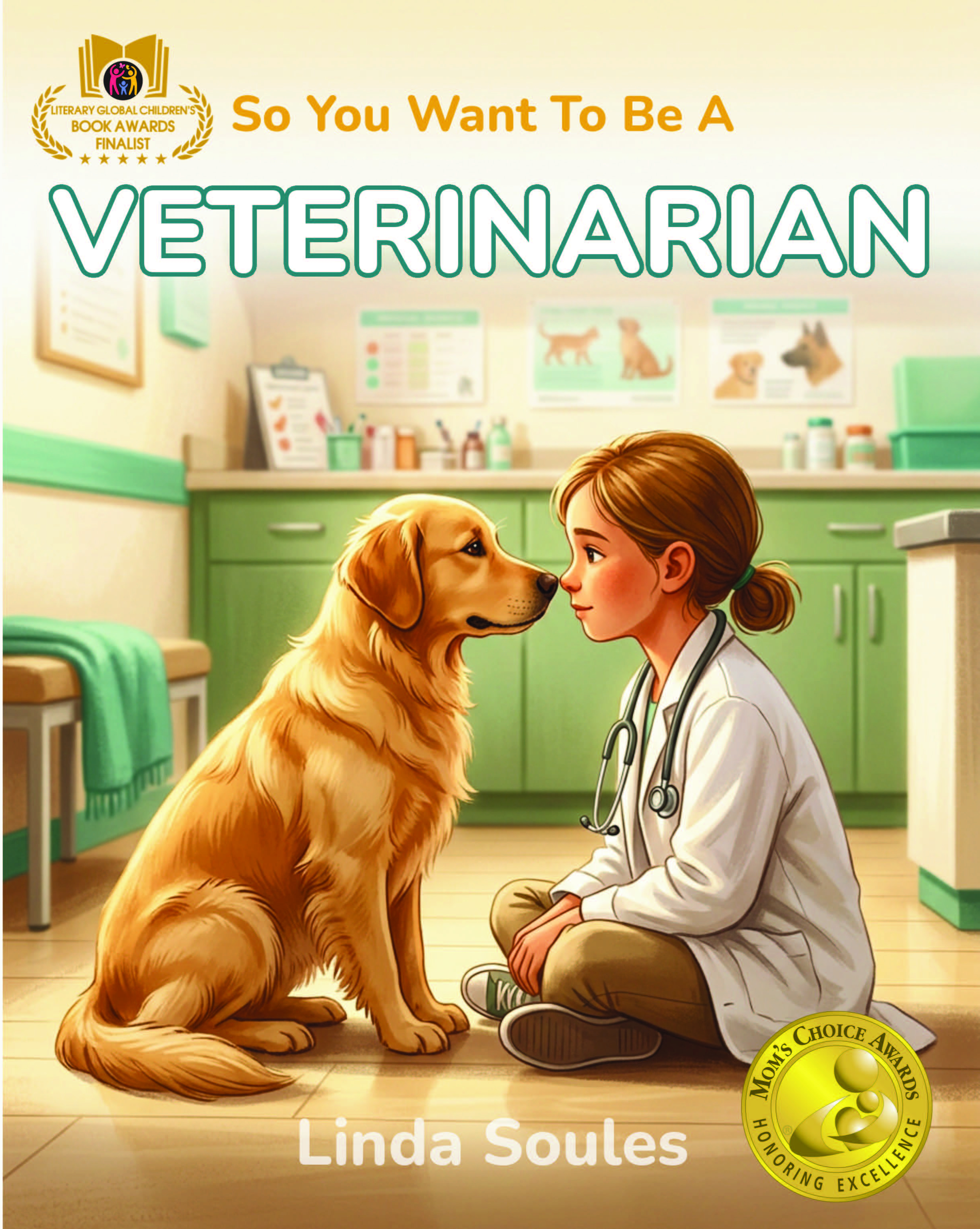
So You Want To Be A Veterinarian
by Linda Soules
Key Takeaways
Summary
An animal cannot tell a veterinarian where it hurts or when the trouble began. A dog cannot say its ear has been aching for three days, a cat cannot explain that it swallowed string, and a horse cannot describe why it is limping. So veterinarians learn to listen without words: by watching, touching, and noticing what changes. A dog repeatedly licking one paw may be signaling pain. A cat hiding under the bed may be ill; hiding weakness is an instinct that helped wild cats survive. A horse shifting weight away from one leg, a rabbit holding its ears flat, or a bird fluffed up at the bottom of its cage can each be telling a different story.
The clues are often small, and they differ from species to species. Vets learn what normal posture, movement, breathing, appetite, and behavior look like for each kind of animal, so they can recognize what is not normal. They also listen closely to the person who knows the patient best. When an owner says, “She’s not acting like herself,” that is not an empty or unhelpful description. A familiar person may detect a subtle change before it shows up in a test or becomes obvious to anyone else. The owner’s observations are part of the clinical evidence, and following them can lead a veterinarian toward the right diagnosis.
A veterinarian diagnoses illness, treats injuries, performs surgery, and helps animals live longer, healthier lives. Yet the work involves much more than applying one set of medical rules. Vets are trained to care for dozens of species, each with its own anatomy, physiology, drug responses, and surgical needs. A general practitioner may see dogs, cats, rabbits, birds, and reptiles in a single day. The differences are so great that learning to treat a parrot and a horse can feel like learning entirely separate languages. A medicine safe for a dog may be dangerous to a cat, and a dose appropriate for a Great Dane could be fatal to a Chihuahua. Precision matters at every size.
Veterinary work also takes place wherever animals need care. Many vets work in clinics and hospitals, where exam tables, lighting, and equipment are arranged for patients who stand on four legs, range from tiny to enormous, or need to be handled in special ways. A surgical suite must be sterile, with instruments in their proper places and each step performed carefully, because infection can turn a successful procedure into a dangerous one. Vets use familiar medical tools such as stethoscopes, otoscopes, thermometers, scalpels, and sutures, along with imaging and blood-testing equipment adapted for animals. Some patients require specialized equipment: an adjustable squeeze cage can help safely hold a wild or dangerous animal during an examination, while a casting table allows a horse or cow to be restrained on its side for treatment.
Other veterinarians travel to their patients. Large-animal vets visit farms in trucks stocked with supplies, sometimes delivering a calf in a freezing barn in the middle of the night. Exotic-animal vets care for creatures such as snakes, lizards, parrots, ferrets, hedgehogs, sugar gliders, and tarantulas. Zoo vets treat elephants, giraffes, tigers, penguins, gorillas, and sea lions. Wildlife veterinarians may help a hawk with a broken wing, a sea turtle tangled in fishing line, or a bear cub orphaned by wildfire, then work toward returning the animal to the wild. Marine veterinarians care for dolphins, whales, manatees, sea otters, and sharks. Wherever animals live, someone may have devoted a career to understanding how to help them.
For many veterinarians, one of the greatest rewards is watching an animal recover. The change is concrete: a patient who arrived sick becomes well, an injured animal heals, or one that could not walk begins running again. Vets also grow attached to particular patients over years. They may know a dog from puppyhood into old age, recognize a horse that nickers at the familiar truck, or appreciate a cat’s long-standing, regal tolerance of examinations. Trust, too, brings its own quiet satisfaction. A frightened animal relaxing under a veterinarian’s hands is a privilege, and it never becomes ordinary.
The work also protects the bond between animals and the people who love them. A pet may be a child’s companion, an elderly person’s closest company, or a beloved part of a family’s memories. When an animal is ill, the family is frightened and the animal may be suffering. A veterinarian treats the patient while helping the people understand what is happening. That calls for more than technical skill: families need clear, kind communication, especially when illness is serious and decisions are difficult. The animal’s well-being and the family’s well-being are closely connected, and the vet is caring for both.
Some of the hardest conversations come when an animal is very sick and cannot recover. If pain cannot be relieved and the body is too tired, a veterinarian may help the animal die gently and without pain. This is called euthanasia, meaning “gentle death,” and is sometimes described as putting an animal to sleep. It can be an act of compassion, but carrying it out and guiding a family through the decision are never entirely easy. These moments occur regularly, and handling them well requires a skill built through effort, compassion, and steadiness.
Money can create another painful limit. Veterinary care is not covered by insurance for most pet owners, so the treatment that medicine could provide may be beyond what a family can afford. The veterinarian must discuss options while recognizing that the person across the room loves the animal deeply. The challenge is to offer the best care possible within real constraints, without mistaking financial limits for a lack of love.
The emotional strain accumulates: animal suffering, end-of-life decisions, difficult conversations, and the burden of knowing that not every possible treatment is affordable. The profession has begun addressing this through mental-health support and a culture more willing to discuss distress. Veterinarians are learning that caring for themselves is part of sustaining their ability to care for patients. The hardest moments do not simply stop hurting, and perhaps they should not; the hurt reflects how much the work matters.
For all the seriousness of the work, veterinary practice can also be funny in ways no one can plan. Animals do not always cooperate: a calm cat may become a furry tornado as soon as an examination begins, while a 90-pound Labrador may be terrified of the scale. A parrot might shout “HELP! HELP!” during a routine checkup, having learned the words from a movie, and a hamster may escape and send three technicians chasing it around the clinic. Patients arrive with problems as strange as a lizard’s sunburn, a dog’s birthday-cake feast, or a cat wearing a tissue box over its head. Each day brings a new surprise, and the work is rarely boring.
Some surprises come from the range of jobs veterinarians can do. Vets may be dentists, treating cavities, gum disease, and broken teeth; specialists in animal dentistry even perform root canals on tigers. Others help dogs rebuild strength after surgery on underwater treadmills, where the water reduces strain on their joints. And some veterinarians work without animals in front of them at all: pathologists study disease, public-health vets protect people from animal-to-human illnesses such as rabies, and food-safety vets inspect the food supply. Getting into veterinary school is itself a challenge. There are relatively few programs, and admission can be more competitive than entry to human medical school.
A typical day in a clinic begins before appointments, with a check on the animals who stayed overnight. The veterinarian reassesses a dog recovering from surgery and needing pain management, then reviews laboratory results for a cat receiving intravenous fluids. At nine, appointments might bring a puppy for a wellness visit, a senior cat for an annual examination, and a worried owner who has found a lump on their dog. The puppy receives vaccines and plenty of attention from the team, while also trying to eat the stethoscope. The senior cat’s exam reveals early kidney changes. The lump is probably benign, but the vet recommends taking a sample with a needle to make sure.
At noon, the work moves to surgery. A routine spay still requires careful attention: a technician monitors anesthesia, an assistant handles instruments, and everyone communicates throughout the procedure. When the patient wakes, groggy and wrapped in a warm blanket, someone stays nearby until she is steady. In the afternoon, the veterinarian may see a family whose elderly dog has been declining. After eleven years together, the vet knows the dog’s history and meets the family for a private, honest conversation. Before leaving, the vet checks the hospitalized patients again, updates records, and leaves instructions for the overnight team.
No one provides that care alone. Veterinary technicians and nurses assist with procedures, monitor patients, and often know the individual animals’ personalities especially well. Receptionists schedule visits and are usually the first people clients speak to; practice managers keep the business running. When a case needs specialized expertise, a cardiologist, oncologist, surgeon, or dermatologist may take a referral. Radiologists interpret images, while emergency veterinarians handle crises overnight and on weekends. Owners and animal caretakers are also partners: they know the patient’s habits and take responsibility for care at home. The whole team contributes because one person cannot provide every kind of treatment an animal may need over a lifetime.
Veterinary work also reaches beyond the examination room. For a family, a veterinarian can help protect a beloved companion from suffering. For livestock, veterinary care supports the food systems that feed communities. In wildlife medicine, veterinary expertise has helped endangered species recover. Animal well-being and human well-being are connected in ways that can be easy to overlook until illness, food safety, or a threat to wildlife makes the connection clear.
To do this work well, a veterinarian needs a trained eye for patterns. A horse’s limp, a rabbit’s tilted head, or a cat’s slow blink may each signal something different. Illness and pain appear differently in different species, and recognizing the signs takes experience. A veterinarian who has seen thousands of patients builds a mental store of what is normal and notices the small deviation another observer might miss. That instinct rests on scientific knowledge and careful attention, not guesswork.
The breadth of that knowledge is demanding. A dog, cat, parrot, horse, and rabbit differ in anatomy, physiology, and how medicines affect them. Good care requires remembering that a treatment appropriate for one species may be wrong for another. It also requires earning an animal’s trust. A frightened patient may need to settle before the vet can examine it safely and effectively. Patience, a steady manner, and respect for the animal’s signals help make that possible.
Ethical judgment matters just as much as medical skill. Clients have different financial resources, so veterinarians must work out what care is possible while still offering sound options. End-of-life decisions, too, must be approached with compassion and honesty. The veterinarian’s task is to guide the conversation without taking away the family’s place in it, while keeping the animal’s welfare at the center.
There are practical responsibilities that veterinary training may not make obvious at first. Many vets eventually run, manage, or co-own a small business. They need to set fees that sustain the practice while remaining mindful of what families can afford, hire and support a team, and negotiate with suppliers. Clinical brilliance alone cannot keep a clinic’s doors open. Nor does learning end at graduation: new drugs, surgical methods, diseases, and research on animal cognition and pain all require veterinarians to keep reading, attending conferences, and updating their work. They may also become public voices when a rabies outbreak, wildfire, pet-food safety concern, or emerging disease frightens a community. Explaining complex science calmly and clearly—to a young child, a journalist, or a city council—calls for another kind of skill.
That responsibility is carried out with tools designed for bodies and behaviors unlike our own. A veterinarian’s stethoscope, otoscope, ophthalmoscope, and thermometer may look familiar, but they are used on patients who cannot say where it hurts and may weigh only a few ounces—or half a ton. The examination begins with basic signs such as heart and lung sounds and temperature, then may call for dental instruments, X-rays, ultrasound, or blood-analysis machines. Surgical instruments such as scalpels, retractors, and sutures are adapted to the patient’s size, while the operating room itself demands the same careful control as a human surgical suite: bright, precise lighting, sterile surfaces, and instruments arranged so each step can be performed in order. Preventing infection is not an extra precaution; it can determine whether a patient heals.
A clinic also has to make examination safe for animals that may be frightened, powerful, or dangerous. A squeeze cage has an adjustable wall that can gently hold a wild animal in place while it is examined. Horses and cattle may be secured on a casting table for procedures, so that a large animal can be safely restrained on its side. These methods are not simply ways to make an animal comply. They allow a veterinary team to work while reducing risk to the patient and the people caring for it. The practical challenge is to match the method to the species, the procedure, and the animal’s condition.
Medication calculations show why that precision matters. A veterinarian cannot rely on a single general dose: reference guides and species-specific charts account for an animal’s size and physiology. The amount of a drug that helps a Great Dane could be fatal to a Chihuahua, and a medication safe for a dog could kill a cat. Even a small error in anesthesia dosing can have grave consequences, especially when treating an animal whose body weighs several tons. The scale of veterinary work runs from a hamster to an elephant, and the arithmetic changes with the patient.
Some of the profession’s less expected branches focus on needs that are familiar from human medicine. Veterinarians can be dentists, treating cavities, gum disease, and broken teeth; specialists in animal dentistry may even perform root canals on tigers. Physical therapy can help dogs regain strength after surgery. On an underwater treadmill, a recovering dog can rebuild muscle while putting less strain on its joints. Other veterinarians may rarely, or never, examine an animal directly. Pathologists study disease, public-health veterinarians work to protect people from infections that pass between animals and humans, and food-safety veterinarians inspect the food supply. The work can therefore extend from one patient’s recovery to the health of whole communities.
Even a familiar animal can reveal how much there is to learn. A horse’s heart weighs about ten pounds, roughly five times the weight of a human heart. Secretariat’s was estimated at twenty-two pounds, more than twice the usual size for a horse; some scientists believe that may have contributed to his extraordinary speed. Cats purr at frequencies between twenty-five and fifty hertz, a range that studies have linked with bone healing and reduced swelling. Researchers have suggested that purring may help a cat’s body recover, and cats often purr when injured. These details are not curiosities detached from medicine; they are reminders that an animal’s body has its own properties, and that careful observation can lead to questions worth investigating.
Veterinary knowledge also reaches into behavior and mental health. Parrots can develop conditions resembling anxiety, depression, and obsessive-compulsive disorder. A veterinary behaviorist may address such problems by making a bird’s surroundings more stimulating, with new toys and puzzles. A bored parrot can develop serious difficulties, just as a bored person can. Meanwhile, a dog’s nose print is unique, much like a human fingerprint, and the Canadian Kennel Club has accepted nose prints as identification since 1938. Different animals bring different kinds of evidence and different medical questions; no single routine can cover them all.
The depth of training can be surprising, too. After four years of veterinary school, a specialist may complete a residency lasting another three to five years in a field such as cardiology, neurology, or oncology. The work of a general practitioner is broad, but a specialist’s focus can demand years of concentrated study. Veterinary medicine keeps changing as new drugs, techniques, diseases, and research on animal pain and cognition emerge, so learning does not stop at graduation. A veterinarian who treats patients over a long career must keep updating what they know.
There is also a practical side to sustaining care. Many veterinarians eventually run, manage, or co-own a small business. They must set fees that allow the practice to keep operating while families can still afford treatment, hire and support staff, and negotiate with suppliers. Being an excellent clinician is not enough if the clinic cannot remain open. Veterinary schools have begun teaching business skills more directly because the day-to-day realities of keeping a practice healthy affect the care available to animals.
Veterinarians may also become the public voice people turn to when animal health becomes a community concern. During a rabies outbreak, a wildfire affecting wildlife, or a public question about pet-food safety or a new disease, they may need to explain complex science clearly to people who are frightened. That explanation could be aimed at a five-year-old or a city council, but in either case it calls for accuracy, calm, and language the listener can understand. Clinical knowledge can move outward from the exam room into farms, food systems, and public decisions, where protecting animal health is closely connected to protecting human health.
The path toward veterinary medicine can begin long before veterinary school. A young person can spend time with many kinds of animals, not only familiar pets, and learn that a relaxed rabbit, a frightened rabbit, and an unwell rabbit may look very different. Watching animals closely and keeping a journal of their habits, moods, and body language builds the same kind of attention a veterinarian will later rely on. Basic biology offers another starting point: learning about cells, body systems, and how living bodies maintain themselves gives animal observations a scientific foundation.
There are practical ways to see the work more directly. A future veterinarian can ask a family vet whether it is possible to observe a routine appointment and ask questions. Volunteering at an animal shelter may mean walking dogs, socializing cats, cleaning enclosures, or helping at adoption events; each task offers experience with behavior and care. Some veterinary colleges run camps for middle- and high-school students, while fostering an animal can bring a young person closer to the everyday responsibility of caretaking. A visit to the large-animal barn at a county fair can broaden experience beyond dogs and cats. The point is not to become an expert immediately, but to keep noticing, asking, and learning—and to practice staying calm when an animal is distressed.
The lives of people who have worked with animals can make the possibilities vivid. James Herriot, a country veterinarian in England’s Yorkshire Dales, spent decades treating farm animals in every kind of weather and at all hours. He later wrote warm, funny, deeply human books about those experiences. His stories made memorable the country vet who drives through an ice storm to deliver a calf at three in the morning, then sits down to make the farmer a cup of tea. Millions of readers found something compelling in that combination of practical medicine and ordinary kindness.
Aleen Cust’s story shows how persistence can carry someone into a profession that has tried to exclude them. She completed her veterinary studies at the New Veterinary College in Edinburgh, but the Royal College of Veterinary Surgeons refused to let her take the qualifying examination because she was a woman. Cust practiced anyway, treating farm animals across rural Ireland for more than twenty years without the credentials her knowledge had earned. In 1922, the College finally admitted her, making her the first woman to hold the qualification in the British Isles. By then she had already been doing the work for decades; recognition had simply lagged behind her ability.
Temple Grandin is not a veterinarian, yet her work has shaped animal medicine and care around the world. Diagnosed with autism as a child and told her prospects were limited, she became one of the most influential animal behavior experts in the world. She designed livestock facilities used across North America, drawing on a close understanding of how animals perceive their surroundings. Grandin has said that thinking in pictures rather than words helped her understand animals, whose experience is not organized around language as ours is. That insight became practical work, improving how livestock are handled and reducing fear and suffering on a vast scale.
The science behind animals can be surprising, too. A horse’s heart weighs about ten pounds, roughly five times the weight of a human heart; Secretariat’s was estimated at twenty-two pounds, and some scientists believe its size contributed to his speed. A cat’s purr falls between twenty-five and fifty hertz, a range that studies have linked to bone healing and reduced swelling. Researchers believe the vibration may help explain why injured cats sometimes purr. Parrots can develop anxiety, depression, and obsessive-compulsive conditions, and veterinary behaviorists may address them by making a bird’s life more engaging with toys and puzzles. Even identification can be individual: a dog’s nose print is as unique as a human fingerprint, and the Canadian Kennel Club has accepted nose prints for identification since 1938.
Some specialists complete years of additional training after veterinary school, pursuing residencies in fields such as cardiology, neurology, or oncology. Such detail is a reminder that curiosity can lead in many directions. For someone who wants to explore further, books such as Herriot’s Treasury for Children, Dr. Chris Carpenter’s Vet Set Go!, and Stephanie Maze’s I Want to Be a Veterinarian offer stories, practical advice, photographs, and introductions to different kinds of veterinary work. Websites, shelters, veterinary camps, and organizations such as the American Veterinary Medical Association and the American Association of Veterinary Medical Colleges can offer more ways to learn.
The questions at the heart of the work are straightforward and demanding: What is wrong with this animal, and how can it be discovered when the patient cannot say? What does the animal need medically and emotionally? How can a family understand what is happening? A person drawn to the profession may love animals deeply, be fascinated by biology, and have the patience to work at an animal’s pace. Yet caring is not only affection. It means being willing to learn, to remain steady in difficult moments, and to take responsibility for patients who cannot speak up for themselves.
That responsibility is the calling’s deepest weight. A veterinarian’s patients cannot choose their doctor, explain what hurts, or object when care is poor. Their well-being depends on the ethics and attention of the person treating them. Families, meanwhile, entrust veterinarians with animals they love as members of their household, often when they are frightened or grieving. The work asks for scientific precision and tenderness together: to comfort an animal that cannot understand, to help a family face what cannot be changed, and to return the next morning because other animals still need care. Learning to hear what cannot be spoken, and to speak for those who cannot ask, is an unusually necessary way to serve the world. For anyone who feels called toward it, the first step is already available: pay attention, keep learning, and show up for animals.
Chapter Summaries
Listening to Animals and Understanding the Work
The book introduces veterinary medicine as a combination of doctoring, detective work, and interpreting animal communication. A dog persistently licking one paw, a cat hiding, a horse favoring a leg, or a bird sitting fluffed up may all be signaling pain or illness. Vets learn what is normal for each species so they can recognize subtle changes, and they treat an owner’s familiarity with an animal as useful clinical information—not merely a vague impression. Veterinarians diagnose illness, treat injuries, perform surgery, and help animals stay healthy, often while caring for species with very different bodies and needs. Their workplaces range from clinics and farms to zoos, wildlife settings, and marine environments. The tools may include familiar instruments such as stethoscopes, otoscopes, imaging equipment, and surgical supplies, as well as species-specific restraint and dosage references. Precision matters: a medicine or dose appropriate for one animal may be dangerous for another.
The Rewards and Emotional Challenges
One of the profession’s greatest satisfactions is seeing an animal recover: a sick patient becomes well, an injured animal walks again, or a familiar patient returns to the clinic with trust. Veterinarians also become part of the lives of the people who care for animals. A pet may be a child’s companion, an elderly person’s closest friend, or a thread running through a family’s memories. In this sense, vets protect not only animal health but the bond between animals and people. The work also brings sorrow and difficult choices. When an animal cannot recover, a veterinarian may guide the family through euthanasia, described in the book as a gentle, compassionate way to end suffering. Cost can create another painful constraint: the treatment that is medically possible may not be financially accessible to every family. The book emphasizes that these realities can accumulate into emotional strain, and that veterinary professionals need support and must treat their own well-being as important too.
Unexpected Moments and a Day in Practice
Veterinary work is not only serious; it can be remarkably funny and unpredictable. A calm cat may become a whirlwind during an examination, a hamster may escape, or a parrot may shout phrases it has learned at an inconvenient moment. Such surprises help make the work varied, while also reminding future vets that patience and adaptability are essential. The book also challenges assumptions about the field: some veterinarians specialize in dentistry or animal rehabilitation, while others work in pathology, public health, or food safety without treating live animals every day. A sample clinic day moves from checking hospitalized patients to appointments, surgery, difficult family conversations, and final rounds. A morning might include a puppy wellness visit, a senior cat showing early kidney changes, and a dog with a lump that needs further testing. A spay surgery involves coordinated monitoring and careful recovery care, while an end-of-life discussion requires honesty and compassion. The schedule illustrates that veterinary practice combines routine prevention, investigation, technical procedures, teamwork, and emotionally demanding encounters.
Teamwork and the Wider Impact of Veterinary Care
Veterinary care is a collaborative effort. Veterinary technicians and nurses help with procedures and patient monitoring, and often know individual animals’ temperaments particularly well. Receptionists and practice managers keep the clinic functioning; specialists handle complex cases; radiologists interpret images; and emergency veterinarians respond to urgent needs. Owners and caretakers are also partners, since they observe the animal at home and continue care after the appointment. The work reaches beyond individual pets. Veterinarians help families prevent and treat suffering, support the health of livestock and the food systems communities depend on, and contribute to wildlife recovery. Public-health veterinarians help protect people from animal-to-human diseases, while food-safety professionals help keep the food supply safe. The book’s larger point is that animal health and human well-being are connected across homes, farms, ecosystems, and communities.
The Qualities and Skills the Profession Requires
A veterinarian needs strong pattern-recognition skills: a tilted head, a limp, or a change in a cat’s expression may mean different things in different species. Experience builds a mental reference for what healthy, typical behavior looks like, making it easier to detect subtle problems. The work also demands broad medical learning across body plans, since dogs, cats, birds, horses, and rabbits differ in anatomy, physiology, and how they respond to medicines. The book highlights compassion alongside practical judgment. Vets must build trust with frightened animals, help owners understand diagnoses and options, and make ethical decisions within real financial limits. They may also need business skills to manage a practice, communication skills to explain complex issues to children or the public, and the humility to continue learning as medicine changes. Grace in hard conversations and the ability to remain calm under pressure are presented as central professional strengths, not extras.
Preparing for a Future in Veterinary Medicine
Young readers are encouraged to begin developing relevant skills before they reach veterinary school. Spending time with many kinds of animals can broaden understanding of how differently species behave. Learning to distinguish a relaxed rabbit from a frightened one, observing a pet’s routines, and recording changes in an animal observation journal all build the attentive habits that veterinarians use. Studying basic biology and asking a veterinarian thoughtful questions can add scientific context to that experience. The book also recommends practical exposure: volunteering at a shelter, helping socialize animals, or asking whether it is possible to observe a routine appointment. Future vets should practice staying composed when an animal is distressed, while recognizing that the job calls for both tenderness and steadiness. A short self-assessment invites readers to consider whether they enjoy science, are patient with animals, can sit with sadness, and believe every creature’s life has value. The book provides further reading, websites, camps, organizations, and activities for readers who want to explore further.
Role Models, Discoveries, and the Meaning of the Calling
Profiles of James Herriot, Aleen Cust, and Temple Grandin show different ways people have influenced animal medicine. Herriot brought the humor and humanity of rural veterinary work to millions of readers. Cust pursued veterinary training and treated farm animals despite being denied the qualifications available to men; official recognition came only after decades of practice. Grandin, though not a veterinarian, transformed livestock handling by applying her understanding of how animals perceive their surroundings, helping reduce fear and suffering on a broad scale. A collection of facts expands readers’ sense of animal medicine, from the extraordinary size of a horse’s heart to the specialized training required in veterinary fields. The closing message frames the profession as a responsibility to patients who cannot speak for themselves. A veterinarian must combine scientific precision with tenderness, earn animals’ trust, support grieving families, and act ethically when the patient cannot advocate for its own care. The book ultimately invites readers who feel drawn to that responsibility to keep learning and to become someone animals and their people can trust.
Notable Quotes
A vet is a doctor, a detective, and an animal translator all rolled into one.
“She’s not acting like herself.” That sentence? That’s worth more than any blood test.
To be trusted by a frightened animal, to have it relax under your hands because something in your manner communicates safety, is a privilege that never gets ordinary.
Every day brings something you’ve never seen before.
The fact that it hurts is proof that you care. And caring is the whole point.
The animals can't tell you what's wrong. Learning to hear them anyway starts now.
You will practice a form of medicine that asks you to hear what cannot be spoken and speak for what cannot ask.
