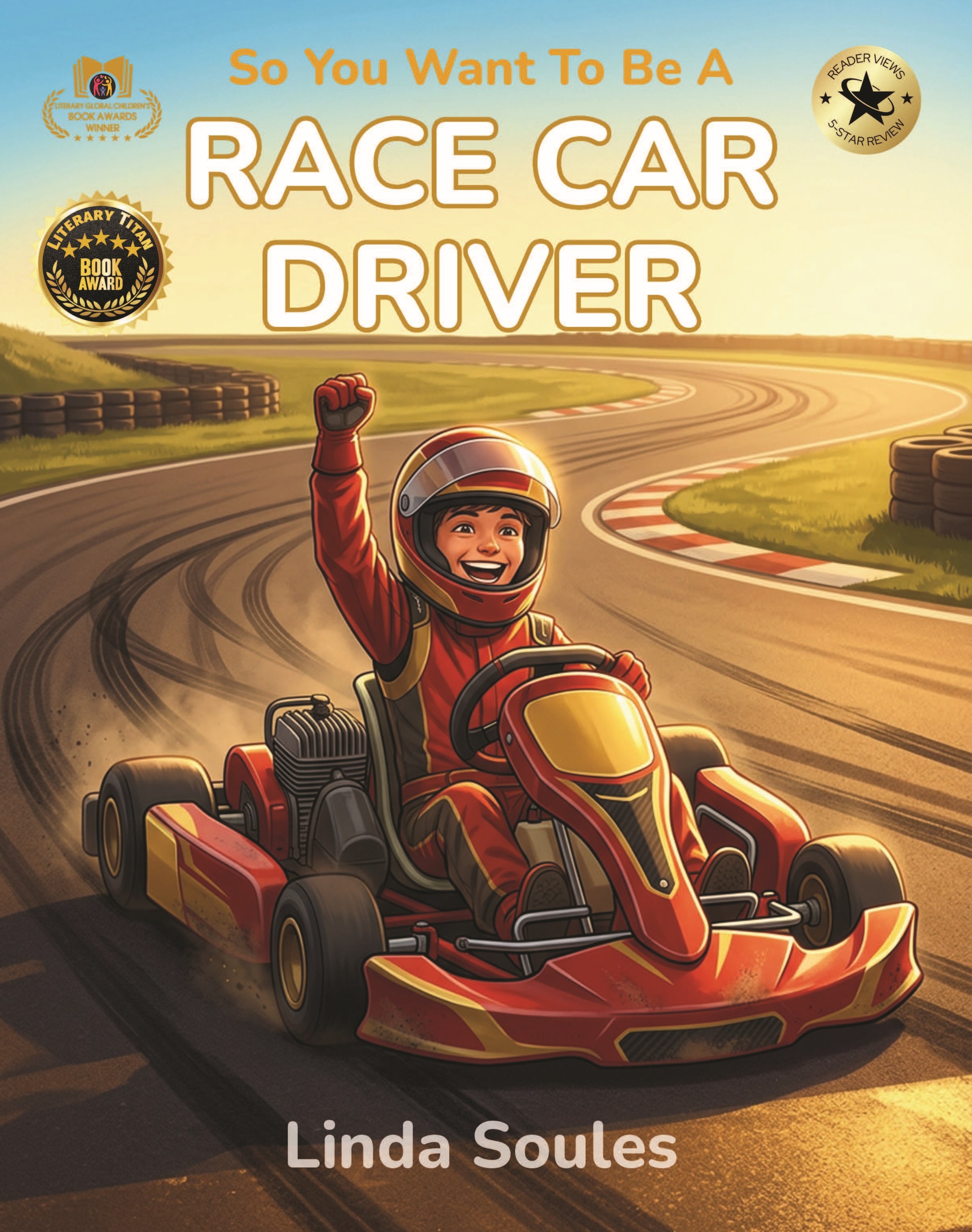
So You Want To Be A Race Car Driver
by Linda Soules
Key Takeaways
Summary
Speed looks simple from the stands: press the accelerator and watch the car surge forward. But almost any powerful machine can go fast in a straight line. Racing is about carrying speed through corners, where braking, turning, and accelerating again have to happen with extraordinary precision. Each turn is a problem to solve at speed, and a lap strings dozens of those problems together.
Drivers learn every corner of every circuit in exact detail. They know where to begin braking, sometimes to within a meter, even while approaching at 200 miles per hour. Brake one meter too late and the car may be going too fast to make the turn safely. Brake one meter too early and the driver gives away time: perhaps a tenth of a second, which can separate a win from fifth place. The challenge is to repeat these decisions corner after corner, throughout the race.
The fastest drivers are not necessarily the most aggressive. They are smooth. They turn the wheel gently rather than yanking it, brake firmly without stamping in panic, and ease onto the accelerator instead of slamming it down. They guide the car rather than fighting it, as if making a request and feeling the machine respond. Smooth inputs help the car remain balanced and let its tires use their grip efficiently. A car that is not being thrown around can put more of that grip and power toward speed.
At racing speeds, decisions must come quickly. A driver may have about half a second to choose what to do, where most people would need five seconds. So the job is as much about thinking as daring. Drivers stay calm and precise, reading the situation while already anticipating what lies several corners ahead.
Driving is only the visible part of the work. Behind each car is a team of more than 200 people: engineers who design and study it, mechanics who build and maintain it, strategists who plan the race, and pit crew members who perform rapid tire changes. The driver and the team depend on one another. A radio built into the helmet lining connects the driver with engineers, who monitor the car from screens. They study tire temperatures, fuel levels, and handling, while the driver reports what the car feels like from the cockpit. Clear communication and quick responses can change the course of a race; the best team is not always the one with the fastest car.
A modern race car also sends its behavior to the engineers as real-time data. Sensors measure speed, throttle position, brake pressure, steering angle, g-forces, tire temperatures, and fuel use. Together, these readings make up telemetry: the car’s voice, describing what it is doing and where time is being gained or lost. The driver’s observations add another kind of information. Engineers can see the numbers, but the driver can describe how the car responds through a corner. In testing, drivers try different setups on track and give detailed feedback, helping the team turn data and sensation into adjustments.
The work continues away from the circuit. Drivers study recordings of their own races and their competitors’, looking for fractions of a second that might be recovered. They test the car, consider how different setups affect its behavior, and stay fit for the demands of driving. Their task is to understand both the track and the machine well enough to explain what is happening and help the team respond.
There is no single kind of racing circuit, and the work changes with the setting. Formula One is the most prestigious international championship, bringing together top drivers in some of the most technologically advanced cars. One race might take place on Monaco’s winding streets, with barriers close on either side; another might be on a wide, fast circuit in the English countryside. In Singapore, drivers race at night beneath bright lights, with the city surrounding the track. NASCAR is a different world, built around huge oval tracks with steeply banked curves. Drag racing is different again: cars race in a straight line, and the contest is over within seconds.
Inside any race car, the driver’s surroundings are close and specialized. A Formula One cockpit wraps tightly around the body, with the driver held in place by a harness and a helmet near the padding above. The car itself is designed to be light and fast, unlike a family car. Its cockpit is tiny, and the driver sits almost lying down. The steering wheel is small and removable, so the driver can take it off to climb into the car.
That wheel does far more than steer. A Formula One steering wheel costs more than many family cars and has more than twenty buttons, switches, and dials. While driving at high speed, the driver uses it as a control panel to adjust the car’s settings. Staying in command therefore means operating a complex interface as well as choosing a line through each turn.
Protective equipment is essential. Drivers wear fireproof suits, gloves, and underwear; every layer is designed to provide precious time if a fire breaks out. A full-face helmet has a visor and impact-absorbing foam. The HANS device helps prevent the head and neck from snapping forward in a crash. In Formula One, the driver is also surrounded by a survival cell, a very strong carbon-fiber shell intended to protect them when other parts of the car are breaking apart. These tools make the cockpit a place where speed, control, and protection are brought together.
Once the protections are in place, the cockpit can become the setting for one of the job’s greatest rewards: the feeling of being completely present. When the car responds to each instruction and every corner is taken with precision, drivers describe a sense of aliveness unlike anything else. Racing is also a demanding puzzle, requiring decisions about tires, fuel, and when to push or conserve the car. Finding the answer at speed is part of the pleasure. Winning can bring an equally powerful reward: drivers who have stood on the top step of the podium many times still say the feeling never fades.
But danger is never far away. A fraction of a second or one wrong movement can separate a clean lap from a crash, and a crash at racing speed can be violent. The best drivers are not fearless; they recognize the risk, assess it calmly, and make responsible decisions without letting fear turn into panic or recklessness. That balance takes years to develop. Even when a driver has done everything right, a failed component, a troublesome pit stop, a poor strategy call, or a tire that wears out too soon can undo hours of work. A mechanical failure on the final lap, within sight of the finish, is a particularly painful disappointment. The driver has to absorb the result, learn from it, and return with confidence intact.
The strain is physical as well as psychological. In high-speed corners, forces several times the driver’s body weight press against them, lap after lap. The cockpit can reach 130 degrees, while the fireproof suit traps heat and the noise and vibration continue without pause. Drivers may lose five to ten pounds during one race through sweating, then need to rehydrate immediately. Their heart rates average 150 to 170 beats per minute across a race that can last two hours. Heat, g-forces, and continuous mental effort combine to make racing an endurance challenge, not simply a test of daring.
The work begins well before a driver climbs into the car. At seven in the morning, a simulator session might already be underway. The machine moves and vibrates while screens reproduce the circuit, allowing the driver to complete dozens of laps and learn where the road tightens, where the surface changes, and exactly where to brake. By nine, the driver is in an engineering briefing, comparing lap data with a teammate’s and identifying where a tenth of a second is being lost. The day’s task might be to find that time in turn seven.
At eleven comes practice. The track may be cool and the tires not yet warm, so the opening laps are cautious. Later, the driver pushes harder, then returns to describe what the car did. At three, another session tests the engineers’ adjustments. A change may improve turn seven but reveal that the car pulls under braking in turn four, giving the driver a new detail to report. At five-thirty, the driver and team spend hours reviewing laps, data traces, and setup decisions. The work is iterative: each observation can guide an adjustment, and each adjustment must be tested.
The people supporting the driver have different responsibilities but share the same goal. The crew chief manages the car’s setup and communicates with the driver during laps. Race engineers study sensor data, while mechanics build and maintain the vehicle between races. A performance coach and physical trainer work on fitness and reaction time; the team principal leads the operation, and sponsors provide funding. Competitors matter too: worthy opponents give each driver a reason to bring their best performance. During a stop, the pit crew—about twenty people in Formula One, or five to seven in NASCAR—works in precise coordination to change tires and, in some races, refuel. In Formula One, the whole tire change can take under two seconds.
A driver contributes to the team not only by completing laps but by explaining what the car feels like. The steering wheel offers subtle signals through vibration, resistance, and changes in how it turns. The driver must detect a loss of grip or a new sensation, interpret it, and describe it clearly enough for the engineers to respond. Words can lead to setup changes, and setup changes can produce speed. That takes technical curiosity: the strongest drivers want to understand the machinery and become partners in improving it, rather than treating the car as a tool they merely operate.
The job also calls for total focus. A thought that comes half a second late may be useless, yet most of a race consists not of dramatic overtakes but of lap after lap requiring steady attention. Drivers need stamina to make good decisions when tired, and calculated courage to acknowledge danger while acting clearly. They must adapt when rain arrives, a rival crashes, or the strategy changes, taking in new information without losing composure. Smooth, controlled driving helps preserve the car’s balance, but it is only part of the challenge; the driver must keep thinking and communicating while the physical demands accumulate.
Some necessities are less obvious than speed or bravery. Neck muscles need special training because cornering forces can make a helmeted head feel five times heavier than normal. Drivers also have to explain the car’s behavior in engineering terms and remain attentive through stretches of repetition, when distraction can cost time. The steering wheel, then, is more than a way to direct the car: it is where the driver feels the machine’s changing behavior and turns those sensations into information the team can use. Together, that precision and technical feedback help make racing a testing ground for safer, better automobiles. Disc brakes developed through racing, as did safety advances such as crumple zones, improved seatbelts, and fire-resistant materials, later adapted for road cars.
The vocabulary of racing gives precise names to the decisions a driver makes every lap. The apex is the ideal inside point of a turn, while the braking point is where the driver begins slowing for it. The racing line connects these choices into the smoothest, fastest path: entering from the outside, reaching the inside at the apex, then opening back toward the outside on the exit. These are not simply markings on the track. They describe a route the driver must continually judge and adjust.
Downforce explains why a race car can take a corner at speeds that would send an ordinary car sliding away. The car’s aerodynamics press it onto the track, increasing the grip available for turning. At high speed, a Formula One car can generate enough downforce that, in theory, it could drive upside down on a tunnel ceiling. But speed also brings g-force: the sensation of being pushed as the car accelerates, brakes, or changes direction. In a corner, those forces press hard against a driver’s body, making physical strength part of the work of steering accurately.
Two terms describe different ways the car can lose grip in a turn. Understeer happens when the front tires slide and the car does not turn as much as the driver intends. Oversteer happens when the rear tires slide, causing the car to turn more sharply than intended. Drivers learn to recognize these changes through the car’s response, including what they feel through the steering wheel. Telemetry adds another kind of evidence: sensors transmit information such as speed, steering angle, brake pressure, g-force, tire temperature, and fuel use to the engineering team. The driver’s impressions and the data together help explain what the car is doing.
The slipstream, or draft, is the pocket of lower-resistance air behind a moving car. A driver who tucks into it can gain speed, which is why it often helps begin an overtake. Qualifying is the timed session that sets the order in which drivers start the race; the fastest lap earns pole position at the front of the grid. During a pit stop, the crew changes tires and, in some forms of racing, refuels the car. Every second matters. Around the driver, the survival cell—the strong carbon-fiber structure—helps protect them if a crash breaks apart other parts of the car. Each term points to a separate piece of the sport, from aerodynamics and tactics to emergency protection.
The author’s note returns to what makes racing more than a test of courage. Drivers who last, Soules argues, are intelligent athletes: they understand physics, read weather and track temperature, notice tire wear, and judge when to push or wait. Speed depends on interpreting changing conditions, not just reacting quickly. A driver’s knowledge of machinery and the ability to make decisions under pressure are part of the same craft.
For those who want to explore further, the suggested books approach racing from different angles. Matt Ralphs’s Formula Fast introduces Formula One cars, tracks, training, and the jobs on a real team, alongside drivers from Senna and Schumacher to Verstappen and Hamilton. Who Is Dale Earnhardt Jr? follows a NASCAR driver who began racing in Street Stock at seventeen and became one of the sport’s most popular competitors. DK Eyewitness Books: Car offers a broader look at how cars work and how they developed, using photographs and cutaway diagrams to show the machines themselves.
Online resources can fill in technical questions. NASCAR Kids offers driver profiles, track guides, race recaps, games, and printable activities; its free Kids Club is for children twelve and under. How Stuff Works’ auto-racing articles explain subjects such as downforce, the competing effects of drag and grip, and why a track’s shape affects how a car is set up. Going to a race offers another kind of lesson: local short-track, dirt-track, and karting events can bring the sound and scale of racing close in a way television cannot.
There are ways to connect curiosity about racing with engineering and organized competition, too. STEM Racing, formerly known as F1 in Schools, has student teams design, build, brand, and race miniature Formula One cars. Its competitions range from regional finals to a world championship, and its Development Class is aimed at grades five through eight. The World Karting Association helps people locate member tracks, shops, and schools for beginners. NASCAR’s Driver Development Program, run with Rev Racing, works with new drivers and pit crew members from varied backgrounds.
Other organizations open different doors into motorsport. The Sports Car Club of America, or SCCA, is a large amateur motorsports club with teen driving programs and schools that teach car control to people old enough to hold a license. The All-American Soap Box Derby offers younger participants a chance to build and race gravity-powered cars from kits. Competitors can progress from local events to the World Championship at Derby Downs in Akron, Ohio, where divisions award college scholarships. With no engine to provide power, the car’s construction, the line, and the driver determine how quickly it travels.
The book also points toward hands-on ways of understanding machines and race teams. A model engine kit, or an old lawn-mower engine taken apart with an adult, can make mechanical systems easier to picture. The Indianapolis Motor Speedway Museum offers racing simulators, including a challenge to qualify for the Indy 500, as well as a pit-stop challenge using real crew tools. Each of these opportunities offers a different view of the same sport: the driver’s decisions, the engineering behind the car, or the coordinated work that surrounds every lap.
The sport’s history is also a story of people who changed what others thought possible. Ayrton Senna grew up in Brazil dreaming of Formula One and became a driver many consider the greatest in history. He was especially remarkable in rain, when conditions frightened other competitors. Senna’s focus was so complete that he later said he did not know where he ended and the car began, as though the machine were an extension of his nervous system and the track a language he could read.
Danica Patrick had to overcome people who insisted that racing was not for girls. She ignored them, becoming the first woman to win an IndyCar race and the first woman to win pole position at the Daytona 500. Her achievements opened doors for girls who followed. Lewis Hamilton’s path began in a small English town, where his father worked multiple jobs to pay for his son’s karting. Hamilton went on to win a record-tying seven Formula One World Championships and use his public standing to speak about equality and inclusion in a sport that had historically offered little of either.
The details of racing can be astonishing even away from the driver’s seat. A driver’s breakfast is carefully planned, often pasta with chicken, measured precisely: too little food can leave them without energy, while too much can make them feel sluggish. At certain tracks, drivers shift gears more than fifty times per lap, using paddles on the steering wheel; over a race, they may shift more than 2,500 times, about once every three seconds while handling everything else. And at high speed, a Formula One car generates enough downforce that, in theory, it could drive upside down on a tunnel ceiling.
Even a specialized job in the pit can require patience followed by instant action. One Formula One crew member’s sole task is to operate the air-powered jack that lifts the car. The person may wait for most of the race, then has to make that move in 1.8 seconds. Racing’s history also shows how much the sport has changed: in its early days, drivers wore ordinary street clothes. Fire-resistant suits did not arrive until the 1960s, after fires revealed how dangerous ordinary fabric could be. Modern suits can withstand temperatures above 800 degrees Fahrenheit.
You do not need a race car to begin learning how a driver thinks. Put on a helmet and set up a simple course with cones on a bicycle. Try to follow the smoothest path through each turn, moving from the outside toward the inside and back out again. Time each attempt and experiment with different lines. Choose a braking point, then see whether you can brake later without losing control or making the turn roughly. The challenge is to find the latest safe point while keeping the whole maneuver smooth.
You can also practice the work of a race engineer. Time a friend’s laps around a course, compare them, and look for a reason one was quicker. Perhaps the line differed, or the braking point came too early. Share what you notice clearly: for instance, that your friend seems to lose time in the second turn and might try braking later. After each session, keep a notebook. Write down what went well, where time was lost, and what you will change next time. Careful observation turns practice into learning.
Go-karting is a common starting point for professional drivers, and many tracks offer sessions for children. Sim racing is another accessible way to study racing lines, braking points, and car setup with a computer, steering wheel, and pedals. You can go to a local race, too; the sound and atmosphere are different from anything on television. Learning how an engine works, perhaps by taking apart an old lawn-mower engine with an adult or building a model, can help you understand the machinery you hope to drive.
There are organized routes into the sport as well. The World Karting Association can help beginners find tracks, shops, and schools. NASCAR’s Driver Development Program, run with Rev Racing, brings new drivers and pit crew members into the sport. The Sports Car Club of America offers Teen Driving Program and Starting Line schools for people old enough to drive. In STEM Racing, formerly F1 in Schools, student teams design, build, brand, and race miniature Formula One cars, taking part in competitions that can reach a world championship. The All-American Soap Box Derby offers children and young people a chance to build gravity-powered cars and race them, with speed depending on the build, the line, and the driver.
As you practice, ask the questions a driver asks: Where is the true fastest line through this corner? What is the car telling me, and what does it need? How do I stay clear-headed when everything is happening faster than thought? A child who studies the same turn repeatedly, records what changes, and tries a better approach is already thinking like a racer. The principles work on a bicycle at fifteen miles per hour as well as in a Formula One car at racing speed: find the braking point, choose the smoothest path, listen to the machine, and learn from the evidence.
A love of speed matters, but so do patience, strategy, curiosity about how things work, and the ability to stay calm amid noise and pressure. If you enjoy solving problems one lap at a time and working with others toward a shared goal, racing may be a future worth exploring. Start with what you have, pay attention to what each attempt teaches you, and keep searching for the smoother way through. Smooth is fast, and the next line is there to be found.
Chapter Summaries
The Real Meaning of Speed
The book opens by challenging the idea that racing is mainly about driving fast in a straight line. The difficult work happens in corners, where a driver must brake at exactly the right point, choose a smooth path, and accelerate without wasting grip. At very high speeds, even a one-meter error can affect whether a car makes a turn safely or loses precious time. A full lap repeats these decisions again and again, demanding precision throughout the race. The book emphasizes that top drivers are not simply the most daring or forceful. They guide the car with smooth, controlled movements, which allows its tires and power to work effectively. They also think ahead, making decisions in fractions of a second while anticipating what comes next. This introduces a central lesson for aspiring drivers: racing combines physical skill with calm judgment and continuous problem-solving.
The Job, the Tracks, and the Equipment
A race car driver studies circuits, practices, tests setups, reviews footage, and communicates with engineers—not just drives during races. The driver is the visible part of a much larger operation that may involve more than 200 people. Sensors record details such as speed, brake pressure, tire temperature, and fuel use; engineers interpret this information while drivers report how the car feels. The team’s ability to communicate and respond can matter as much as the car’s raw speed. The book introduces different forms of racing, from Formula One’s international circuits and technically advanced cars to NASCAR’s steeply banked ovals and drag racing’s short straight-line contests. It also describes the specialized tools of the job: compact cars with removable, button-covered steering wheels; fire-resistant clothing; helmets and HANS devices; and, in Formula One, a protective carbon-fiber survival cell. The close cockpit, intense noise, and safety equipment make clear that the driver works inside a highly engineered environment.
Rewards, Risks, and Surprising Demands
One of the greatest rewards is the feeling of complete focus that comes when driver and car respond to each other precisely. Racing also offers a complex intellectual challenge: drivers must manage tires and fuel, judge when to push or conserve, and anticipate competitors’ decisions. A win can be deeply satisfying, but the book makes clear that the enjoyment comes from mastering the process as well as from standing on the podium. The risks and strain are substantial. Drivers must handle genuine danger without pretending to be fearless, maintain control under pressure, and recover from setbacks caused by failures or strategy decisions outside their control. Heat, vibration, and g-forces make racing an endurance test: the book notes that drivers may lose five to ten pounds through sweating and sustain heart rates comparable to marathon runners. It also describes the steering wheel as a source of sensory information, helping drivers feel changes in grip and handling through their hands.
A Race Day and the Team Behind It
The sample day begins with a simulator session, where a driver rehearses the track and memorizes details such as braking zones, bumps, and changing corners. An engineering briefing then uses lap data to identify where time is being lost. During practice, the driver gradually builds speed, reports the car’s behavior, and tests adjustments. A change that improves one corner may reveal a new problem elsewhere, so practice becomes a rapid feedback loop between driver and engineers. The team includes a crew chief, race engineer, mechanics, performance coach, physical trainer, team principal, sponsors, and competitors. Pit crews execute highly coordinated tire changes, with each person responsible for a precise task. The driver’s ability to describe the car clearly helps the team make useful setup changes; in turn, the team’s analysis helps the driver make better choices. The chapter portrays racing as collective work, not an individual achievement performed alone.
Skills, Contributions, and the Driver’s Mindset
The book identifies total focus, calculated courage, stamina, technical curiosity, and adaptability as important qualities for a race car driver. It adds less obvious requirements: communicating mechanical feedback, staying attentive through long stretches when little seems dramatic, and building the physical strength to manage a helmeted head under high g-forces. Drivers need both athletic conditioning and the patience to study performance closely. Racing can also benefit people beyond the track. The book explains that motorsport has helped develop or test technologies and safety systems—including disc brakes, crumple zones, seatbelt improvements, and fire-resistant materials—that have influenced ordinary vehicles. Drivers serve as test pilots, pushing cars toward their limits so engineers can learn from the results. Their work can help make cars safer while also showing audiences what disciplined skill and concentration can accomplish.
Racing History and Remarkable Details
Profiles of Ayrton Senna, Danica Patrick, and Lewis Hamilton show different forms of excellence and influence. Senna is remembered for extraordinary focus, especially in rain; Patrick broke barriers as the first woman to win an IndyCar race and take pole position at the Daytona 500; and Hamilton’s record-tying seven Formula One World Championships sit alongside his advocacy for greater equality and inclusion. Their stories offer young readers examples of persistence, skill, and opening doors for others. A collection of facts reveals the technical and logistical detail behind the spectacle. Formula One pit crews can change four tires in under two seconds, drivers may shift gears thousands of times over a race, and aerodynamic downforce can press a car onto the track with extraordinary force. The book also notes how carefully drivers plan meals and how fire-resistant suits evolved after early racing exposed the danger of ordinary clothing. These details reinforce that racing relies on preparation, engineering, and coordinated work as much as excitement.
Starting Now: Practice and Career Exploration
The book offers practical ways to explore racing without owning a race car. Readers can set up a safe bicycle course, experiment with the smoothest line through corners, practice choosing braking points, or time a friend’s laps and give useful feedback. Go-karting and sim racing offer more direct experience, while a race notebook helps turn each session into a cycle of observation, analysis, and improvement: record what worked, where time was lost, and what to try next. A series of questions helps readers consider whether the career suits them: Do they enjoy speed as well as strategy? Can they stay calm amid noise and pressure? Are they curious about machines and comfortable working as part of a team? The book’s glossary introduces terms such as apex, telemetry, downforce, and racing line, while its further-learning resources point readers toward books, organizations, tracks, and activities. Its central invitation is to begin learning and practicing now, with safety and steady improvement in mind.
Notable Quotes
Going fast is easy; press the accelerator (the gas), and the engine does the rest.
The fastest drivers in the world are not the most aggressive. They are the most smooth.
The answer to every performance question is always in the data.
The best drivers aren't fearless. They feel the danger just like anyone would.
Racing is not just bravery. It is brilliance wrapped in a helmet.
Smooth is fast. It is true on a bicycle, true on a go-kart, and true at two hundred miles per hour.
