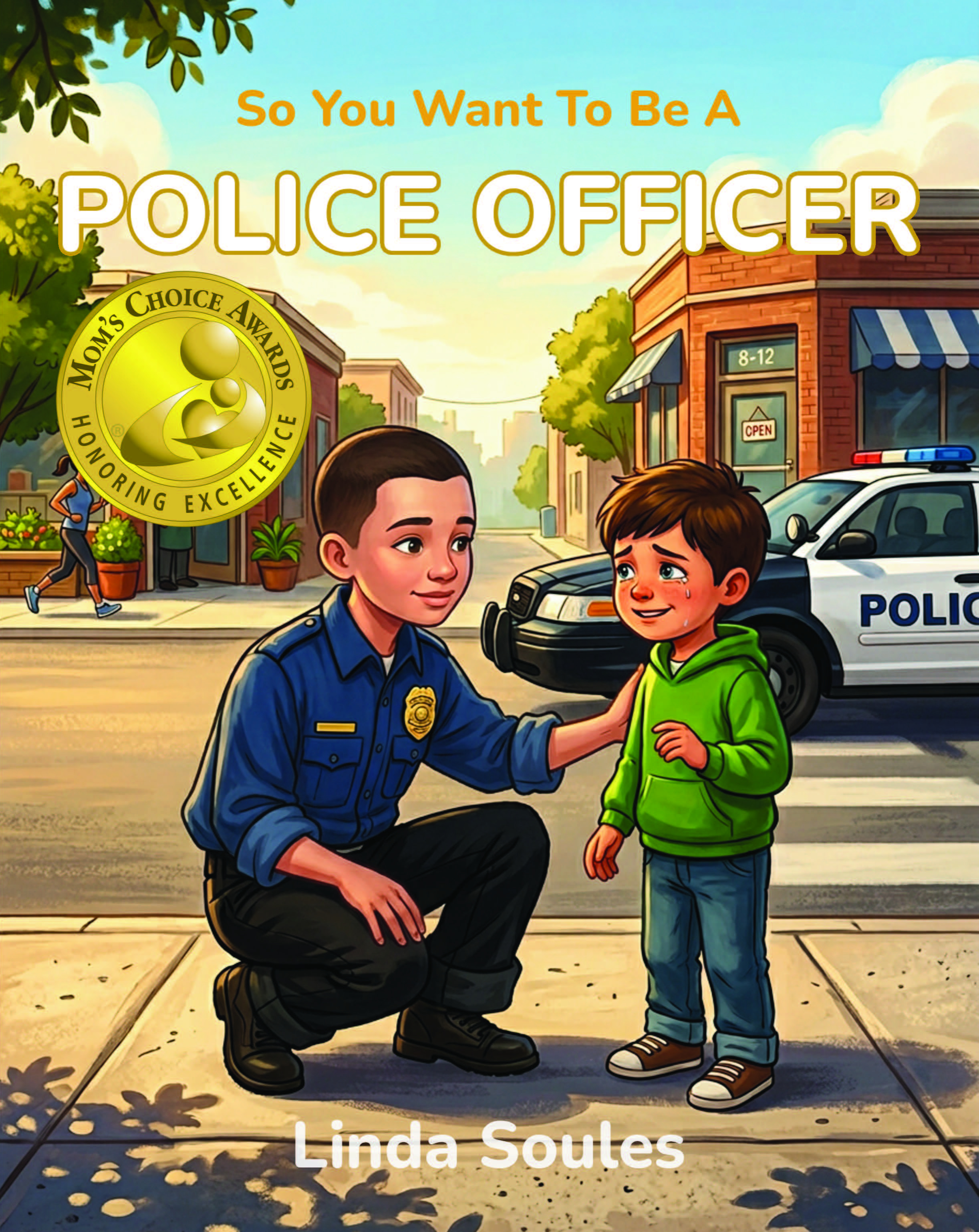
So You Want To Be A Police Officer
by Linda Soules
Key Takeaways
Summary
The work begins with a different idea of what it means to protect people. Police officers are responsible for public safety: they respond to emergencies, investigate crimes, enforce laws, and help maintain the order communities need to function. But the job is not mainly a matter of chasing criminals. Much of it depends on knowing people, listening carefully, paying attention, and showing up for the community day after day. An officer cannot protect a neighborhood they do not understand. The strongest officers learn its rhythms and concerns by walking past shops and through parks, speaking with residents, and getting to know the people who live and work there. They may learn the bakery owner’s name or recognize the kid practicing skateboard tricks after school. Community policing, at its simplest, means being a good neighbor first.
A single shift can bring a mental-health crisis, a disturbance in a household, a traffic accident, a theft, a medical emergency, and a call from someone frightened and unsure where else to turn. One call might involve a fender bender at a busy intersection: no one is hurt, but both drivers are upset. Then there may be a lost dog, a shop owner who suspects something has been stolen, or a neighbor worried because an elderly woman has not been seen for several days. The details change, but each call involves someone who needs help. Officers must quickly work out what is happening and choose a response suited to that particular situation, combining authority with communication, skill, and judgment.
An officer’s beat is the specific area they cover, often from a patrol car that serves as a mobile office, equipped with a radio, a computer terminal, and gear in the trunk. Someone who has covered the same beat for years may know its streets and local faces intimately, and notice when something seems unfamiliar. The station is a home base, but police work can take officers almost anywhere people are: schools, offices, hospitals, parks, and private homes.
The equipment is organized for quick access. A duty belt holds a radio, handcuffs, a firearm, a taser, and a flashlight; officers practice reaching for each item until the movements become automatic. Patrol cars carry computers, radios, emergency lights, and sirens. Dashboard cameras record the view through the windshield, sometimes providing key evidence, while body cameras record interactions as both an accountability measure and a source of evidence. They can protect the public and officers by preserving a record. Officers’ notebooks matter too: accurate notes support reports, and those reports may affect the outcome of a case years later.
Yet the most important tool cannot be worn or stored in a car. It is the ability to communicate: to listen closely, read a situation, speak with authority and respect, and lower the temperature when people are upset. Communication often resolves more than equipment does. A traffic accident, a dispute, or a frightening call may require calm attention more than force. Physical readiness matters, but the work also depends on interpersonal skill and sound judgment.
For officers who value the job, the connections with the community are among its greatest rewards. Over years on the same beat, relationships can become genuinely mutual: residents know the officer, and the officer knows them. Veterans often say that listening is the skill that matters most. People calling the police may be scared, angry, confused, or hurt, and often need someone to hear not just their words but the feelings beneath them. A good officer invites them to explain what happened and then truly pays attention. The everyday signs of connection—a conversation with a child on a corner, a check-in with a business owner, a nod from a longtime resident—can be as meaningful as the dramatic moments.
Directly helping someone can give the work its clearest sense of purpose: finding a missing child, talking a person through a crisis until they are safe, or simply arriving when someone desperately needs help. Knowing that training and presence made a difference to a real person can sustain an officer through more difficult days.
Those difficulties are substantial. Police regularly encounter situations that are painful and sometimes traumatic. In high-call-volume areas, repeated exposure to human suffering accumulates, and the profession has not always provided enough support to help officers process it. After ten years on the job, an officer may have witnessed things most people never will; those experiences remain, whether or not the officer has received help working through them. The demands are compounded by decisions made in seconds amid incomplete information, ambiguity, and possible danger. Later, those decisions may be examined for months by people who have the benefit of complete information and no time pressure. Officers carry both the unpredictability of the outcomes and the knowledge that their choices will be scrutinized.
Another surprise is how much police work has little to do with crime. The text reports that studies consistently find more than eighty percent of calls concern mental-health crises, neighbor disputes, noise complaints, welfare checks, traffic issues, or people who are confused, lost, or frightened. Police often become the around-the-clock response for social problems because no other service fills the same role. Much of the work is effectively social work performed by people trained for a different purpose. When available, social workers and mental-health professionals can help meet needs officers may not be equipped to handle alone.
Evidence can be surprising, too. Eyewitness testimony may impress juries, yet decades of research show that memory for stressful events is reconstructive, not a perfect replay. Later information can shape what a person remembers, so someone may be entirely certain and still be wrong. DNA evidence has overturned wrongful convictions based almost universally on eyewitness identification, although the legal system has been slow to fully account for what research reveals.
A shift begins with information passed from one team to the next. At roll call, the departing officers brief the incoming shift about ongoing situations, wanted people, and places that may need attention. The officer makes notes, then heads out to patrol. Those first hours are not simply waiting for a call. Being visible in the assigned area helps people know an officer is available, while also giving the officer a sense of what an ordinary morning looks like. Knowing that everyday rhythm makes it easier to notice when something has changed.
When a neighbor dispute comes in, the officer may speak with each person separately and listen without interrupting. Many disagreements do not call for an arrest or any other enforcement action; they call for someone who can help both sides calm down and begin talking again. A traffic stop might follow. Then, after responding to calls, the officer may spend a substantial part of the shift writing reports. These are legal documents, so they must be accurate, specific, and complete. At the end of the shift, the work does not instantly disappear from the officer’s mind; finishing reports and securing equipment are part of leaving the job ready for the next person.
Police work is also shared work. An officer’s partner is often the colleague they spend more waking hours with than almost anyone else. A sergeant supervises daily work, while dispatchers coordinate calls and connect officers with emergencies over the radio. Detectives may take up investigations an officer begins; forensic investigators examine evidence; and prosecutors bring cases to court. Each role contributes something different, and good coordination matters because decisions and records made in the field can shape what happens later.
Social workers and mental-health professionals are increasingly part of this network, particularly when a call involves someone in crisis. Their responsibilities complement rather than replace one another’s: the officer attends to safety and possible danger in the setting, while the social worker focuses on the person’s emotional state and needs. Neither has to pretend to do the other’s job. When the partnership works, a person in crisis may receive help rather than handcuffs, and the response can end more safely than it might have if either professional were acting alone.
The community itself is not merely the place where police work happens; its people are essential partners. Trust makes it more likely that people will share information, ask for help, and work with officers. That trust grows through repeated contact: being approachable, keeping promises, listening carefully, and treating people with respect in ordinary moments as well as urgent ones. An officer who knows residents and local concerns can better understand what is happening when a call comes in. But familiarity must never become favoritism. Serving fairly means applying the law and offering the same basic dignity to everyone, regardless of appearance, background, or address.
Police authority makes fairness more than a matter of good manners. Officers can tell people to stop, ask questions, and make decisions with serious consequences for their lives. That power brings a responsibility to follow the rules themselves, to use judgment carefully, and to speak up when something is wrong. A badge does not automatically create public confidence. Trust is earned through conduct, one honest and fair decision at a time. Sometimes service also requires physical courage: officers may move toward danger when others are trying to get away, in order to protect people they may never have met.
The most important qualities of an officer are habits of judgment, communication, and integrity, developed over time. Judgment in the moment means assessing what is actually happening and choosing a response proportionate to the situation, rather than reacting to what it might be. No single response suits every call. An officer must keep taking in new information and adjusting as events unfold.
De-escalation is a central professional skill, not a lesser substitute for action. It involves reducing tension through calm words, attentive listening, and the way an officer carries themselves. Active listening can reveal what a person fears or needs, while respectful communication can keep a difficult encounter from getting worse. Community trust supports this work: an officer who is known and approachable may be better able to gain cooperation and understand what residents are telling them. Ethical consistency holds these qualities together, requiring officers to apply the law evenly and to act with honesty even when doing so is difficult.
Physical fitness matters as well. An officer might be standing at a school crosswalk and then, within the same hour, need to sprint after a suspect. Endurance, strength, and the ability to function through a long shift are part of being prepared to serve. But readiness also requires knowledge that may not be as visible as physical training. Understanding mental-health crises can help an officer recognize a panic attack, psychotic episode, overdose, or pattern of domestic violence and respond more accurately and safely, instead of treating every crisis as simply a law-enforcement problem.
Cultural knowledge is another form of preparation. Building trust means learning a community’s history, values, and concerns, not relying only on what a database can tell you. Knowing why a neighborhood observes a particular holiday, or why a family might be wary of opening the door to someone in uniform, can help an officer interpret a situation with greater care. The work also calls for honest self-awareness about stress. Exposure to suffering, danger, and morally complicated decisions can accumulate. Officers who recognize that strain and actively manage their well-being are better able to preserve clear judgment and serve effectively over the course of a career.
Noticing when something changes is useful because police work depends on understanding what is happening before deciding what to do. That can be harder than it sounds. More than eighty percent of police calls, studies consistently find, involve no crime at all. Officers may be sent to mental-health crises, neighbor disputes, noise complaints, welfare checks, traffic problems, or people who are confused, lost, or frightened. They are often the around-the-clock responders for social problems that have no other service ready to take the call. Much of the work is therefore social work performed by people trained for a different role—not because police were designed to meet every social need, but because they are available when other help is not.
The difference between recognizing a crisis and treating it as a crime can matter enormously. An officer who understands the signs of a panic attack, psychotic episode, overdose, or pattern of domestic violence may respond more accurately and safely than one who interprets every difficult situation as a law-enforcement problem. Mental-health and crisis knowledge is not yet taught in many academies, but officers who seek it out are better equipped for the calls that make up so much of the work. Departments increasingly partner officers with social workers or mental-health co-responders. On a crisis call, the social worker may assess the person’s emotional state while the officer watches for immediate danger. Each brings different expertise, and neither has to pretend to do the other’s job. When the partnership works, a person can receive help instead of handcuffs, and a situation may end more safely than it would have with an officer alone.
Even the evidence officers collect requires careful judgment. Eyewitness testimony can feel especially convincing to a jury, but decades of research show that memory for stressful events is reconstructive, not a recording that can simply be replayed. What a witness remembers can be influenced by information encountered afterward. A person may be completely certain and still be wrong. Wrongful convictions overturned by DNA evidence have almost universally involved mistaken eyewitness identification, yet the legal system has been slow to account fully for what research reveals about memory. Investigators must therefore treat certainty as something to examine, not as proof by itself.
A sample shift shows how much of the job is ordinary contact, careful listening, and documentation. At six in the morning, roll call brings the incoming shift together with the officers going off duty. They share information about ongoing situations, wanted people, and areas of concern; the incoming officer writes down what matters. By seven-thirty, patrol begins. Before any call arrives, the officer is learning the neighborhood’s normal morning rhythm, because recognizing what is unusual depends on knowing what is usual.
At nine, a noise dispute between neighbors requires more listening than enforcement. The officer hears each person separately without interrupting. Most disputes do not need a citation or arrest; they need someone to help the people involved begin talking again. By the time both neighbors are calm, the call may be resolved without force. A late-morning traffic stop also ends with a conversation, as most traffic stops do. Then, at two, the officer begins writing reports about the morning’s calls. A report is a legal document, so it must be accurate, specific, and complete; getting it right takes longer than many people expect. The shift ends only after reports are finished and equipment is secured, and the emotional residue of the day may take longer still to set aside.
Officers do not do this work alone. A partner may spend more waking hours with an officer than almost anyone else. A sergeant supervises daily work; dispatchers coordinate calls; detectives investigate cases officers initiate; forensic investigators process evidence; and prosecutors take cases to court. But the community itself is also an essential partner. Public trust helps make cooperation and information possible, and it cannot be replaced by equipment or procedure. On some calls, the most effective response depends on bringing together people whose roles are distinct: the officer considers safety, while a social worker concentrates on the crisis. The aim is not simply to clear a call, but to leave the person and the situation better than they were found.
The history of policing includes people who tried to make that kind of service central. In 1919, Georgia Ann Robinson became the first Black female police officer in the Los Angeles Police Department. The department had little interest in granting authority to a Black woman, while the communities she served had few advocates within law enforcement. Robinson focused on juvenile cases and worked with young people at risk, seeing prevention as part of policing. An injury ended her career after twenty-one years, but she continued advocating for her community.
August Vollmer likewise argued that the purpose of policing should extend beyond responding after harm had occurred. He helped introduce fingerprinting and police radios and promoted college education for officers. He believed police should act as community helpers and that a department should be judged by crimes prevented, not simply arrests made. Beverly Harvard became the first Black woman to lead a major American city’s police department when she was appointed chief in Atlanta in 1994. Having risen through every rank in a department that had not historically promoted Black women to command, she introduced community-policing programs and expanded attention to domestic violence.
Some familiar police tools and facts are less straightforward than they seem. A lie detector does not reliably distinguish dishonesty from anxiety: it measures physical responses that nervousness can also produce. A skilled liar may pass, while an innocent person who is frightened may fail, which is why the device is generally not considered reliable enough for admission in most American courts. Fingerprints, by contrast, form patterns called loops, whorls, and arches. No two people in recorded history have been found to share the same fingerprint pattern, even identical twins, and a print left at a crime scene can still identify its owner decades later. Police horses are gradually desensitized to loud noises, sudden movements, and crowds pressing against them, training that takes years. Even the emergency system people now take for granted is relatively recent: 911 did not exist until 1968, when different cities still used different numbers to summon help.
The profession’s history offers examples of how policing can change when people bring new ideas and new perspectives to the work. Georgia Ann Robinson became the Los Angeles Police Department’s first Black female officer in 1919, when the department had little interest in giving authority to a Black woman and the communities she served had few advocates within law enforcement. She focused on juvenile cases and at-risk youth, seeing that preventing harm could be part of policing. After an injury ended her twenty-one-year career, she continued advocating for her community. August Vollmer championed fingerprinting, police radios, and college education for officers. He believed officers should prevent crime and help communities, and that a department should be judged not by how many arrests it made but by how many crimes it prevented. Beverly Harvard, named Atlanta’s chief of police in 1994, became the first Black woman to lead a major American city’s department. Having risen through every rank in a department that had not historically promoted Black women to command, she introduced community-policing programs and expanded attention to domestic violence.
Some facts about police work reveal why evidence and training matter. A lie detector measures bodily responses that may come from anxiety rather than dishonesty, so it is not considered reliable enough for admission in most American courts. Nervous innocent people can fail, while skilled liars can pass. Fingerprints, by contrast, are made up of distinctive ridges arranged in loops, whorls, and arches; even identical twins have different patterns, and a print left decades earlier can still identify its owner. Police horses spend years being desensitized to frightening sounds, movements, and crowds. The 911 system did not begin until 1968, before which emergency numbers differed from city to city. Speed cameras, meanwhile, grew out of technology once used to time aircraft by measuring their shadows. Even K-9 officers have a particular legal status: in the United States, police dogs are legally considered law-enforcement officers, and assaulting one carries serious federal penalties.
Preparation does not have to wait for an academy or a uniform. Observation can be practiced by studying a room for thirty seconds, leaving, and trying to recall its details: the curtains, chairs, and objects on a table. Listening is another skill to build early. When a friend describes a difficult day, repeat back what they have said and notice what you missed. Learn who lives nearby, which businesses serve the neighborhood, and what gives the place its character. When people disagree, hear both sides before deciding what you think. Mystery books can strengthen the habit of following clues, noticing patterns, and reasoning carefully. And a conversation with a police officer can make the profession more real: ask what the officer loves, what is hardest, and what they wish people understood.
The questions at the heart of an officer’s decisions are useful well beyond police work: How can everyone be kept safe, including the person involved? What is really happening before deciding what to do? How can each person be treated with fairness and dignity? A child who stays calm when a friend is upset, listens to both sides, or notices something others overlook is already practicing qualities the work depends on. A badge is not needed to make a neighborhood better. The larger question is whether you care about your community and its fairness, can stay respectful in tense moments, and believe trust must be earned.
The author makes the weight of the badge explicit. Officers can order people to stop, search, arrest, and, in extreme circumstances, use force that changes or ends a life. Such authority exists because communities need it, but it belongs to the community, not to the person who wears the badge. The officers most worthy of admiration understand that the badge raises the standard they must meet; it does not release them from responsibility. They welcome accountability and recognize that each interaction affects public trust. The charge is to listen first, act fairly, use power carefully, and keep earning the confidence of the people served. Trust can be broken quickly and is difficult to rebuild.
There are many ways to explore the profession further. Books offer different windows into investigation: James L. Swanson’s *Chasing Lincoln’s Killer* follows the twelve-day manhunt for John Wilkes Booth; Tom Sullivan’s *Unsolved Case Files: Escape at 10,000 Feet* uses real FBI case documents to show what evidence looks like when it is insufficient; and Chris Cooper’s *Eyewitness Forensic Science* explains fingerprints, DNA, fibers, and blood evidence. Peggy Rathmann’s *Officer Buckle and Gloria* offers a younger audience a humorous look at school safety visits.
Online, McGruff.org provides games and activities about safety, scams, and how neighborhoods and police can work together. The U.S. Occupational Outlook Handbook gives practical information on training, earnings, and job openings. The National Law Enforcement Museum offers online history exhibits and, for visitors, a patrol-driving simulator and decision-making simulator. Outside a screen, National Night Out brings neighbors and officers together at community block parties. Attending a public court hearing can show where a police report goes and why its wording matters. A simple fingerprint activity—dusting a thumbprint on glass with cocoa powder or pencil shavings, lifting it with tape, and comparing prints—makes forensic identification tangible.
Organizations offer more direct connections. Police Athletic League chapters combine sports, tutoring, and mentoring with relationships between officers and young people. The National Law Enforcement Officers Memorial Fund honors officers who died in the line of duty. For teens ages fourteen to twenty, local Law Enforcement Exploring posts may offer ride-alongs, training exercises, competitions, and mentorship; interested young people can ask their local department whether it has a post. Learning about the work can begin with one’s own street: pay attention to the people and places around you, and notice when something changes.
Chapter Summaries
What Police Work Really Involves
The book challenges the popular image of policing as a job centered on chasing criminals. An officer’s work is built around being present in the community and responding to people who need help. One shift might include a traffic accident, a theft report, a lost dog, a dispute between neighbors, or concern for an older resident who has not been seen recently. Each call requires the officer to understand what is happening and choose a response suited to that particular situation. Officers work across the environments people inhabit: in patrol cars and on assigned beats, as well as in homes, schools, hospitals, parks, and the police station. Their equipment includes radios, computers, notebooks, body cameras, and tools carried on a duty belt. But the book emphasizes that communication is the most important tool: listening carefully, reading the situation, and speaking with calm authority and respect can resolve many incidents safely. Strong community relationships also make an officer more effective, because knowing local people and concerns helps distinguish what is ordinary from what needs attention.
The Rewards, Difficulties, and Surprises of the Job
The book identifies community connection and direct service as among the most meaningful parts of policing. An officer may become a familiar, trusted presence—checking in with a business owner, talking with a young person, or helping someone through a crisis. Veterans often describe listening as a crucial skill: people who call for help may be afraid, angry, confused, or hurt, and they need an officer to hear both what happened and how it affected them. Finding a missing child or helping someone reach safety can give the work a lasting sense of purpose. The work also exposes officers to suffering and traumatic events, sometimes over many years, while demanding decisions in uncertain and potentially dangerous circumstances. Those decisions may later be reviewed with far more time and information than the officer had in the moment. Another surprise is that, according to the book, most calls are not crimes: many involve mental-health needs, neighbor disputes, welfare checks, traffic issues, or people who are frightened or lost. The book also cautions readers about eyewitness accounts, explaining that memory can be reconstructed and influenced by later information, so a witness’s confidence does not guarantee accuracy.
Daily Work, Teamwork, and Serving Fairly
A sample shift shows the variety and routine behind the work. Officers begin with a roll-call briefing, then patrol their area and learn what the neighborhood looks like on an ordinary day. They may settle a noise dispute by listening separately to both neighbors, conduct a traffic stop, and spend significant time completing reports. The book stresses that reports are legal documents: they need to be accurate, specific, and complete, and writing them can take longer than readers might expect. Police work depends on relationships with partners, sergeants, dispatchers, detectives, forensic investigators, prosecutors, community members, and increasingly social workers and mental-health co-responders. In a crisis, an officer may focus on immediate safety while a social worker assesses emotional needs; coordinated help can offer a person in crisis support instead of an unnecessarily punitive response. The chapter connects this work to fairness and public trust. Officers have substantial authority, so they must treat people with dignity, apply the law consistently, and understand that trust is earned through everyday decisions—not automatically conferred by a badge.
The Qualities and Knowledge the Job Requires
The book highlights judgment as a central professional skill: officers must read situations accurately and choose responses proportionate to what is actually happening. De-escalation is presented not as a lesser or “soft” ability but as a demanding expression of competence. Other essential qualities include community trust, ethical consistency, and physical fitness. An officer might move from a quiet assignment to a physically demanding emergency, so strength, endurance, and the ability to function through long shifts matter. Some useful preparation may be less obvious. Mental-health and crisis literacy can help officers recognize a panic attack, psychotic episode, overdose, or domestic-violence pattern rather than treating every situation as a conventional law-enforcement problem. Deep knowledge of a community’s history and culture can also improve understanding and build trust. Finally, officers need honest awareness of accumulated stress and ways to manage it. The book’s examples of Georgia Ann Robinson, August Vollmer, and Beverly Harvard show different contributions to the profession, including advocacy for underserved communities, crime prevention and modernization, and community policing and leadership.
Learning About the Profession and Preparing Now
The book uses facts and practical activities to make the profession more approachable. Readers learn, for example, that lie detectors are not considered reliable enough to be admitted in most American courts, that fingerprints are classified by patterns such as loops, whorls, and arches, and that police horses undergo extensive desensitization training. It also introduces the history of the 911 system and explains that speed-camera technology was adapted from aviation applications. These details encourage curiosity while illustrating that policing involves science, technology, training, and judgment—not simply action scenes. Young readers are encouraged to practice observation by describing a room from memory, strengthen listening by repeating back what a friend has said, learn the people and places in their neighborhood, and hear both sides of disagreements before forming a judgment. Mystery books can help develop logical thinking, and talking with an officer can reveal what the work is actually like. The book offers reflective questions—how to keep everyone safe, understand what is happening, and treat each person fairly—and suggests that children can already practice the habits of a future public servant without having a badge.
Career Reflection, Responsibility, and Further Exploration
The closing material helps readers assess whether the career fits their interests and values. It asks whether they care about their community, can remain calm and respectful in tense situations, and believe in justice and earning public trust. A glossary explains key terms such as academy, community policing, de-escalation, probable cause, warrant, patrol, and oath of office, giving readers a foundation for further learning. The book’s resources include suggested books and websites, visits to a law-enforcement museum, attending a court hearing, fingerprint activities, National Night Out, and youth programs such as Police Athletic League and Law Enforcement Exploring. In the author’s note, Soules underscores that police authority includes the power to stop, search, arrest, and, in extreme circumstances, use life-altering force. That authority belongs to the community and depends on the officer’s accountability to it. The author admires officers who treat the badge as a higher standard rather than an exemption from one, and encourages aspiring officers to listen first, act fairly, and keep earning trust. The book ultimately presents policing as a serious calling rooted in service, restraint, and responsibility.
Notable Quotes
The real job? It’s about knowing people. Listening. Paying attention. And caring enough about your community to show up for it every day.
The simple version of community policing is: be a good neighbor first.
The majority of calls that police respond to are not crimes.
Trust isn’t something you get by wearing a badge. It’s something you earn. Every day.
The power of the badge is real, and so is the responsibility.
