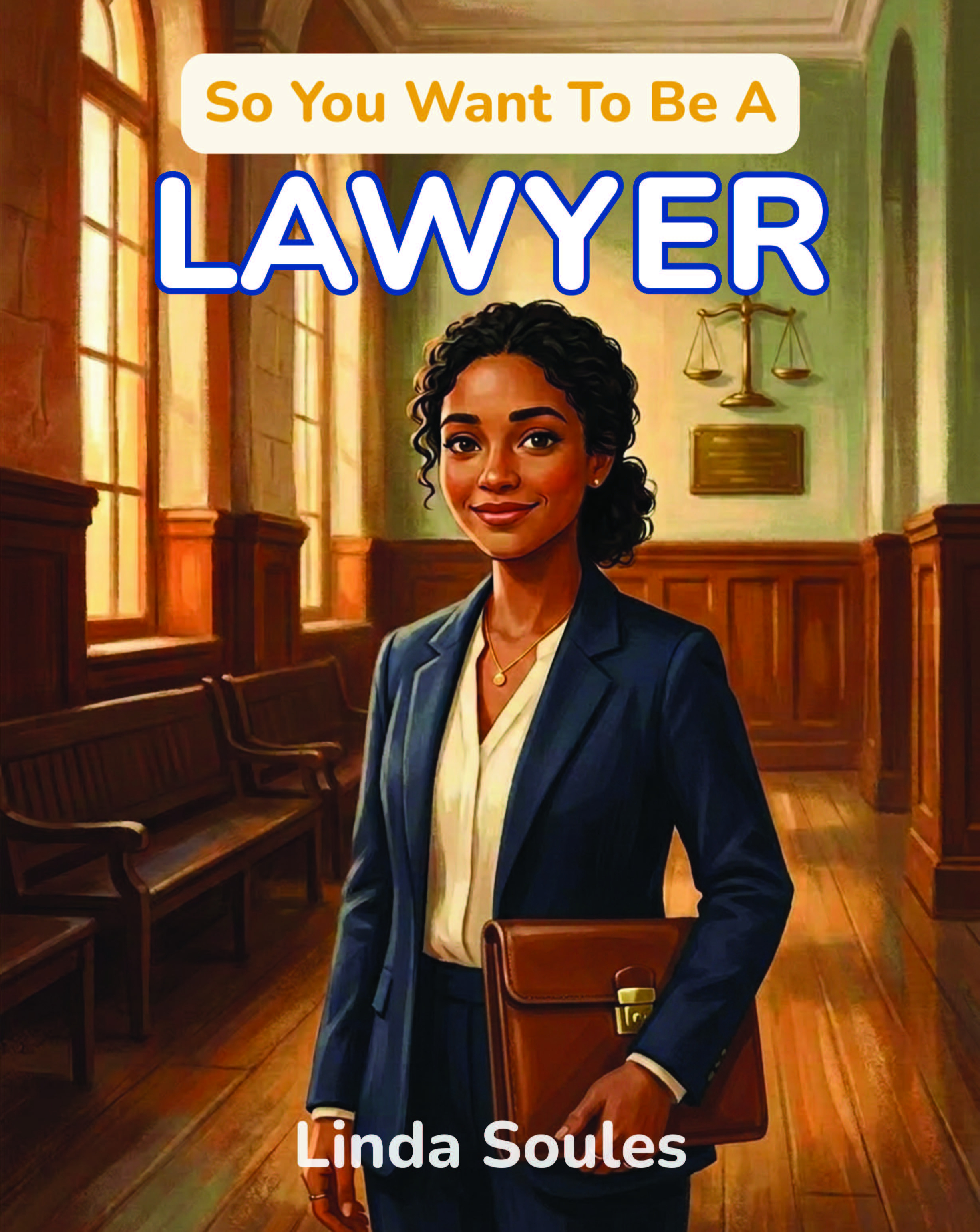
So You Want To Be A Lawyer
by Linda Soules
Key Takeaways
Summary
Imagine someone arriving at a lawyer’s office frightened and convinced that something has gone badly wrong. The lawyer listens, explains what is happening, lays out the person’s choices, and says what help is possible. Lawyers learn to find their way through an immense body of laws, court decisions, and arguments, and to use that knowledge for people who cannot push back alone.
There is no single kind of lawyer. A criminal defense attorney, representing someone accused of a crime, does very different work from an attorney helping a startup write its founding documents. A lawyer fighting to keep tenants from being evicted may have little in common day to day with one working on a billion-dollar merger. There are family, immigration, environmental, patent, civil rights, tax, and constitutional lawyers, among many others. Some focus on unusual specialties, such as horse sales, video-game studios, or the legal meaning of a comma. Technology and privacy lawyers deal with disputes over what companies may do with people’s data; copyright lawyers work with musicians and filmmakers, and sports lawyers may negotiate athletes’ contracts. A judge once even had to decide whether a burrito legally counted as a sandwich, and ruled that it did not.
Broadly, American law flows in two directions. Criminal law concerns the government accusing someone of breaking a law, with possible punishment including jail. Civil law covers other disputes, such as arguments between people or companies over money, contracts, property, or harm; the losing side usually pays rather than going to jail. Whatever their specialty, lawyers use law to help a person, organization, community, or cause—and they do so through words, both written and spoken.
The work begins with facts: what happened, who said what, what was signed or promised, and what may have been broken. Understanding those facts can take weeks or months of investigation. Lawyers interview witnesses, read documents, ask questions, and look for what initially went unnoticed, perhaps a receipt in a coat pocket, a forgotten text message, or a line in a contract no one thought to examine. They then find the relevant law, including statutes passed by legislatures, decisions made by judges, and detailed regulations written by government agencies. The challenge is to connect general rules to the particulars of one situation.
Lawyers work throughout the legal system. They may help lawmakers write rules, argue in court about what those rules mean, or hold powerful people and institutions accountable to them. Arguments sometimes happen in front of a judge or jury, but many important ones happen in writing: in a brief filed with a court, a letter to another lawyer, or a memo to a client. The most consequential arguments are often written rather than spoken, and some of the most carefully crafted legal sentences are never seen by the public. Lawyers also prevent problems before they begin. A well-drafted contract may avert a lawsuit; a carefully written will may prevent a family fight; clear company rules may keep a business out of trouble. When good legal work succeeds, it can look as if nothing happened—because nothing went wrong.
Lawyers work in settings as varied as their specialties. A law firm might consist of one lawyer in a small office or thousands of attorneys spread across the world. A lawyer’s workspace may be quiet, filled with files, research on computer screens, and documents that all matter. The hallways, meanwhile, can be busy with colleagues asking about a clause, sharing a strategy, or seeking a second opinion before a filing goes out.
The courtroom is the profession’s most visible stage, but it is only one part of the work. In a trial, a judge may wear robes, a court reporter records every word, and witnesses testify under oath. The lawyer presents evidence, questions witnesses, and argues the law. In many trials, ordinary citizens serving on a jury listen and decide what they believe happened. They are not legal experts; the point is that the law entrusts regular people to weigh evidence and tell the truth as they see it. Some lawyers spend much of their time in court, while others rarely go.
Many lawyers work elsewhere. In-house attorneys advise a company from within. Government lawyers serve cities, states, or the federal government. Public defenders represent people accused of crimes who cannot afford lawyers, while prosecutors bring criminal cases for the state. Public-interest lawyers work for nonprofit organizations on causes such as civil rights, housing, environmental protection, and immigration. Judges, who were lawyers themselves, listen to the parties and decide questions of law. Wherever law touches human life, lawyers are at work.
Their most important tools are words. A single word in a contract can determine millions of dollars, and a phrase in a statute can shape how a law is applied for decades. Lawyers pay close attention to each comma and to small words such as “and” or “or,” because each can affect meaning. A brief presents facts, explains the law, and argues why a client should win. It may run twenty pages or two hundred. A memo is usually a more private analysis for a client or supervisor, explaining what the law says and what the lawyer recommends. Both require precision.
Behind briefs and memos lie hours of research. Lawyers read statutes, regulations, court decisions, and other legal writing to understand what applies to a particular question. Much of that work now happens through online databases such as Westlaw and Lexis, which contain vast collections of published court decisions. Knowing how to search them effectively gives a lawyer a real advantage. Another essential tool is negotiation. Most disputes settle instead of going to trial, so lawyers must understand what the other side actually wants, find a workable agreement, and remain calm as the stakes rise.
The clearest rewards come when a client gets help: a defendant whose case is dismissed and who walks free, a family finally able to adopt a child, a small business owner whose patent is upheld, a woman granted asylum after years of legal work, or a tenant who keeps her apartment. These victories may be rare, but they can make the long nights and difficult reading feel worthwhile. The work itself can also be deeply satisfying. Law rewards careful thought and precise writing, and many lawyers see it as a kind of puzzle-solving—with dense rules and real consequences for real people.
Over time, clients entrust lawyers with financial troubles, family conflicts, and fears they may have carried for years. Being trusted with the hardest parts of someone’s life is a serious responsibility and, for the best lawyers, an honor. A long career can also build a sense of belonging: after years in a courthouse, bailiffs, clerks, and judges may know a lawyer by name. The work has helped move many people’s lives through the system.
But losses are part of the profession. A lawyer may lose a case that seems as though it should have been won because the law is against the client, the opposing side has more resources, or the system fails. Those losses matter because a real person may not get what they needed. Lawyers may remember them years later, and learning from disappointment without being hollowed out by it takes emotional strength.
The hours can be demanding too. Major cases may last years; major deals may consume nights and weekends; and trial weeks can be exhausting. All-nighters, unusual in many jobs, are routine in some kinds of legal work. Another difficult burden is representing a client whom the public dislikes, whether someone accused of something terrible or a company whose conduct has drawn condemnation. Yet the right to a lawyer belongs to everyone. Due process means the government must play fair, under rules that apply to all. Defending an unpopular person does not betray the system; it is the system functioning as it was designed to. Pay varies widely: some large-firm lawyers earn a great deal, while public defenders and public-interest lawyers are often paid the least. Many still describe that work as among the most meaningful they could do. The profession asks a lot, and those who remain in it must find a way to carry its weight without letting it make them cold.
The most surprising thing about the job may be how little it resembles the movies. Most lawyers are not delivering passionate speeches to juries; much of their work is quiet, careful reading. A small word can reverse the meaning of a sentence, or an exception hidden deep in a contract can change what someone is allowed to do. A lawyer who notices what everyone else skimmed past may make the difference in a case. And the work is not reserved for people who like commanding a room. Many excellent lawyers are quiet, thoughtful people who would rather read closely, think slowly, and choose the exact right words. Being careful matters more than being loud.
The profession also reaches much farther back in human history than most people expect. People have written rules for living together for nearly four thousand years. One of the oldest complete collections still surviving is the Code of Hammurabi, carved into stone in ancient Mesopotamia around 1750 BCE. An even older code, written by King Ur-Nammu about three hundred years earlier, is the oldest known to survive. Their rules dealt with subjects that still occupy lawyers: contracts, inheritance, theft, and borrowers and lenders. From ancient scribes through Roman lawyers, medieval English judges, the writers of constitutions, and lawyers today, people have returned to enduring questions: How should we live together fairly? How should disagreements be decided? How can the powerful be stopped from harming the weak?
The movies get something else wrong when they portray lawyers as smooth operators who will say anything to win. A lawyer’s career depends on being believed: by clients who share difficult truths, by other lawyers, and by judges. A lie can destroy trust that took years to earn. The best lawyers are known for a plain, sometimes stubborn honesty. Their word is among the most valuable things they have.
A typical day shows how different the work can be from its dramatic image. At 6:30 in the morning, a lawyer is up with coffee and the news, then reading a judge’s ruling issued the previous afternoon. It concerns a case like one she is handling, so she studies it twice before leaving home, identifying its key points and how they may shape her argument at a hearing.
By 8:30, she is in the office preparing a client for a deposition, a formal interview recorded under oath. The client’s deposition is scheduled for the following week. They discuss the questions that may come, practice answers, and talk about staying composed under pressure. The client begins the meeting nervous and leaves feeling steadier.
At ten, the lawyer is in court for a pretrial hearing in a contract dispute. The judge asks questions she anticipated and others she did not. She answers as best she can, though the result will not be known that day; the judge will issue a ruling the following week. At noon, lunch happens at the desk, alongside emails and edits to a colleague’s draft brief, due Friday. At 1:30, she begins drafting a motion to dismiss in a new case—a request asking the judge to throw the case out. She writes, rereads, rewrites, and sets the work aside before returning to it. By 4:30, the draft is better, but she plans to read it fresh the next morning and edit again.
At 8:30 that evening, she is home with the brief open on her laptop, making notes for tomorrow before finally closing the computer. She is also thinking about a client whose son was arrested that afternoon, after the client called between the hearing and the drafting. She knows she may think about that family again at three in the morning. That, too, belongs to the day.
Even when a lawyer’s name appears alone on an office door, the work is intensely collaborative. Cases and deals are often handled by teams. Senior lawyers, called partners, oversee strategy; associates do much of the research and writing. Paralegals, trained professionals who are not lawyers, organize documents, file court papers, and keep work moving. A skilled paralegal may catch a missing exhibit, locate a hard-to-find citation, or produce exactly the right document at the crucial moment. Without paralegals, much of the profession would quickly grind to a halt.
The circle of colleagues extends beyond the office. Opposing counsel may be an adversary in one case and a friend by Thursday. Even the nine Supreme Court Justices shake hands with one another before taking the bench, a reminder that disagreement does not make someone an enemy. In court, the judge oversees proceedings and decides questions of law; the court reporter records every word; and clerks, bailiffs, and the judge’s law clerks all help the process work. Witnesses, experts, investigators, and jurors contribute in different ways. At the center are the clients, whose lives have been touched by the law. A case file may be a stack of papers, but the client is a person with a family, a future, and a life beyond the case.
That is why helping someone often begins in a moment of fear: an arrest, the decision to leave a marriage, a bewildering letter from an insurance company, or the discovery that a signed contract does not mean what its signer thought. People rarely call a lawyer because everything is going well. The lawyer’s help is often less dramatic than the crisis that brought the client in. She explains what is happening, lays out the available choices, and takes on the parts the client cannot manage alone. Years later, people may remember how their lawyer treated them even more clearly than whether they won. A lawyer who returned calls and explained matters plainly can be remembered for a lifetime.
Some lawyers help people on a broader scale. They work with lawmakers to make a new law’s wording precise before it takes effect. Others expose unfairness by challenging a powerful company, an unjust system, or a law that should never have stood. Some teach in law schools, free legal clinics, and classrooms, passing their knowledge to those who will come after them. No one lawyer can repair the whole world, but each can help leave some part of it fairer than it was before.
The qualities that make a lawyer effective reach beyond knowing rules. Rigorous reasoning means breaking a complicated situation into parts, identifying what matters, and tracing the likely consequences of each choice. Precision with language is just as essential: knowing the difference between “shall” and “may,” or noticing a comma that alters a sentence, can change what a rule requires. Moral courage means taking an unpopular case, telling a powerful person an unwelcome truth, or giving a client news they do not want to hear. Unbending ethics means refusing shortcuts and being honest even when dishonesty might seem to offer an advantage. And curiosity about people helps a lawyer see the human being behind the file: what a client values, fears, and hopes to protect.
Some necessary skills are less obvious. Lawyers are storytellers, arranging facts into a clear account that helps a judge, jury, or negotiating partner understand what happened and what should happen next. They need stamina for enormous quantities of reading, staying alert through the final pages of a lengthy contract or transcript. They also need emotional self-control: to remain professional when a witness lies, a client panics, opposing counsel behaves badly, or a judge is impatient. This steadiness is not simply a matter of personality; it is a discipline that can be learned and strengthened.
The long history of law includes people who used careful legal work to change who received justice. Thurgood Marshall grew up under segregation and devoted his career to challenging it through the courts. After years of litigation, he argued Brown v. Board of Education before the Supreme Court. In 1954, the Court ruled unanimously in his favor, changing the legal foundation of American life. Marshall later became the first Black Justice of the Supreme Court.
Ruth Bader Ginsburg finished near the top of her law school class but could not find a New York law firm willing to hire her because she was a woman. She became a professor, then founded the American Civil Liberties Union’s Women’s Rights Project. In the 1970s, she brought cases challenging laws that treated men and women differently. She sometimes represented men harmed by those laws, knowing that an all-male Supreme Court might recognize unfairness more readily when men experienced it. Her strategy helped reshape the law, and in 1993 she joined the Court as a Justice.
Constance Baker Motley, one of twelve children in a family whose parents came from Nevis, became a lawyer when Black women were rarely welcomed into the profession. Working with the NAACP, she wrote the first complaint in the case that became Brown v. Board of Education. She was the first Black woman to argue before the Supreme Court, winning nine of the ten cases she argued there. She represented Martin Luther King Jr., helped win the case opening the University of Mississippi to its first Black student, and later became the first Black woman to serve as a federal judge. Bryan Stevenson has carried that commitment into the present. He founded the Equal Justice Initiative to represent people wrongly convicted, unfairly sentenced, or harshly treated. His work has helped overturn convictions and reduce sentences for hundreds of incarcerated people; he has also created a national memorial to victims of lynching.
Legal history has its oddities, too. The United States Constitution, including its twenty-seven amendments, contains about 7,500 words, while India’s constitution has more than 146,000. Supreme Court advocates receive roughly thirty minutes per side; a white light signals that five minutes remain, and a red one marks the end. Court reporters can record 225 to 300 words a minute on a stenotype, far faster than an average computer typist. In 1893, the Supreme Court decided that a tomato counted as a vegetable for a tariff law, because that was how people used the word at the dinner table, even though it is scientifically a fruit. In earlier European courts, animals—including pigs and rats—were sometimes put on trial. And above the U.S. Supreme Court’s courtroom sits a basketball court nicknamed “the Highest Court in the Land.”
A young person interested in law can begin preparing without waiting for college. Practice arguing carefully by restating someone else’s view fairly before explaining your own. Read closely, including the fine print on ordinary signs and receipts, and revise your writing until it says exactly what you mean in fewer words. Visit a real trial, since most courthouses are open to the public, or join a school mock-trial team to try preparing a case, questioning witnesses, and speaking in court. Volunteering at a food pantry, shelter, immigration assistance program, or tutoring center can build understanding of the people lawyers serve. Reading biographies of Marshall, Ginsburg, Stevenson, Motley, John Adams, Gandhi, or Nelson Mandela offers another way to explore how law can shape lives.
The questions at the heart of the work are straightforward, though their answers can be difficult: What does the law actually say, and what does it mean? What is the client’s real problem, and what does the law allow a lawyer to do? How can the story be told so that someone who has never met the client understands what is at stake? Becoming a lawyer usually means completing college in any subject, then attending three years of law school and passing a demanding two- or three-day bar exam. To be “admitted to the bar” is to earn a license to practice. The name comes from the railing that once separated lawyers in a courtroom from the public. People drawn to fairness, careful argument, close reading, exact words, and speaking up when no one else will may find the work suits them.
The legal vocabulary captures both the system’s complexity and its protections. An appeal asks a higher court to review whether a lower court applied the law correctly; it does not retry the whole case. A brief is a written argument filed with a court. Damages are money awarded for harm, while a defendant is the person or side facing a lawsuit or criminal charge. A deposition is a recorded interview under oath before trial, and testimony is evidence given under oath. Due process requires the government to follow fair procedures before taking life, liberty, or property. Habeas corpus allows someone held by the government to challenge the legality of that detention. Litigation is resolving a dispute through the courts, though many cases settle first. A plaintiff starts a lawsuit; precedent is an earlier decision that guides later cases. A statute is a law passed by a legislature, and pro bono means legal work done without charge, often for someone unable to pay.
The author, Linda Soules, writes from twenty-five years of legal practice. Her work, she explains, rarely resembled courtroom speeches; it mostly involved reading, writing, thinking, and long conversations. Often success meant enlarging the possibilities for everyone through a deal or negotiation, not defeating an opponent. Law, in her view, gives even the smallest person a way to be heard, and that structure is built case by case by ordinary people who show up and do the work. The habits law teaches—careful reading, clear speech, steadiness, teamwork, kindness in telling hard truths, and standing beside someone who cannot stand alone—are useful in any life.
For those who want to explore further, suggested books range from John Grisham’s Theodore Boone to biographies of Ginsburg and Sonia Sotomayor, Bryan Stevenson’s Just Mercy, and To Kill a Mockingbird. The iCivics games, recordings of real arguments at Oyez, and legal texts at Cornell’s Legal Information Institute offer ways to encounter law directly. Readers can follow a case in the news, listen to an argument, or visit the American Bar Association’s public-education resources. The invitation is to pick a case, follow it to the end, and notice whether the questions—and the work of answering them—stay with you.
Chapter Summaries
What If You Were a Lawyer? What a Lawyer Actually Does
The book introduces lawyering as the work of understanding a complicated system of rules and using it to help someone facing a difficult situation. Lawyers may defend people accused of crimes, assist families or tenants, advise companies, protect civil rights, or specialize in areas such as immigration, environmental law, patents, and privacy. The variety is vast, but the shared purpose is to use the law on behalf of a person, organization, community, or cause. A lawyer begins by establishing what happened: gathering documents, interviewing witnesses, and checking details that others may have missed. The lawyer then identifies relevant statutes, court decisions, and regulations, and works out how general rules apply to the particular facts. Arguments may be spoken in court, but much of the profession’s most consequential work is written. Careful contracts, wills, and policies can also prevent conflicts before they begin.
Where Lawyers Work
Lawyers work in settings ranging from a solo practice to a large international firm, and the familiar courtroom is only one possible workplace. During a trial, lawyers present evidence, question witnesses, and argue before a judge or jury. A jury’s role is important precisely because jurors are ordinary citizens asked to weigh the evidence and decide what they believe happened. Many lawyers rarely go to court. In-house lawyers advise a single company; government attorneys work for public agencies; public defenders represent people who cannot afford counsel; prosecutors bring criminal cases; and public-interest lawyers work on causes such as housing, immigration, environmental protection, and civil rights. The practical insight is that a person exploring law should consider the kind of work and community they want to serve, not just imagine themselves making courtroom speeches.
The Tools of the Trade
Words are a lawyer’s primary tool. Lawyers scrutinize wording, punctuation, and distinctions such as “shall” versus “may,” because small language choices can affect large sums of money or determine how a rule is applied. Briefs present a client’s legal argument to a court, while memos analyze the law and advise a client or supervisor. Both require precision and clear organization. Research supports this writing. Lawyers read cases, statutes, regulations, and other legal sources, often using extensive online databases. They also rely on negotiation: since most disputes settle rather than go to trial, a lawyer needs to understand what each side wants, stay composed under pressure, and find workable terms. Together, research, writing, and negotiation show why the profession rewards patience and preparation as much as public speaking.
The Best and Hardest Parts of the Job
The greatest rewards often come when legal work changes a client’s life: a defendant is freed, a family completes an adoption, an asylum seeker is allowed to remain in the country, or a tenant keeps a home. Lawyers may also enjoy the intellectual challenge of applying dense rules to complicated facts. Over time, clients’ trust and the sense of contributing to a community can make the work especially meaningful. The difficulties are equally significant. Lawyers sometimes lose cases even when they believe their clients deserve a better outcome, and those losses can stay with them. Major cases and deals may demand long hours, and the consequences of mistakes are personal and serious. Lawyers may also represent people or organizations the public dislikes. The book emphasizes that defending an accused person is not approval of the alleged conduct; it is part of due process and the principle that the government must follow fair rules. Pay varies widely, and meaningful public-service work is often among the least highly paid.
The Most Surprising Thing About the Job
The book challenges the movie image of law as constant courtroom performance. Most lawyers spend far more time reading, researching, writing, and thinking than delivering speeches. A quiet person can thrive: careful attention, steady reasoning, and choosing the right words can matter more than commanding a room. Noticing a buried exception or a word that changes a sentence’s meaning may be decisive. Law also connects today’s practitioners to a long history of people trying to resolve disputes and limit unfairness. The book traces written law back thousands of years, noting ancient rules about contracts, inheritance, theft, and borrowing. It also stresses that a lawyer’s credibility is essential: clients, judges, and other attorneys must be able to trust the lawyer’s word. In this profession, honesty is not a decorative virtue but a foundation of effective work.
A Day in the Life
A sample day follows a lawyer preparing for a hearing by reading a new ruling, coaching a nervous client for a deposition, and answering a judge’s questions in court. The hearing does not necessarily resolve the dispute immediately; the judge may issue a decision later. The schedule then shifts to desk work: reviewing a colleague’s brief, answering emails, and drafting a motion asking the judge to dismiss a case. The day illustrates both the variety and the persistence of legal work. Drafting involves writing, rereading, revising, and returning to the document with fresh eyes. Client concerns can follow a lawyer home, including a late-day call about a child’s arrest. The practical lesson is that the job’s visible moments are only part of the experience; preparation, revision, and emotional responsibility fill much of the day.
The People You Work With and How You Help People
Lawyering is collaborative even when a single attorney is most visible. Partners guide strategy, associates do substantial research and writing, and paralegals organize records and court filings, track down evidence, and keep cases moving. A case also involves opposing counsel, judges, court reporters, clerks, bailiffs, witnesses, experts, investigators, and sometimes jurors. Professional disagreement does not have to mean personal hostility. At the center are clients, whose lives are affected by the legal problem. People often seek a lawyer during frightening or confusing moments: an arrest, a separation, an insurance dispute, or a contract problem. A good lawyer explains the situation, sets out choices, and takes on tasks the client cannot manage alone. Returning calls and speaking plainly can matter to clients for years. Beyond individual representation, lawyers can help draft laws, challenge injustice, teach, and provide free legal services.
The Qualities and Unexpected Skills Lawyers Need
The book identifies five core qualities: rigorous reasoning, precision with language, moral courage, strong ethics, and curiosity about people. Lawyers must break complex situations into manageable questions and explain their conclusions clearly. They need to make difficult choices, tell clients hard truths, and sometimes take on cases others avoid. Because clients entrust them with sensitive information, skill must be matched by honesty and dependability. Other less obvious abilities matter too. Lawyers tell stories by organizing facts into narratives that help judges, jurors, or clients understand what is at stake. They need stamina for extensive reading and emotional self-control when a witness lies, a client panics, or a courtroom becomes tense. These habits are learnable rather than reserved for a particular personality type; the book particularly reassures readers that being quiet does not rule out a legal career.
Lawyers in History and Fun Facts
Profiles of Thurgood Marshall, Ruth Bader Ginsburg, Bryan Stevenson, and Constance Baker Motley show how legal work can challenge discrimination and injustice. Marshall argued Brown v. Board of Education and later became the first Black Supreme Court Justice. Ginsburg used carefully selected cases to challenge sex discrimination. Stevenson has represented people who were wrongly convicted or unfairly sentenced, while Motley helped break racial barriers in courts and education and became the first Black woman federal judge. A collection of facts makes legal history and institutions more approachable. The U.S. Constitution is short compared with India’s; Supreme Court arguments are tightly timed; and court reporters can record speech at remarkable speeds. The book also recounts disputes over whether a tomato counts as a fruit or vegetable for tax purposes, historical animal trials, and the basketball court above the Supreme Court courtroom. These examples underline how legal questions can turn on language, context, and the rules people have chosen to live by.
Preparing Now and Considering the Career
Readers are encouraged to practice skills associated with legal work before entering the profession. When disagreeing, first restate the other person’s view fairly, then make a case using evidence and reasons. Read attentively, write with precision, observe a real public trial, try mock trial, volunteer in settings where people face unfairness, and read lawyers’ biographies. These activities build both analytical ability and understanding of the people lawyers serve. The book describes a typical U.S. route into the profession: finish college in any subject, attend law school for about three years, then pass the bar exam to become licensed. It invites readers to ask whether they care about fairness, enjoy careful argument and reading, can consider opposing ideas, and remain steady under pressure. A short set of guiding questions—what the law says, what the client needs, and how to make the story understandable—captures the mindset the career demands.
Glossary, Author’s Note, and Further Exploration
A glossary explains essential legal terms, including appeal, brief, damages, defendant, deposition, due process, habeas corpus, litigation, plaintiff, precedent, pro bono, statute, and testimony. The definitions help readers understand that legal vocabulary has practical consequences: an appeal reviews whether a lower court applied the law correctly, for example, while a deposition records sworn answers before trial. The glossary also makes clear that a case can settle or be appealed rather than ending with a single courtroom moment. In her author’s note, Linda Soules draws on twenty-five years of practice to correct the assumption that lawyers spend most of their careers in court. She describes reading, writing, negotiation, and finding solutions that can meet several parties’ needs as central to the work. The book closes by directing readers toward age-appropriate books, legal websites, mock-trial programs, and organizations such as the Equal Justice Initiative and the Innocence Project. Its final invitation is practical: choose a case, follow it, and see whether the work draws you in.
Notable Quotes
A lawyer is someone who has learned to find a path through that vast structure, use it, and, when it is being used unfairly, push back on behalf of someone who cannot push back alone.
Some of the best lawyering in the world looks, from the outside, like nothing happened. Because nothing went wrong.
The defense of a person no one wants to defend is not a betrayal of the system. It is the system working as it was designed.
The case file is a stack of papers. The client is a person, with a life and a family and a future. The best lawyers never confuse the two.
The law does not belong to the loudest person in the room. It belongs to the most careful one.
Without it, the strongest person simply wins. With it, even the smallest person has a way to be heard.
