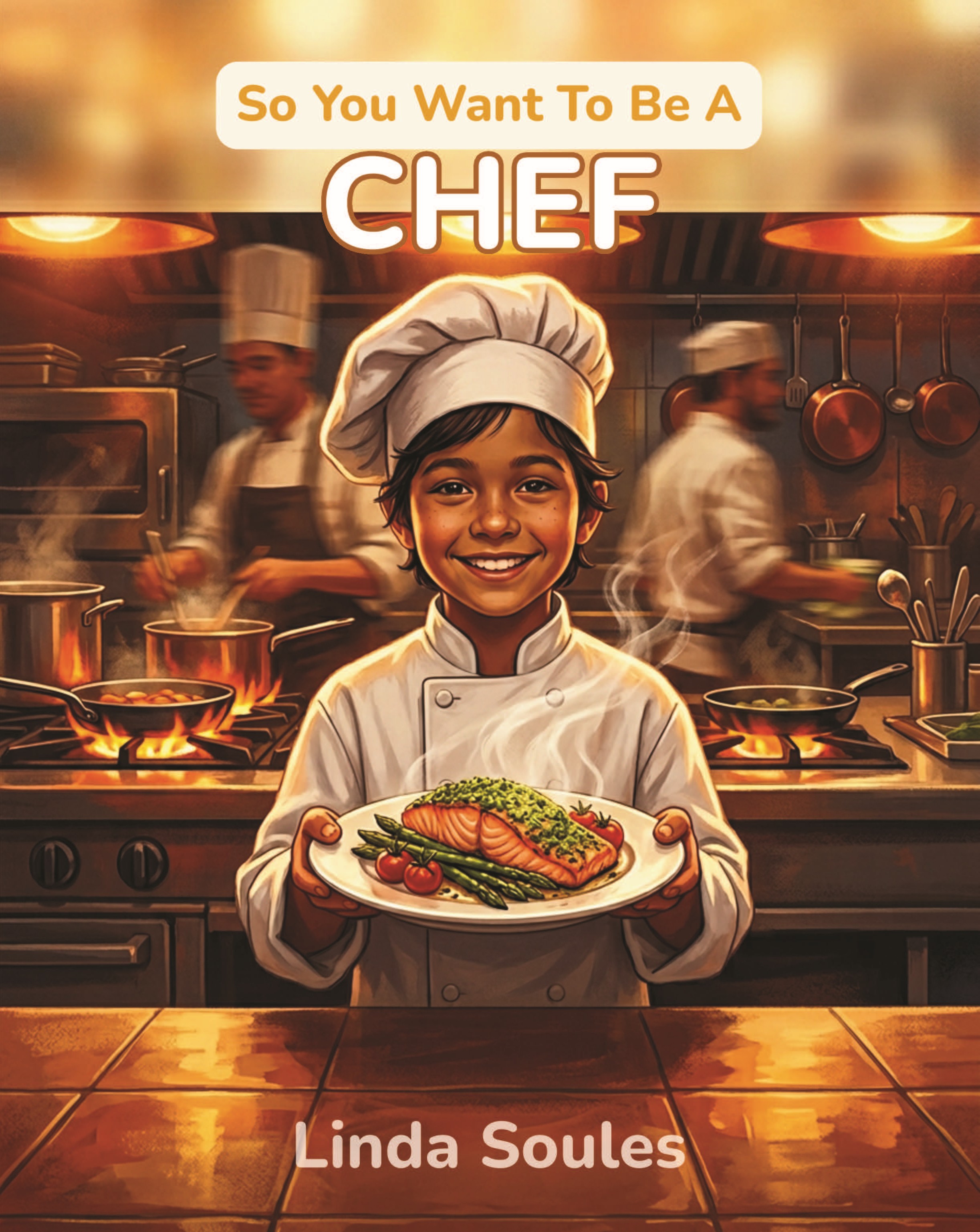
So You Want To Be A Chef
by Linda Soules
Key Takeaways
Summary
So. You want to be a chef. You picture yourself at a hot pan, knife in one hand and spoon in the other, tasting a sauce again and again until it is right. Then you send a plate across the pass to a server, knowing that someone is about to enjoy a meal you created. A chef makes food for other people, but the work behind that plate is anything but simple. Chefs stand for hours, make a stream of small decisions, and keep track of several pans and timings at once. The kitchen is hot, the pace is fast, and the clock is always counting. When the food is good, the kitchen is clean, and the last guest leaves happy, though, chefs describe a satisfaction unlike any other.
Cooking reaches back to the earliest days of human life. Long before writing or cities, someone stood over a fire and prepared something for someone else to eat. That purpose is still at the heart of professional cooking. Food is one way people care for one another: a homemade soup for someone who is sick, a packed lunch, or cookies brought to a friend after a hard week. A professional chef does the same thing on a larger scale. A dinner for a hundred guests is a way of looking after a hundred people, even when the chef never meets them.
It is easy to think that a chef’s job is simply to cook. In reality, a kitchen brings many kinds of work together, each demanding a different kind of attention. A pastry chef measures in grams with the precision of a watchmaker, because baking is chemistry. A bread baker tends an oven that may have been heating since midnight. Prep cooks chop, dice, blanch, and marinate, and may tend broths simmering for twelve hours. A fish cook might visit the market before dawn, choosing what the evening’s menu will become according to what came in from the boats that morning.
The head chef’s work includes tasting each component, adjusting sauces, rewriting the specials, and meeting with staff. The chef explains the dishes so servers can describe them clearly when guests ask questions. Then service begins. Orders arrive quickly, and the kitchen has to answer even faster. Pans hit burners, flames leap, and plates move toward the pass, where finished dishes are checked before leaving for the dining room. Every part needs to arrive at the right time. A chef has to bring together the broad view of a conductor, the curiosity of a chemist, and the speed of a sprinter, all in a room hotter and faster than most offices.
A professional kitchen has its own sound and rhythm: food hissing as it touches a hot pan, knives thudding against cutting boards, and cooks communicating sharply across their stations. The walk-in coolers at the back offer a striking contrast, cold and filled with fresh produce. That is where the day’s preparation begins. Cooks call this preparation mise en place, French for “everything in its place.” Ingredients are readied and organized before the rush, creating the order that lets a busy kitchen work quickly. The spaces themselves vary widely. A fine-dining kitchen may be surprisingly small, a hotel kitchen can be enormous, and a street-food chef might work from a cart smaller than a large closet.
A kitchen runs on a team in which each person has a particular responsibility. The executive chef leads the creative direction; the sous chef manages daily operations. Line cooks take charge of stations such as grill, sauté, pastry, or prep, while dishwashers keep clean equipment moving back into use. Without them, the work would stop. Beyond the kitchen, a general manager leads the front of house, and servers carry the kitchen’s food and explanations to the guests. Suppliers and farmers bring in the ingredients on which every dish depends. A chef who knows the farmers, visits the land, and understands where the food comes from brings that knowledge to the menu. The guest is the reason the kitchen fires up each night, and the server is the link between a chef’s work and the person who will enjoy it.
A chef’s knife is one of the most personal tools in the kitchen. Professional cooks can feel about knives the way musicians feel about their instruments. A well-made knife has enough weight for serious work but is balanced to suit the person using it. After years with the same knife, a chef comes to know its particular weight and shape. Knives need care: they are sharpened on a whetstone and honed on a steel before use. Other equipment helps control the details. Instant-read thermometers check temperatures quickly; timers keep processes on track. Cast iron holds heat, copper helps whip cream faster, and a mandoline can make slices thinner than a knife can.
For all that hardware, the chef’s most important tool may be a spoon. Cooks taste constantly, checking the parts of a dish as they develop. A recipe gives them a starting point, but the food in the pot determines what happens next. Tasting is feedback: it helps the chef decide what to adjust as the dish takes shape. Behind that spoon is the chef’s palate, the trained ability to recognize what food needs—perhaps more acid, less salt, a different texture, or more time. Some people may begin with a natural sensitivity to flavor, but a palate is built through years of attention and practice. The instruments and equipment serve the cook; the decisive judgment happens in the mouth and mind of the chef.
The rewards are often found in the response to a meal. A chef watches a guest take the first bite: the shoulders easing, the pause, the glance toward a companion. That small reaction can make the work feel worthwhile, because the dish has reached the person it was made for. Cooking is generosity, whether it is a bowl of soup for someone who is sick or a dinner prepared for strangers. Chefs also value the creative process: beginning with an ingredient or idea, testing a version, tasting it, changing it, and trying again. The kitchen can be a laboratory, and there is always another possibility to explore.
The same work brings disappointment and strain. A sauce that took hours to make can burn in a moment of distraction; a dish can be oversalted, and a customer can send back food the chef believed was perfect. During service, orders may arrive faster than they can be completed, while the cook must keep moving and maintain quality. Criticism can sting, whether it comes from a guest, an online review, or a critic whose judgment could affect a restaurant’s survival. Chefs must reconcile what they want to serve with what customers want to eat, and those standards do not always match.
Mistakes, though, are part of becoming skilled. A burned sauce teaches a cook about heat; an oversalted dish teaches restraint; a returned plate reveals a gap between the chef’s intentions and the guest’s experience. The important distinction is not between cooks who fail and those who never do. It is between those who learn from failure and those who cannot recover. Kitchens reward recovery: noticing what went wrong, correcting what can be corrected, and returning to the work with better judgment.
Cooking also involves surprising chemistry. Heat changes food at a molecular level: proteins unfold and recombine, sugars break down and form new flavors, and evaporating water concentrates what remains. The Maillard reaction happens when proteins and sugars are heated together. It creates the golden-brown crust on seared steak, the crackling skin of roasted chicken, and the dark surface of toasted bread. This browned layer is more than color; it carries flavor created by the heat itself.
Salt is another part of the science. Restaurant cooking often uses more salt than home cooks expect—not simply to make food taste salty, but to soften bitterness and bring other flavors forward. Chefs season in layers, adding salt at different stages instead of waiting until the end. They also adjust for ingredients that change from day to day: a batch of tomatoes may be sweeter than last week’s, cream may be richer, or stock may have reduced further and become more concentrated. A recipe cannot account for every variation. The chef must judge what is actually in the pot.
A working day begins well before dinner. At eight in the morning, the chef may visit a farmers market and choose ingredients in person. Fava beans may have arrived early, or a new producer may have brought a cheese worth featuring; those discoveries can change the evening’s specials. By ten, preparation is underway: vegetables are cut, proteins portioned, sauces started, and the components of service brought into readiness. Tasting during this work is quality control, not a formality.
At one, the team shares a staff meal and holds a pre-shift meeting. The chef explains the specials, tastes them with the staff, and answers questions so servers can describe the dishes accurately. Service begins at four. From the dining room, the rush may look like improvisation; inside the kitchen, it depends on dishes being assembled in the right order, at the right temperature, and at the right moment. When service ends around ten, the chef and sous chef review what worked and what did not. By eleven-thirty, the kitchen is clean, and the chef may already be changing one detail on tomorrow’s menu before heading home still smelling of dinner.
A restaurant’s work depends on relationships that extend beyond the stove. Farmers and suppliers bring the ingredients on which every dish depends; a chef who knows the people who grow or produce the food can bring a deeper understanding of its origin to the menu. The server carries the kitchen’s voice to the table, explaining a dish with accuracy and warmth. And the guest is not an afterthought: the meal’s purpose becomes real when the plate reaches the person who chose to spend an evening there. A guest who feels welcome before the first bite is already having a better experience.
Food can care for people without a speech or grand gesture. A meal says, “I thought about you. I made this for you. Sit down and eat.” Around a shared table, people slow down and pay attention to one another. A dish can become part of a memory that lasts long after the meal itself; ask someone about a dinner from childhood, and the food may bring back a whole kitchen. A chef can also connect people to a culture through its food, support local farms by buying from them, or pass practical knowledge on by teaching children to cook. Nourishment is only one part of what a meal can provide.
To do this work well requires qualities that develop over time. Sensory intelligence means learning to recognize what a dish needs, while composure under pressure allows a chef to stay precise as the pace intensifies. Respect for ingredients means treating each one as a partner and understanding it at its best. Creative discipline starts with learning established techniques thoroughly; only then can a cook break a rule knowingly and understand what the change is meant to achieve. Physical stamina matters too: a chef may stand for ten or twelve hours in the heat, moving continually, and must care for the body that makes that work possible.
Other abilities may seem less connected to cooking but matter just as much. Memory and emotion help a chef understand why a taste can evoke a grandmother’s kitchen, while technical skill alone cannot guarantee that kind of connection. Business sense helps a restaurant manage prices, rent, staff costs, ingredients, and waste. A small amount of food discarded nightly can add up over a year. Cultural curiosity matters as well: food expresses a culture’s history, climate, values, and creativity, and a chef who travels and eats with respect builds a wider understanding to bring back to the kitchen.
As those first dishes become more ambitious, the language of kitchens helps make the work easier to understand. A brigade is the structured team behind a professional kitchen, from the executive chef and sous chef to station cooks, prep cooks, and dishwashers. The arrangement is practical: each person has a defined role, and the work depends on those roles fitting together. Even a garnish—the small element added for color, flavor, or beauty—has a job to do. It is not merely decoration; it is the last brushstroke on the plate.
Other kitchen terms name techniques and judgments that a cook learns to recognize. Knife skills mean cutting quickly and safely into uniform pieces, so ingredients cook at the same rate. A reduction is a liquid simmered until it thickens and intensifies. To sauté is to cook quickly in a small amount of fat over high heat, while plating means arranging finished food so its appearance matches its flavor. The vocabulary points to a larger principle: good cooking is a collection of purposeful decisions, not a series of unexplained motions.
Some words describe processes that happen beyond the cook’s immediate control. The Maillard reaction is the interaction of proteins and sugars at high heat, producing the brown crust on seared meat, toasted bread, and roasted vegetables, along with many new flavor molecules. Umami names a deep, savory richness—the fifth basic taste alongside sweet, salty, sour, and bitter—which appears in foods such as Parmesan, soy sauce, mushrooms, roasted meat, and ripe tomatoes. And seasoning is not simply adding salt at the end. It means balancing salt, acid, fat, and heat until the ingredients taste like the fullest version of themselves. Learning these terms gives a cook a way to name what is happening, then decide what to do next.
The book’s suggested reading offers several ways to keep exploring. The Complete Cookbook for Young Chefs, from America’s Test Kitchen Kids, provides more than a hundred recipes tested by thousands of young cooks, with step-by-step photographs of real techniques. Its companion for teen chefs moves into dishes such as hand-pulled noodles, arepas, and congee, while explaining why the recipes work. That reasoning matters: a recipe can show what to do, but understanding why makes it easier to adapt when a cook encounters a different ingredient or result.
Other books open a window onto the many paths cooking can take. Chef Roy Choi and the Street Food Remix follows the Korean American chef who left fine dining to sell Korean barbecue tacos from a truck and helped launch the food-truck movement. Fry Bread: A Native American Family Story offers another way to think about what food carries. Its author’s note, the book suggests, is worth reading closely: a recipe can hold more than instructions, carrying a family’s and community’s story alongside the food.
Online resources can supplement books with demonstrations and experiments. America’s Test Kitchen Kids offers recipes, technique videos, and kitchen-science activities tested by young cooks; Food Network’s family and kids pages gather beginner-friendly recipes and cooking activities. For a more practical view of the occupation, the U.S. Bureau of Labor Statistics’ information on chefs and head cooks covers pay, training, and employment outlook, and is updated each year. Looking up the career means learning not only what chefs make, but also what preparation the work requires and how the profession is changing.
The suggested activities turn learning into a routine. Planning and cooking one meal each week means choosing a menu, pricing ingredients, shopping, and cooking—not simply following someone else’s recipe. It gives a young cook a small view of the decisions that surround a meal. Cooking the same dish three times, changing one thing each time—perhaps the amount of salt, the heat, or the herb—makes comparison possible. Tasting the versions side by side reveals how a small adjustment changes the result. That kind of experiment turns a vague impression into useful evidence.
Watching a cooking competition can be a different kind of lesson. The recommendation is to pay attention to the contestants’ hands rather than the scoreboard: how they handle ingredients, organize tasks, and move through a kitchen under time pressure. The point is not to mistake a television contest for the whole profession, but to notice the practical work taking place as the clock runs. A beginner can also look for structured opportunities nearby. ProStart is a two-year culinary and restaurant-management program offered in high schools across the country, with competitions and scholarships. The James Beard Foundation offers scholarships for students pursuing culinary school, and local 4-H clubs may offer cooking and food-science activities, from knife basics to gluten chemistry. Entering a dish at a county fair can bring a project out of the kitchen and into a community setting.
The recommendations include a reminder that culinary work has responsibilities beyond a restaurant’s menu. No Kid Hungry works to end childhood hunger in America. The book places it among organizations to know because feeding people is not only a matter of creating an impressive dish; it also involves recognizing whether people have access to food at all. The different resources—from a beginner’s recipe book to a school program, a scholarship organization, or a community food effort—show that learning to cook can lead toward many kinds of participation.
A taste journal can make that learning more deliberate. Instead of writing only that a meal was good, a cook can record what stood out: perhaps it was salty and slightly sour, crisp outside and soft inside. The glossary gives names to some of those observations, while the books, videos, experiments, and programs offer ways to investigate them. One dish can become a series of questions: what changed when the heat was higher, which ingredient contributed the savory depth, and whether the final plate needs anything more. Each answer provides a starting point for the next trial.
That curiosity also means looking backward, because food carries history in its ingredients, methods, and memories. Edna Lewis made that history visible in American fine dining. The granddaughter of formerly enslaved people, she grew up in Freetown, Virginia, where the seasons shaped what her community ate: wild greens picked in spring, pork smoked over hickory, and strawberry preserves put up in June. Lewis brought the flavors of her childhood into celebrated restaurants and writing, insisting through her work that Black communities’ cooking was not merely a folk tradition. It was American fine dining, and it had always been.
Julia Child helped make another food tradition accessible to American home cooks. Nearly forty, and without cooking-school experience, she enrolled at Le Cordon Bleu in Paris. Male classmates largely dismissed her, but she mastered French cuisine and brought it into American kitchens. On television, she let viewers see her make mistakes, laugh, and keep going. Her example made the kitchen feel less like a place reserved for experts and more like somewhere anyone could learn.
Massimo Bottura’s cooking grew from memories of Modena, Italy. As a child, he hid beneath a kitchen table while his grandmother rolled pasta above him, flour drifting down onto his feet. At his restaurant, Osteria Francescana, he later took apart the regional recipes his neighbors held sacred. He might present Parmesan cheese in five forms, representing five different ages, or turn a dropped lemon tart into a dish named for the accident. Some neighbors called him a traitor to their food. The restaurant was eventually named the best in the world twice. Bottura and his wife, Lara Gilmore, also opened community kitchens where food headed for the garbage becomes meals served on real plates at real tables to anyone who needs one. His work shows how a chef can challenge tradition while remaining rooted in place—and can put cooking to work for a community.
Even familiar foods have unexpected histories. Chili peppers’ capsaicin doesn’t physically burn; it activates nerve receptors that signal heat. Birds don’t feel the effect, so they can eat peppers and spread the plants’ seeds, while mammals are more likely to chew the seeds up. Lobsters, now considered expensive, were once so plentiful they washed ashore in piles and were used as fertilizer. Some servants’ contracts even limited how often employers could serve them.
Chocolate began as a bitter, spicy drink made from ground cacao, water, and chili pepper. The Aztec emperor Montezuma reportedly drank fifty cups a day. Europeans later added sugar and milk, eventually creating solid chocolate. These changes are reminders that what seems timeless on a modern menu may have travelled through centuries of experimentation, trade, and changing tastes.
Cooking also rewards curiosity about small technical details. A dull knife can be more dangerous than a sharp one because it takes extra force and may slip unpredictably; professionals sharpen their knives constantly. Different fats tolerate different temperatures: butter burns at 350 degrees Fahrenheit, olive oil at 410, and clarified butter at 450. Knowing a fat’s smoke point can mean the difference between a golden sear and bitter food. And some Japanese sushi chefs spend a decade or more studying a single technique; a chef may devote two years to cooking and seasoning rice before ever handling fish. Mastery can mean giving extraordinary attention to one apparently simple part of a meal.
A future chef doesn’t have to wait for professional training to begin. Cook something simple and real today: scrambled eggs, a carefully made sandwich, or a salad dressed with olive oil and lemon. Notice what happens at each step. How does the egg change as it heats? What does salt do to the flavor? The point is not to produce a perfect dish, but to learn to pay attention.
A taste journal can make that attention more precise. When something tastes especially good, describe it beyond “delicious”: perhaps salty and slightly sour, crisp on the outside and soft within. Record what you cooked, who you made it for, what worked, and what you might change next time. Learn knife skills carefully, asking an adult to teach you the grip, guide hand, and rocking motion. Try both cooking and baking, noticing how baking depends on exact measurements while cooking allows more improvisation.
Exploration can happen beyond the home kitchen, too. Taste a food you’ve never tried, perhaps at an international grocery store or a restaurant serving a cuisine unfamiliar to you. The book’s suggestions for learning include cookbooks for young chefs, cooking and food-science resources, and opportunities such as 4-H clubs, high-school ProStart programs, and scholarships through the James Beard Foundation. A practical exercise is to plan and cook one meal each week, including choosing a menu, pricing ingredients, shopping, and preparing the food. Another is to cook one dish three times, changing one thing each time—more salt, higher heat, or a different herb—and comparing the results. That loop of trying, tasting, and adjusting is how dishes develop.
The questions worth carrying into a kitchen are simple, but they open up many possibilities: What does this ingredient want to become, and how can I get out of its way? How will the dish make someone feel at the first bite? What could I remove so that everything else tastes more like itself?
A child watching someone cook closely—the sizzle, the smell, the movements at the stove—is already practicing the attention the work requires. Interest in food means more than enjoying a meal: it means wondering how heat changes ingredients, how flavors fit together, and how making something by hand can become a gift. No one needs to know immediately whether cooking will become a career. The place to begin is a simple dish made for someone you love. A future chef might burn the rice or make a loaf dense as a doorstop; what matters is returning to the kitchen, learning from the attempt, and choosing to cook again.
Chapter Summaries
What If You Were a Chef?
At the heart of the work is the idea that food is a form of care. Family members and friends express affection through everyday cooking, and professional chefs do the same on a larger scale. A chef serving a hundred guests may never meet them all, but each carefully prepared meal can still offer comfort and pleasure.
The Kitchen, the Team, and the Tools
The setting varies from a compact fine-dining kitchen to a large hotel operation or a small street-food cart, but preparation is essential everywhere. Mise en place—having everything prepared and organized before cooking—supports the work of service. Knives, thermometers, timers, pans, and other equipment all matter, but the book emphasizes two less visible tools: the spoon used for constant tasting and the trained palate that guides adjustments.
The Rewards and Challenges of the Job
The same pressure that makes the work exciting also makes it difficult. Food can burn, become oversalted, or be returned by a customer, while a busy service requires physical energy and clear decisions even when orders are piling up. Rather than promising perfection, the book presents recovery as a central professional skill. Each mistake can teach something about heat, restraint, or a guest’s expectations, although chefs must continually balance their own standards with what customers want.
Surprising Science and a Day in the Life
A sample workday shows how a chef’s responsibilities stretch from ingredient selection to post-service review. The chef visits a farmers market, adjusts specials to match what is fresh, oversees preparation, shares a staff meal, explains dishes to servers, and leads the team through dinner service. Afterward, the chef and sous chef discuss what worked and what did not before cleaning the kitchen and planning a change for the next day. Throughout, tasting helps the chef respond to differences in ingredients and cooking conditions.
People, Purpose, and the Qualities of a Chef
Cooking can help people in ways that extend beyond the meal itself. A shared table encourages conversation and connection, while a chef can introduce diners to another cuisine, support local farms, or teach children a lifelong skill. The book identifies sensory intelligence, composure, respect for ingredients, creative discipline, and physical stamina as key qualities. It also highlights how meals can connect with memory and emotion, making technical skill only one part of a meaningful dining experience.
Unexpected Lessons, Food History, and Curiosity
Profiles of Julia Child, Edna Lewis, and Massimo Bottura show different paths to influence. Child studied French cuisine as an adult and made cooking feel accessible; Lewis celebrated the Southern food traditions of her childhood and helped establish their place in American fine dining; Bottura reimagined regional Italian dishes and later helped create community kitchens that turn surplus food into meals. Fun facts about chili peppers, lobster, chocolate, sushi training, and cooking fats reinforce the book’s broader invitation to investigate how food works and how its meanings change.
Getting Started and Imagining the Career
The book’s questions for future chefs focus on understanding an ingredient, considering how a dish will make someone feel, and identifying what can be removed to let the remaining flavors stand out. It closes by reassuring beginners that celebrated chefs also started with mistakes; persistence matters more than innate talent. Career resources, a glossary of kitchen terms, and suggestions for books, programs, and activities offer ways to continue learning, while the author’s final message is simple: cook for someone you love, learn from the result, and return to the kitchen.
Notable Quotes
Food is how people take care of each other.
A chef is a conductor, a chemist, and a sprinter — doing all of it at once, in a room hotter and faster than most offices will ever be.
The kitchen does not reward perfection. The kitchen rewards recovery.
The chef who listens to the pot makes the better dish. Every time.
Food is not just fuel.
Nobody is born a great chef.
The kitchen does not care about your mistakes. The kitchen cares that you came back.
