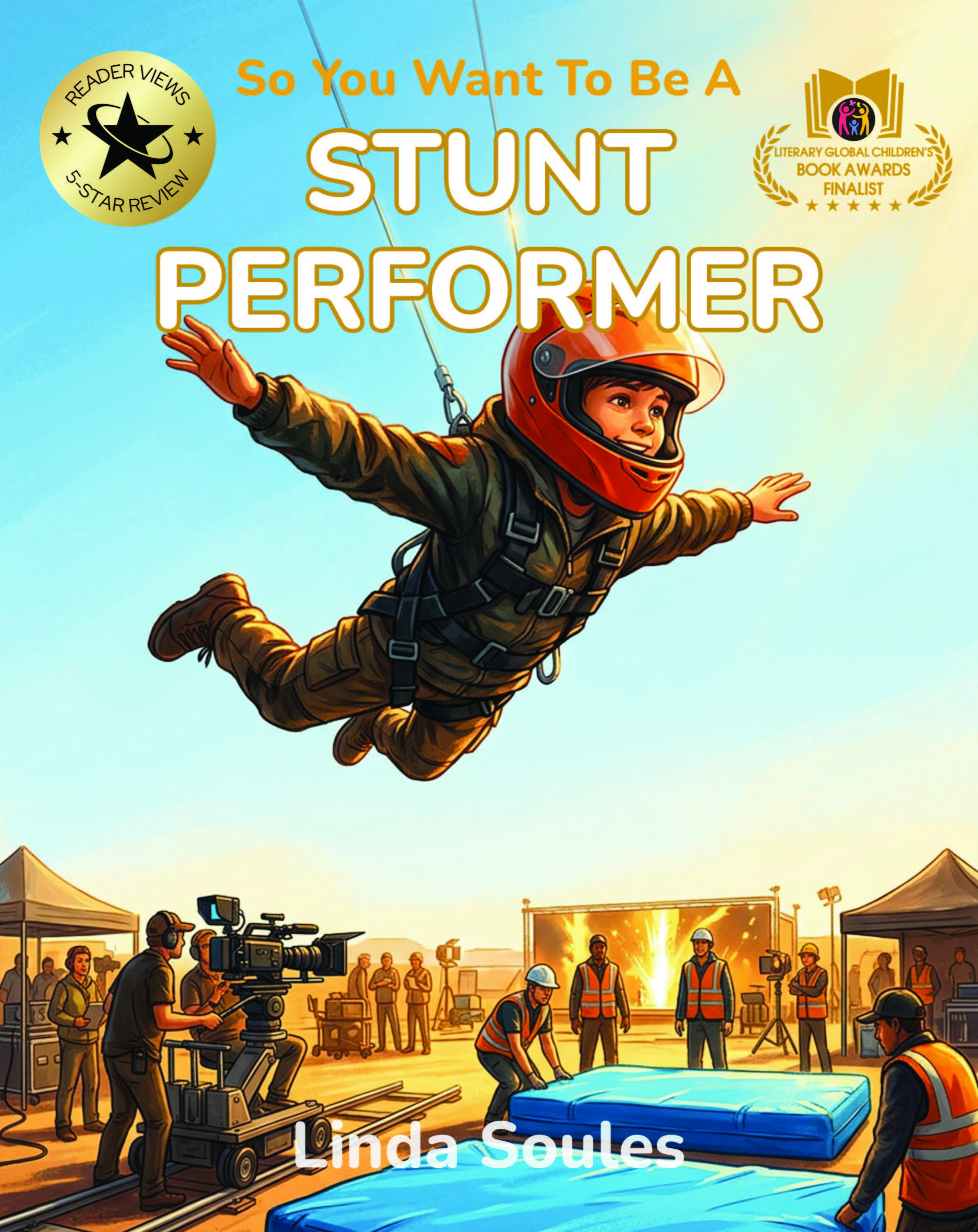
So You Want To Be A Stunt Performer
by Linda Soules
Key Takeaways
Summary
A stunt performer’s work begins long before anyone calls “action.” Each stunt is first broken down: the script is read to identify the physical action, then the team plans how to achieve it while protecting the performer. The stunt breakdown is the blueprint, setting out the action, the equipment, the physical calculations, the rehearsal schedule, and backup plans. A fall, for example, must be considered in terms of its distance and impact force; a wire sequence in terms of the load on its cables and harness; a fire gag in terms of how long the performer will burn before being extinguished. Equipment is chosen to withstand significantly more than the forces expected in the stunt. The aim is not to guess that everything will go right, but to anticipate how it might go wrong and build protections around those possibilities.
Next comes rehearsal, usually at gradually increasing difficulty. Performers practice the movement until it becomes familiar, while the team checks that the safety systems work as intended. Only after those checks does the stunt move toward its full performance. On the day, the stunt coordinator runs through a complete checklist and remains prepared to stop the action at any moment. The performer’s physical ability matters, but so does the mental discipline to commit fully to a movement that seems dangerous while trusting a sequence that has already been practiced repeatedly.
For one experienced performer, the foundation of that discipline began with her mother, a professional dancer. She taught her that falling is a skill, not a failure: a dancer who can fall beautifully has more control over her body than one who never falls. The body, in this view, is an instrument that can be trained to perform extraordinary movements with precision. A fall is not simply something that happens to a performer; it is something to learn and execute. Stunt coordinators apply the same careful thinking to the entire sequence. They plan the action, imagine ways it could fail, and design protections accordingly.
The work takes place in settings chosen for both the story and the safety requirements. A car chase might use a closed street or a purpose-built track. A high fall may be staged on a soundstage, with crash pads hidden outside the camera’s view. Fight scenes happen on sets where furniture is checked and surfaces are assessed, so that the choreography can be performed without unexpected hazards. Rehearsal spaces matter just as much as filming locations: coordinators test sequences before cameras roll, and wire rigs are tested and retested. Learning to work in different environments takes time, because each setting presents its own practical demands.
The equipment is selected for the particular action and performer, not simply grabbed from a general supply. Crash pads are thick foam mats positioned out of frame. For a fall from great height, a large airbag may be needed. Its size, position, and inflation pressure are calculated according to the performer’s weight, the height of the fall, the body position at landing, and the amount of force that must be absorbed. The goal is to slow the body’s deceleration enough to help prevent injury. A crash mat is therefore a precision safety tool, not merely a soft cushion placed beneath a performer.
Wire rigs and harnesses support performers during high falls, wire-assisted fights, and flying sequences. A descender controls how quickly the cable pays out, while the wires can be removed digitally from the finished image. The audience may see a person flying, but the performer is supported by a harness and cable system. Each wire must be rated well above the load it will actually carry: a wire holding a 150-pound performer, for instance, must be rated for 1,500 pounds. The system has to suit the planned movement and forces, and it is tested before use.
Fire work requires its own layers of preparation. A performer wears a full-body flame-resistant suit beneath the costume, and fire gel forms a cooling barrier that delays heat for a calculated number of seconds. The burn is timed precisely, with the safety team knowing when to extinguish the flames. Protection does not make the performer’s exposure unlimited; it creates a brief, planned window in which the effect can be carried out. The suit, gel, burn duration, and extinguishing procedure all have to work together.
Props and set materials are prepared so that they can break safely. The glass used in a breaking-window stunt is often sugar glass, made from sugar, corn syrup, and water poured into window-shaped molds. Unlike ordinary glass, it breaks into blunt pieces that do not cut in the same way. Breakaway furniture is built to collapse safely, and every prop involved in the action is manufactured or modified for that purpose. The visible crash or shatter is only possible because the materials have been chosen and prepared for the performer’s specific movements. Before filming, all of these pieces—locations, equipment, choreography, and safety systems—must fit together in a sequence the team has rehearsed and checked.
Once the preparation is complete, the best part of the job is the moment when years of training meet the action itself. A performer may fall, fly, drive, or fight in ways most people only imagine, then walk away because the movement has been practiced and controlled. In those seconds, concentration becomes total: courage, skill, and training come together in a precise sequence. The reward is not fame or credit. Stunt performers often double for the world’s most famous actors, but the audience is not meant to notice them. Their work succeeds when the illusion is complete, the actor remains safe, and the story is carried by the body. Watching the finished scene, with every frame shaped by hours of preparation, can be its own deeply satisfying payoff.
That payoff comes with risks that cannot be wished away. Wires can malfunction, a fall can land slightly wrong, and a vehicle stunt can behave differently from its rehearsal. Planning lowers the chance of injury but cannot make it zero. Repeated impacts also accumulate: falls, fights, crashes, and fire work can leave performers managing injuries while trying to recover between production days. A schedule may not give the body all the time it needs. The body is the one tool that cannot simply be replaced, so protecting it is part of the job.
One of the profession’s most important skills is refusing to proceed when the plan is not good enough. A performer may need to say that equipment has not been tested, rehearsal time is insufficient, or conditions are unsafe. Such a refusal may be unpopular, but it can prevent a life-changing injury. Modern stunt work relies on a safety culture in which performers can refuse unsafe work, coordinators can stop a stunt, and safety meetings make hazards and responsibilities clear. The ability to say no is not a failure of courage; it is a way of making sure courage is not mistaken for carelessness.
The job also contains a surprising contradiction: the performer must look as though a movement is happening by accident while executing it with exact control. Someone tumbling down stairs has specific steps and body positions to hit, even while appearing helpless. The more convincing the chaos looks, the more carefully the performer must know where they are going. Much of the work is repetition rather than spectacle. Performers may walk through a sequence slowly, then repeat it until the movement is familiar enough to perform reliably at speed. When filming finally captures a few seconds, the audience sees apparent spontaneity; the performer is carrying out something practiced into routine.
Athletic versatility is essential. Stunt performers may need to drive, ride, swim, climb, fight, fall, or fly, and their physical preparation continues across a career. But athleticism alone is not enough. They also need emotional readiness: the ability to show fear, pain, or panic while remaining calm enough inside to follow choreography and hit marks. Looking terrified while mentally tracking a shoulder position or a breakaway cue is a demanding form of acting.
A performer’s ego must be the right size. Confidence helps them commit to a rehearsed action without hesitation, but they must also recognize their limits. Overconfidence can turn a controlled stunt into a dangerous one. They need physical awareness, too: proprioception, the sense of where the body is in space without having to look. A performer in midair may feel whether a shoulder is too high, a rotation is off, or the speed is wrong. That awareness takes years to develop.
Technical understanding helps keep that body safe. Every stunt involves physical forces—height, distance, speed, and impact—and performers need to understand the calculations behind the action. Acting ability gives the movement meaning: the stunt must fit the character and tell the story, not merely look impressive. Communication brings the whole effort together. Directors, camera operators, drivers, effects technicians, and safety teams need clear information and precise coordination. The performer is part of a group solving a problem, not an athlete acting alone.
The stunt coordinator designs and oversees the action and bears responsibility for safety. A rigger handles cable systems, while a medic is present during stunt shooting. Camera teams work closely with performers so that the action can be captured without compromising safe movement. The actor being doubled also matters: the double must match the actor’s appearance and movement closely enough for the audience to accept the illusion, and that actor’s trust rests on the double’s preparation. Stunt professionals also keep records of significant work—what succeeded, what went wrong, and what could be improved. Sharing experience can help protect the people who take on similar actions later.
The history of stunt work shows both its creativity and its cost. Dar Robinson, regarded as one of the great precision performers, set nineteen world records and made a 700-foot freefall from the CN Tower in Toronto for the 1982 film *Highpoint*, doubling for Christopher Plummer. He invented the decelerator, a cable system that let a camera film a high fall from above without showing an airbag. Robinson never broke a bone during nineteen years of stunt work, yet he was killed in 1986 during a routine motorcycle ride filmed after the day’s difficult stunts. His death reinforced a hard lesson: even apparently easy moments demand the same care as the spectacular ones.
Zoë Bell began as a gymnast in New Zealand and became the stunt double for the lead on *Xena: Warrior Princess*. She later doubled for major Hollywood actresses, performed a perilous stunt clinging to a speeding car in a Quentin Tarantino film, and became a respected coordinator who trains and hires women entering the profession. Jackie Chan’s path began with Beijing opera training in acrobatics, martial arts, and physical storytelling. As a Hong Kong film star, he insisted on doing nearly all his own stunts, from falls off clock towers to leaps between rooftops. He has broken many major bones and included footage of injuries in his films’ outtakes, making visible the physical price behind the spectacle. His training tradition continues to shape stunt work around the world.
For the audience, the purpose is to feel a car chase in the pulse, gasp at a fall, or believe a fight has real force. Stunt performers make those moments possible while remaining largely unseen. Their work can help films tell stories about courage, conflict, and powerful characters, and the safety practices developed by stunt professionals influence how action is made across filmmaking. The people in the credits may be hidden behind the illusion, but the audience’s response depends on the precision and teamwork they bring to it.
The difference between what the audience sees and what the performers actually do is especially clear across a working day. A stunt may occupy only a few seconds in the finished film, but its place in the schedule is surrounded by meetings, adjustments, checks, and repetition. At seven in the morning, the performer meets the stunt coordinator to review the day’s assignments: a vehicle extraction and an alley fight. The fight has already been rehearsed since the previous week, but preparation does not end when the team reaches the set.
At eight-thirty, the full group attends a safety meeting. The team identifies the hazards of the day, including the ground surface, the vehicle’s condition, and how the camera positions affect which directions are safe to fall. Everyone confirms their role in an emergency. By ten, rehearsal has moved onto the actual set. The space differs from the rehearsal area, so the performer and fight partner adjust two beats that do not read clearly from the camera’s angle. The choreography must work for the story and the shot without losing the precision on which the action depends.
At twelve-thirty comes wardrobe and look matching. Because the performer is doubling for a particular actor, costume and physical presentation are checked against reference photographs. A double must resemble the actor not only in general appearance but in the specific details visible at a distance. At two, the vehicle extraction is filmed: the car approaches at speed, stops abruptly, and the performer exits quickly and low, crossing over the hood. The team does it three times; the third take is the one the director wants. At seven in the evening, the coordinator debriefs with the performer, who is sore in particular places and plans to treat them that night. The next day’s call sheet brings a different sequence, so the performer studies it before work begins again.
That routine makes clear that getting started does not mean trying a dangerous stunt alone. It means learning to notice what makes a movement safe, and building the discipline to think before acting. A young person can begin by practicing a basic fall on a soft surface, such as grass or a gym mat, with a parent supervising. The book suggests a backward fall from standing: bend the knees, tuck the chin to protect the head, and roll onto the back. Even this simple exercise is presented as a skill to learn carefully, not a dare to attempt recklessly.
Another useful first step is to write a breakdown for a very simple action, such as jumping from a low step or rolling across the floor. Identify what happens, consider the landing surface, ask whether it is soft enough, imagine what could go wrong, and decide how to prevent it. Writing the plan down turns attention toward the thinking behind the movement. Keeping a stunt book can extend that practice: record what was attempted, what worked, and what might need adjustment. The point is not to collect spectacular feats, but to develop the habit of planning.
Watching films closely can become a form of study. Behind-the-scenes footage reveals the equipment and people hidden from the finished image. In a fight scene, look for the spaces between punches, the kicks that stop short, and the reactions performed rather than caused by contact. Stage combat is choreography disguised as conflict, and attention makes its careful construction easier to see. Training can also begin with one physical discipline—gymnastics, martial arts, swimming, or general conditioning—practiced consistently. Stunt performers build a broad physical foundation rather than relying on one impressive trick.
The questions that matter are not simply whether someone enjoys excitement or can tolerate fear. A performer has to ask what might go wrong, whether the plan accounts for it, how to appear out of control while remaining controlled, and how to protect the body well enough to work again. The career may suit someone who enjoys physical challenges but also approaches danger thoughtfully, who wants to help create the moment that takes an audience’s breath away, and who accepts that the work is often anonymous. The job is not a license to improvise; it is a responsibility to plan, rehearse, and perform with confidence grounded in preparation.
The vocabulary of the profession reflects that responsibility. A dry run is a full rehearsal at reduced speed, without cameras, so that every person understands where they should be and what should happen. A mark is the precise spot a performer must reach for the camera, choreography, and safety to align. A stunt reel is a short video showing a performer’s abilities, used when seeking work. These terms point toward a path built from demonstrated skills and dependable practice, rather than simply asking for a first job.
For anyone who wants to explore further, the book points to several kinds of resources. Books such as *Stunt Performer: Life Before the Camera* offer a closer look at hiring, pay, and the route into the profession; *Fearless! Stunt People* explores driving, fight work, and the relationship between practical stunts and digital effects. The International Stunt School in Seattle publishes a training syllabus describing the range of skills expected of working performers. SAG-AFTRA’s Stunt & Safety pages explain the rules around safe work, including the coordinator’s authority to stop a stunt and a performer’s right to refuse unsafe work. The United Stuntwomen’s Association and International Stunt Association offer ways to learn about professionals and organizations in the field, while gymnastics clubs provide a place to begin developing tumbling, trampoline, and acrobatic skills.
There are practical ways to look beyond the page, too. Stay through a film’s credits and notice the stunt coordinator and stunt doubles. Watch a live stunt show from the side, where the marks, pads, and carefully controlled movements may be easier to spot. Look up a stunt reel and observe how much technique can appear in a few seconds of footage. Each exercise shifts attention away from danger as spectacle and toward the choices that make performance possible.
The author’s final challenge is to recognize that modern safety practices were built in the wake of injuries and deaths. Checklists and stop-work authority are not needless obstacles; they reflect hard lessons about what happens when preparation is missing or someone is pressured to agree. The courage required is therefore not simply the courage to leap. It is the courage to wait, question, or refuse until the conditions are right. For a future performer, the first step toward making the impossible believable is learning to land safely.
Chapter Summaries
What a Stunt Performer Actually Does
The book opens by explaining the defining paradox of stunt work: audiences must believe a character is in danger, while the performer must be protected by a carefully engineered plan. A high fall, for example, may appear to be an uncontrolled plunge, but it involves a hidden airbag selected for the fall, a backup wire and harness, and rehearsals that gradually build up to the final height. A scene lasting seconds can require hours of preparation. The performer’s job is not to take a reckless chance, but to make a planned action look convincing. A stunt breakdown turns the idea into a practical sequence: identify the scripted action, design a safe method, calculate relevant forces and equipment requirements, rehearse progressively, and complete a checklist before the take. The stunt coordinator considers how the stunt could fail and plans protections accordingly. The book also presents falling as a trainable physical skill, drawing on a performer’s early lessons from a professional dancer: a disciplined body can learn to fall with control. Preparation, rather than improvisation, is what allows performers to commit to the movement with confidence.
Workplaces, Equipment, and Preparation
Stunt performers work in varied settings, from closed streets and purpose-built driving tracks to film stages, fight sets, and rehearsal spaces. Each environment creates different demands. A set may have to be adjusted after a rehearsal because its dimensions or camera angle differ from the practice space, while vehicles, surfaces, props, and wire systems all need to be checked and tested. The book introduces the tools that make risky-looking action safer. Crash pads and large airbags absorb impact, with their position and characteristics calculated for the performer, fall, and landing. Wire rigs support falls, fights, or flying effects, and the cables are removed from the finished image. Fire suits and cooling gel provide protection during timed burns, while sugar glass and specially constructed breakaway furniture are designed to shatter or collapse without the hazards of their real counterparts. These are not interchangeable props: each is a precision tool chosen and prepared for a particular stunt.
Rewards, Risks, and the Surprising Reality of the Job
The rewards of stunt work include the rare physical challenge of falling, flying, driving, or fighting as part of a story—and the satisfaction of seeing years of training come together in a precise performance. Stunt performers may double for famous actors, but the work is usually meant to go unnoticed. Their success is measured in part by whether the illusion feels seamless and the story remains the audience’s focus. The book is equally direct about the costs. Careful preparation lowers the chance of injury but cannot erase risk, and repeated impacts can wear down the body over time. Production schedules may not leave enough time to recover, so performers have to protect their health and speak up when the plan is inadequate. The most surprising feature of the job is how little of it is spontaneous: a performer may spend many more hours rehearsing than filming, hitting precise marks while making a fall or fight look uncontrolled. The book’s guiding principle is that the visible danger is an illusion, but the safety must be real.
Skills and Qualities of a Stunt Performer
The book identifies the discipline to say no as a performer’s most important quality. A stunt professional must be willing to reject insufficient rehearsal, untested equipment, or unsafe conditions, even when doing so delays production or disappoints others. This is not a lack of courage; it is a form of responsibility to the performer, the crew, and the wider safety culture. Physical versatility matters too. Driving, riding, swimming, climbing, fighting, falling, and flying may all be relevant, so general athletic development and ongoing training provide a strong foundation. Performers also need emotional readiness: they may portray fear or pain while remaining calm enough to count movements and hit marks. Proprioception—the sense of where the body is in space—helps them judge rotation, position, and landing. In addition, the work benefits from acting ability, communication, basic physics, and an ego balanced between confidence and honest awareness of personal limits.
Teams, History, and the Audience
Stunt work depends on a coordinated team. The stunt coordinator designs and oversees the action and carries a central safety role; performers and doubles execute it; riggers handle cable systems; medics are present during stunt shooting; and directors and camera crews work with the team to achieve the intended image without compromising safety. The actor being doubled also places trust in the performer’s preparation. Stunt professionals share records of what worked and what failed so that lessons can improve future practice. Profiles of Dar Robinson, Zoë Bell, and Jackie Chan show different paths through the profession. Robinson’s precision, innovations, and tragic death illustrate why even routine moments deserve careful planning. Bell’s journey from gymnastics to stunt doubling and coordination highlights training and leadership, including opportunities for women in the field. Chan’s background in acrobatics and martial arts demonstrates the importance of physical storytelling and a distinctive stunt tradition. The book connects this work to audiences: action scenes that create suspense or inspire a sense of bravery are possible because professionals planned, rehearsed, and safely executed the moments viewers remember.
A Day on Set and Getting Started
A sample workday shows how much coordination surrounds a stunt. It begins with a production call and a review of the day’s action, followed by a safety meeting that names hazards, checks vehicle conditions and surfaces, and assigns emergency roles. On-set rehearsal may require changes to choreography when the actual space or camera angle differs from the practice area. Costume and appearance are then checked so a double matches the actor, before a vehicle sequence or fight is filmed in carefully controlled takes. The day ends with a debrief, attention to soreness or injuries, and preparation for the next call. For young readers who want to explore the field, the book recommends supervised, low-risk preparation: practice basic movement on a soft surface with adult guidance, write a breakdown for a simple action, study behind-the-scenes footage, and look for the carefully choreographed gaps in screen fights. It also encourages broad physical training and keeping a notebook of practice, plans, and lessons. These activities are ways to understand the profession’s habits of observation, communication, and safety—not instructions to attempt dangerous stunts.
Career Reflection and Further Exploration
The closing sections invite readers to consider whether they enjoy physical challenges, approach risk thoughtfully, and want to help create memorable moments behind the scenes. A short set of questions captures the job’s mindset: consider what could go wrong, make an apparently chaotic action controlled, and protect the body so it can work again. The glossary explains professional terms such as “dry run,” “mark,” “high fall,” “stunt breakdown,” and “stunt coordinator,” showing how stunt work relies on a shared technical vocabulary. The author’s note emphasizes that modern safety practices were shaped by injuries and deaths, making checklists, authority to stop a stunt, and the right to refuse unsafe work essential rather than bureaucratic. The book then points readers toward books, training organizations, union safety information, stunt shows, and behind-the-scenes material. Its final message is that imagination and ambition should be paired with preparation: learn, plan, check the safety, and understand that the courage required is often the courage to wait or refuse until a stunt is genuinely ready.
Notable Quotes
Making safety look dangerous is the profession's defining skill.
The stunt performer who skips the plan is improvising with their body — and the body does not have an undo button.
The stunt performer’s most important skill is saying NO.
Only the performer who knows exactly where they are going can look like they have no idea.
The danger is an illusion. The safety is real.
The body is irreplaceable. Every other tool can be rebuilt. The body cannot. Protect it.
The courage the job asks for is not the courage to jump. It is the courage to refuse to jump until you're certain you'll land.
Every stunt you will ever see was a plan before it was a picture.
