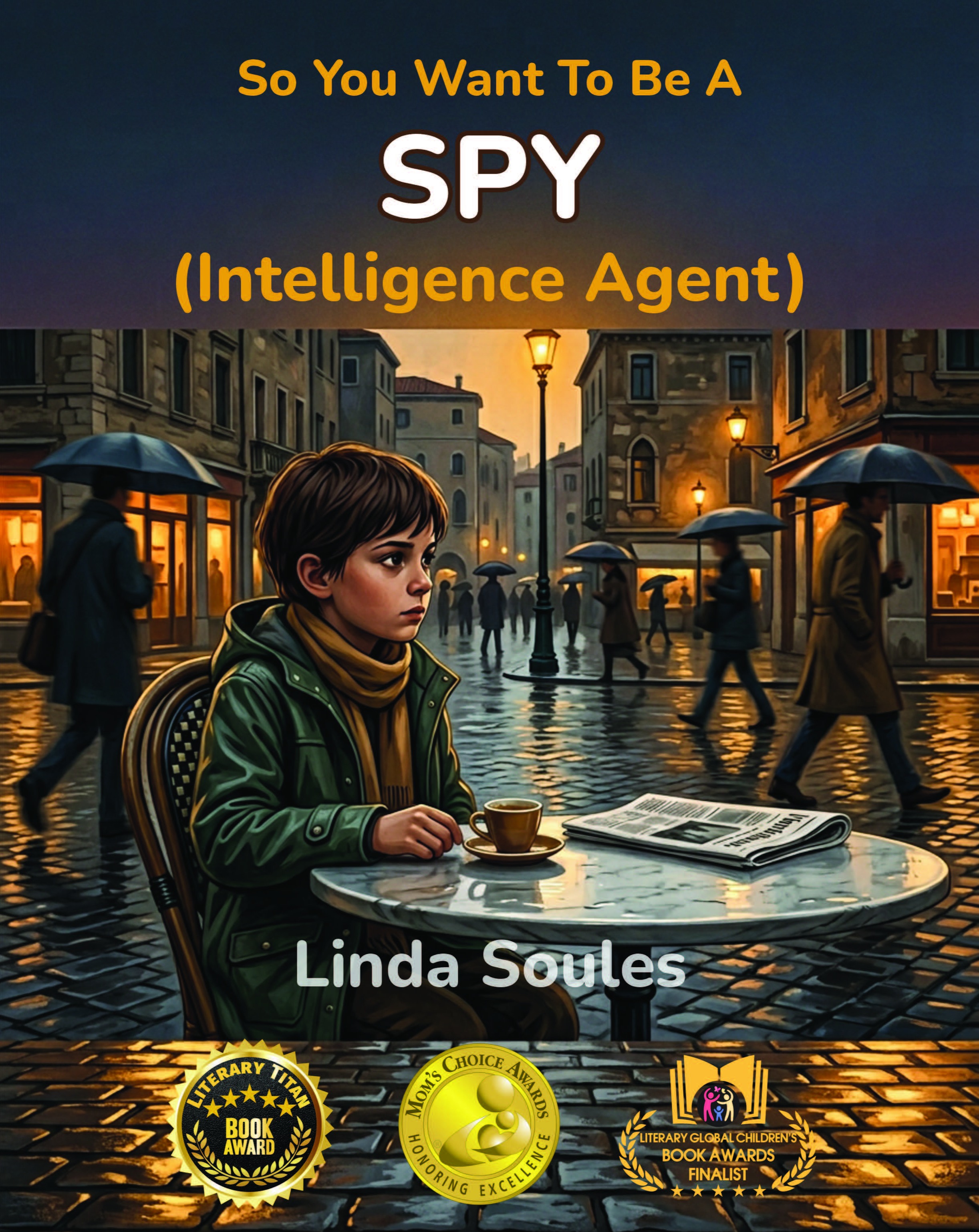
So You Want To Be A Spy (Intelligence Agent)
by Linda Soules
Key Takeaways
Summary
Imagine the world’s hardest puzzle, with pieces arriving from everywhere: a news report from one country, a satellite photograph from another, a public speech whose meaning may be more complicated than it first appears, a banking record that does not add up, or a conversation carefully observed and reported. Thousands of pieces may come from hundreds of sources, in dozens of languages. Some sources are reliable, some are mistaken, and some are deliberately trying to mislead. Most of the pieces are missing, too. Intelligence professionals rarely see a complete picture; they work with fragments, hints, patterns, and gaps, and must distinguish what the evidence suggests from what it cannot establish.
That is why intelligence is not simply the acquisition of secrets. It is the work of gathering information, judging its quality, analyzing what it means, and communicating the result to people who need it to keep the country safe. An intelligence agent looks for things that matter to national security, including information others are working hard to conceal. The clues can come from public records and news reports, intercepted messages and computer data, photographs taken by satellites high above Earth, or people on the ground who provide information. Each source offers only part of the picture. The work is to assemble those parts and consider how they fit together.
Analysis is at the heart of the process. The analyst receives raw information and asks what it means: What pattern might connect these details? What other explanations could account for them? Which explanation is best supported by the evidence? Information may be incomplete or contradictory, so the analyst must think clearly, write precisely, and resist the temptation to claim more certainty than the facts permit. The analyst is the engine of the intelligence enterprise: without careful interpretation, even a large collection of information cannot answer the questions decision-makers need answered.
Some intelligence officers work in the field, living in foreign countries and sometimes operating under different identities to gather information in person. This work calls for language skills, the ability to blend into unfamiliar surroundings, and calm judgment when circumstances are difficult. But field officers make up only part of intelligence work. Much of the profession depends on people who read, compare, assess, and explain information. The popular image of car chases and dazzling gadgets misses the real demands: patience, observation, and the ability to notice what a situation is actually showing. Much of the work happens in plain sight, through careful reading, close watching, and questions others have not thought to ask.
The human relationships behind the information matter just as much as the evidence itself. The most important skill an intelligence agent has is not combat training, but the ability to earn another person’s trust. That requires listening well, understanding different cultures, and knowing when to speak and when to stay quiet. Even an ordinary conversation may depend on patience and attentiveness, not dramatic tactics. The purpose of the work is to protect the country, often without recognition. When intelligence work succeeds, danger may be prevented before it becomes visible; ordinary life continues, and the people being protected may never know how close things came to going wrong.
The places where intelligence professionals work are often designed to look unremarkable. An officer may spend the day in an office building much like any other, with fluorescent lights, cubicles, conference rooms, desks, and computers. Classified work takes place behind security doors, in rooms without windows, where phones have to be left outside. From the street, the building gives little away. Inside, people may be studying reports, comparing evidence, and thinking hard about a problem, while anyone walking past would have no reason to guess what was being worked out.
A field officer’s surroundings can change from one day to the next. A case officer meeting a source might sit in a café at a table selected for the view it offers, speaking in a language that is not their own and appearing to everyone nearby to be having an ordinary conversation. The officer may spend weeks in a quiet, plain-looking office and then be sent to live and work in another country. One possible workplace is an embassy, the official home base a country maintains in another country’s city. Even there, the work is not necessarily dramatic: careful, patient analysis still takes place in rooms that look much like ordinary offices.
A spy’s essential working equipment may include a cover identity: a false name, background, and personal story, supported by documents such as a passport, identification card, or driver’s license. The identity has to be convincing, and the officer must know its details so thoroughly that questions about it can be answered naturally, without hesitation. A cover is not merely a name on a document; it is a life story that has to hold together when another person asks about it. The ability to maintain that story under pressure is part of the work of blending into an unfamiliar environment.
Agents may also use small cameras hidden inside everyday objects, encrypted communication devices that scramble messages, and listening devices capable of picking up conversations from a considerable distance. Another tool is the dead drop: a concealed place where one person can leave information for another to collect later, without the two meeting. A dead drop might be a loose brick in a wall, a hollow tree, or a magnetized container attached beneath a park bench. Its usefulness lies in separating the exchange from any face-to-face encounter. The person leaving the message and the person retrieving it do not have to be there at the same time—or even see each other.
Yet the most valuable tool may be neither a device nor a hidden place, but a trained mind. An agent needs to observe a room full of people, remember faces, and notice the one detail that seems out of place. A gadget can record an image or a sound, but it cannot by itself decide which detail matters or how it connects with what has already been learned. The ability to see carefully, remember accurately, and link details without rushing to a conclusion is what turns scattered observations into useful knowledge.
The pleasure of intelligence work comes from solving a puzzle whose answer matters. An analyst may find the thread connecting two apparently unrelated details, or recognize the one fact hidden in a flood of information that changes the whole picture. There is a particular satisfaction in being right about something that was genuinely difficult to understand. But the work also demands a constant check on that satisfaction: is this the real pattern, or merely the pattern I hoped to find? Analysts who question their own conclusions as rigorously as they question other people’s can produce work others can trust. They may also know, without public recognition, that their efforts helped prevent something terrible. The skills built through training—languages, cultural knowledge, observation, and communication—can enrich the way a person sees everyday life long after a particular assignment is over.
The difficulties are less dramatic than the movies suggest, but no less real. Intelligence missions can mean long stretches of surveillance, paperwork, and waiting, as well as hours spent examining information that ultimately proves irrelevant. The work is slow and methodical, and its most important test may come when an analyst must report something a decision-maker does not want to hear. If the evidence points to danger, the analyst has to say so, even if a leader would rather be reassured. That takes a quiet kind of courage: loyalty belongs to the evidence, not to a person’s preferred policy or outcome.
Secrecy brings another burden. Professionals may be unable to tell even their closest friends or family what they have done, where they have been, or why a difficult day was difficult. Success cannot always be celebrated, and a brave act may remain unspoken forever. Inside an agency, a rule called “need to know” limits what colleagues share: even people working on the same problem may each hold only part of the picture. A senior officer may know one piece and a junior analyst another; neither necessarily sees everything. This protects secrets, but it also means carrying important knowledge without being able to discuss it widely.
One of the job’s biggest surprises is how much intelligence comes from information that is public. Newspapers, academic journals, government reports, social media, and other open sources are available to everyone. The challenge is often not to obtain information but to read what is already there, judge whether it is reliable, and recognize what it means. Another surprise is that most intelligence professionals do not travel the world on operations. Many spend their careers at desks, becoming highly specialized researchers—for example, experts on a country’s military logistics or an organization’s funding. Their detailed knowledge can matter more than the work of a field officer.
Analysts also have to guard against a danger inside their own minds: confirmation bias, the tendency to favor information that supports what they already believe and dismiss what contradicts it. The best analysts deliberately search for evidence that could prove them wrong. They ask what would change their minds. If the answer is “nothing,” they have stopped analyzing and started defending a belief. That kind of self-questioning is essential when incomplete or contradictory evidence could shape consequential decisions.
A typical workday shows how much of the job depends on careful reading, teamwork, and precise communication. At 7:30 in the morning, an analyst begins a review of overnight reports, both secret material and ordinary news. Working through them quickly but attentively, the analyst notes what has changed and looks for an anomaly—a detail that conflicts with what seemed true yesterday. At nine, the team gathers to compare what each person noticed independently. Three people can read the same information and see different things; discussing those observations helps build a more accurate picture than any one person could assemble alone.
At eleven, there may be a meeting with a contact who has agreed to provide information over time. The setting might be an everyday café, bookshop, or park bench. Conversation begins with ordinary matters, because trust grows through small exchanges before people move to more important ones. After lunch comes report writing. A paragraph may be rewritten several times until it says exactly what the evidence supports—neither more nor less. Assumptions must be marked, and conclusions based on only one source deserve special scrutiny. Later, an hour of language study keeps the analyst connected to the region they cover. At 5:30, a briefing with a senior officer brings questions that expose gaps in the analysis. The day ends not with complete certainty, but with a clearer understanding of what remains unknown—and what needs attention next.
No one does this work alone. A handler or case officer directs missions, receives reports, and bears responsibility for an agent’s safety. Analysts turn collected information into finished intelligence; technical officers maintain communication and surveillance equipment and help provide cover documentation; linguists and translators make work across language boundaries possible. Supervisors and senior officers review decisions and carry accountability. Some operations involve partner countries’ intelligence services, requiring people to trust colleagues they may never have met because their governments trust one another. Behind the work are also the people it is meant to protect, who may never learn what happened or who helped them.
The qualities needed are not chiefly physical. Observation means truly processing the surroundings: noticing a repeated pattern, a detail that does not fit, or behavior that seems slightly inconsistent. Patience under pressure matters because an operation can take months or years, and urgency can tempt people into mistakes. Compartmentalization—the ability to hold difficult information without letting it overwhelm personal stability—requires psychological strength. Analytical skepticism is not cynicism; it is the refusal to accept the first explanation, including one’s own. And discretion means knowing what not to say, to whom, and when. In this work, silence can be an active choice that protects people and information.
Some useful abilities may be unexpected. An agent working under a false identity may need acting skill: the ability to inhabit a different name, job, and life story convincingly, even under pressure. Just as important is the discipline to say, “I don’t know.” When the evidence is unclear, guessing or sounding more certain than the facts allow is not strength. The smartest analysts know where their knowledge ends. They also need a deep understanding of human psychology: what motivates people, what they fear, and why they act as they do. Listening, cultural understanding, and careful judgment can matter more than any cinematic image of a spy.
The history of intelligence offers a clearer picture than the legends do: the people behind the stories often relied on persistence, observation, and nerve more than on gadgets or action-movie heroics. Virginia Hall, an American working in Nazi-occupied France during World War II, operated with a prosthetic leg after losing her left leg in a hunting accident. The Gestapo called her “the most dangerous of all Allied spies” and hunted her across the country. She escaped over the Pyrenees in winter, then returned to her mission.
Noor Inayat Khan had grown up as the daughter of an Indian Sufi musician. Gentle and artistic, she loved writing children’s stories. When war began, she became the first female radio operator sent into Nazi-occupied France, transmitting secret messages under the enemy’s nose. After she was captured, she refused to give up a single name. Her story shows how a person’s quiet qualities can become a source of extraordinary courage.
Harriet Tubman, famous for leading people out of slavery, also became one of the most effective spies in American history. During the Civil War, she served the Union Army as a spy, scout, and intelligence gatherer, recruiting informants behind Confederate lines. The skills she had built while escaping and evading capture—moving unseen and reading the land—helped her understand what the enemy was doing.
Juan Pujol García began as a Spanish chicken farmer who hated fascism so much that he decided to become a spy, though no one had asked him to. He talked his way into working for the Nazis, then secretly passed what he learned to British intelligence. His greatest mission was to persuade Hitler that the D-Day invasion would land hundreds of miles from its real location. The Germans believed him. Known by the codename Garbo, Pujol won medals from both sides and was never caught.
Wartime intelligence also depended on elaborate deception. During World War II, British intelligence created a fake army to mislead the Nazis, using inflatable rubber tanks, dummy landing craft, and false radio communications to suggest that the D-Day invasion would come somewhere else. Other tricks were smaller: some British invisible-ink formulas used substances so unexpected that even experienced counterintelligence officers would not know to look for them. And intelligence work could turn up in surprising places. British intelligence once used a crossword puzzle in a London newspaper as a screening test, watching who could solve it fastest to find potential code-breaking minds.
Some intelligence history is still kept behind closed doors. The CIA has a museum inside its headquarters filled with captured spy gadgets, disguise kits, and Cold War equipment, but the public cannot visit it. Undercover agents, meanwhile, may build what is known as a “legend”: a complete invented life, backed by fake documents and details as specific as what the person supposedly received on a third-grade report card. Even a work of art can conceal a puzzle. At CIA headquarters, the copper sculpture KRYPTOS contains four encrypted messages. Three were solved in the 1990s. The fourth resisted code-breakers for 35 years, until two journalists found its answer in the artist’s papers at the Smithsonian in 2025—a solution hidden in plain sight.
There are practical ways to begin learning the habits intelligence work demands. To train observation, walk into a room, look around for thirty seconds, then close your eyes and describe what you remember. Repeating the exercise each day helps turn casual looking into careful seeing. When you encounter a surprising claim, check its source: Who said it? How do they know? Can another source confirm it? One source is a start; two independent sources agreeing are stronger, and three are the beginning of a fact.
A bias journal can reveal how easily belief outruns evidence. For a week, write down each time you accept something without checking or dismiss it because you dislike it. Noticing a bias is the first step toward correcting it. You can also choose a topic that interests you, gather information from several sources, and draw a pattern map connecting what you know. Mark the gaps, and distinguish what is certain from what is only a guess. This is the analyst’s central task in miniature: assembling information while staying honest about what it does and does not show.
To test your reasoning, ask a friend to defend an idea they believe while you argue the opposite—not to start a fight, but to see whether the argument holds up under pressure. Then switch roles, making sure your friend knows that the exercise is about testing ideas, not attacking anyone. Keep learning broadly, too. Study a foreign language, strengthen your writing, and read about history, science, news, and fiction. Curiosity matters most when you act on it.
The questions that guide a spy are simple but demanding: What is really happening beneath what I’m being told? What does this person know, and what do they want me to think they know? How do I protect the people counting on me? A young person who asks “How do you know that?” is already practicing the kind of thinking intelligence analysis requires. Four questions can make that thinking stronger: Is this true? How do I know? What am I missing? And what would prove me wrong?
Whether this work might suit you depends not on whether you love disguises or secret gadgets, but on whether you enjoy puzzles and noticing details that do not fit; whether you want to learn about countries, cultures, languages, and how the world connects; and whether you can change your mind when evidence calls for it. Intelligence work asks for patience, honesty, curiosity, and a willingness to follow the facts even when they lead somewhere unexpected. Those habits can begin anywhere—in a classroom, in a conversation, or in the quiet moment when something does not quite add up. The puzzle is already waiting.
Chapter Summaries
What Intelligence Work Really Is
The book begins by recasting espionage as a difficult puzzle assembled from scattered pieces. Reports, photographs, public speeches, financial records, and information from people may each reveal only part of a situation. Some sources are unreliable or intentionally deceptive, and important pieces may be missing. The intelligence professional’s task is to judge what the available evidence means, distinguish facts from assumptions, and communicate the most responsible assessment possible when real decisions—and sometimes lives—depend on it. The work also depends on human relationships. An intelligence officer may need to earn someone’s trust by listening carefully, respecting cultural differences, and choosing words with care. The book emphasizes that intelligence is meant to protect people, often without their knowing it: when the work succeeds, danger may be prevented and ordinary life simply continues. The central lesson is that intelligence is less about secrets for their own sake than about turning knowledge into sound decisions.
Where Agents Work and What They Use
Intelligence work can take place in ordinary-looking offices, secure rooms, embassies, or public settings such as cafés and parks. Analysts may spend their days reading, researching, collaborating, and writing behind security doors, while field officers may meet sources in places designed to look unremarkable. The contrast between the ordinary appearance of these environments and the significance of the work is part of the profession’s reality. The book introduces tools such as cover identities, encrypted communication devices, hidden cameras, listening equipment, and dead drops—secret locations where people can leave information for one another without meeting. But it argues that no device replaces trained observation and memory. A strong intelligence professional notices what does not fit, remembers details, and connects what others might overlook. The practical insight is that attention and sound judgment are more foundational than gadgets.
The Rewards, Difficulties, and Surprises
One of the job’s greatest rewards is solving a complicated problem accurately: finding the detail that changes the picture or identifying a pattern hidden in a flood of information. That intellectual satisfaction must be balanced with humility. Analysts have to ask whether they have found a real pattern or merely one that confirms what they already believe. Questioning their own conclusions, not just other people’s, is essential to producing trustworthy work. The difficult side includes prolonged surveillance, waiting, extensive paperwork, and the possibility that careful work will prove irrelevant. Secrecy can also keep professionals from sharing difficult experiences or celebrating successes with loved ones. The book explains the “need to know” principle, under which information is shared only with those who require it for their work. It also highlights a surprising fact: much valuable intelligence comes from public sources, while confirmation bias—our tendency to favor information that supports existing beliefs—can be one of an analyst’s most dangerous obstacles.
A Day at Work and the People Behind It
A sample workday shows intelligence as a steady cycle of reading, discussion, reporting, study, and review. A morning briefing might involve comparing overnight developments with what was known before and looking for anomalies. Team analysis helps reveal different interpretations of the same information. Later, a professional may meet a contact, refine a report until its wording matches the strength of the evidence, study a regional language, and brief a senior officer about both findings and unanswered questions. No single person performs the whole mission. Case officers guide operations and protect sources; analysts turn information into assessments; technical officers maintain equipment and communications; and linguists help people work across language barriers. Supervisors review decisions and carry responsibility, while partner agencies may contribute to shared efforts. The broader purpose is public protection: stopping a harmful plan, disrupting a dangerous network, or delivering crucial information in time—often without the people helped ever learning who made it possible.
The Qualities and Less Obvious Skills of a Spy
The book identifies observation, patience under pressure, compartmentalization, analytical skepticism, and discretion as central qualities. Observation means truly processing a setting rather than merely looking at it. Patience allows an agent to keep working toward outcomes that may take months or years. Compartmentalization and discretion help professionals manage sensitive information and decide what should not be shared, while analytical skepticism means resisting the first plausible explanation without becoming cynical. Some essential skills may be unexpected. Field officers may need acting ability to maintain a convincing identity, while analysts need the discipline to say “I don’t know” when evidence is unclear. Understanding human psychology—what people want, fear, and are likely to do—also supports intelligence work. The book presents honesty about uncertainty as a professional strength: the best analyst is not the person with an opinion on everything, but the person who knows where the evidence ends.
Historical Spies and the Reality Behind the Legends
Profiles of Virginia Hall, Noor Inayat Khan, Harriet Tubman, and Juan Pujol García illustrate how intelligence work has depended on courage, ingenuity, and close observation across different eras. Hall continued her mission in occupied France despite having a prosthetic leg and being hunted by the Gestapo. Khan transmitted messages as a radio operator in Nazi-occupied France and, after capture, protected the identities of others. Tubman used her experience navigating danger and moving unseen to gather intelligence for the Union during the Civil War. Pujol García, known by the codename Garbo, deceived Nazi intelligence while secretly working for the British, helping persuade Hitler that the D-Day invasion would occur elsewhere. The book’s additional examples—from inflatable decoy equipment and secret inks to code-breaking tests and the Kryptos sculpture—show how intelligence can involve creativity as much as secrecy. Together, these stories challenge the idea that spies all fit one dramatic stereotype: their methods and backgrounds vary, but their work depends on observation, planning, and nerve.
Preparing Now and Deciding Whether It Fits
Readers are given practical exercises that build core analytical habits. They can study a room for thirty seconds and then recall its details, check surprising claims against multiple independent sources, keep a journal of moments when bias influenced their thinking, and create a pattern map that separates known facts from guesses and unanswered questions. The book also recommends practicing “red teaming”: respectfully making the strongest case against a conclusion to test whether it holds up. The career-fit section encourages curiosity about puzzles, cultures, languages, and details that do not match expectations, along with a willingness to change one’s mind when evidence requires it. Four questions form a useful starting point: Is this true? How do I know? What am I missing? What would prove me wrong? The glossary and further-reading suggestions extend that learning through books, museums, websites, cipher activities, and open-source research. The author’s closing message is that these habits are useful far beyond intelligence work: they help anyone think more carefully and honestly.
Notable Quotes
The best outcomes are the ones where nothing bad ever happened — and nobody knows why.
The analyst’s loyalty is to the truth, not to a person, a policy, or an outcome.
The smartest analysts are not the ones with the most opinions. They are the ones who can tell exactly where their knowledge ends.
