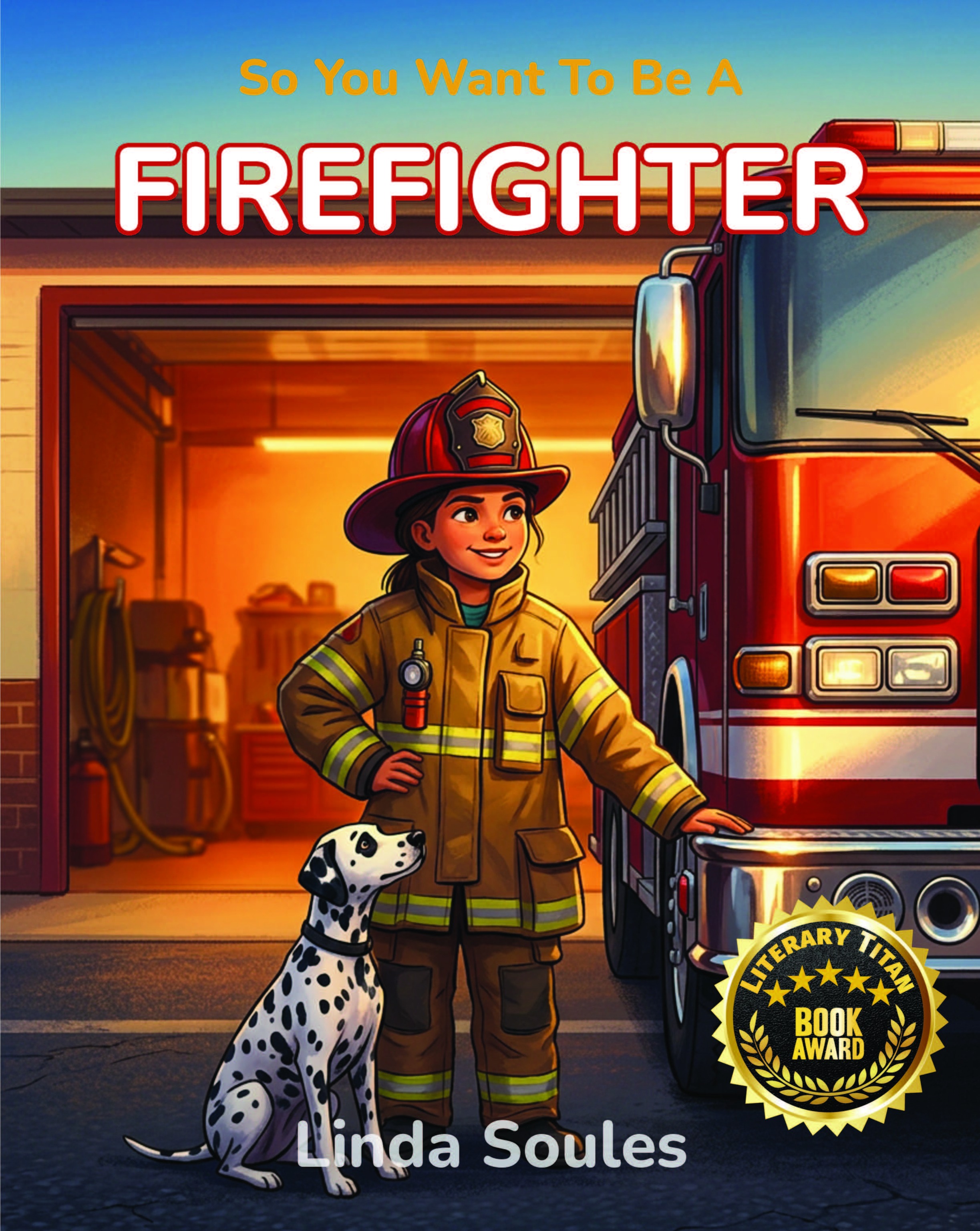
So You Want To Be A Firefighter
by Linda Soules
Key Takeaways
Summary
So you want to be a firefighter: to slide down a brass pole, race aboard a red engine, and head toward danger while everyone else moves away. It sounds like a job made of sirens and flames. But fighting fires is only part of the work. Firefighters answer many kinds of urgent calls, and the less dramatic work they do between emergencies helps them respond when every second matters.
The alarm can sound in the middle of anything: a meal, sleep, even brushing your teeth. In an instant, the station changes. Boots are tucked into pants beside the engine, ready to step into. You pull on your gear, climb aboard, and move. The crew is rolling before the full details of the call are known; getting there quickly is part of the job.
On the way, the captain studies information about the emergency: what kind of call it is, how large a building might be, whether anyone is trapped, and whether someone is hurt. The crew begins to plan before reaching the scene. Firefighters must move fast, but they cannot simply rush in without thinking. They make decisions under pressure, using their training to choose what to do next.
A building with smoke pouring from its windows can be frightening even from a distance. The heat reaches out, and the fire roars and crackles. A firefighter feels fear, too. Courage does not mean feeling nothing; it means acting despite fear, because someone may need help and the training is there to guide the next move. Repeated practice makes important actions more automatic, so fear does not have to make every decision.
Much of the work happens before an alarm. Firefighters train, check equipment, inspect buildings for hazards, and teach children about escape plans. They also eat and spend time together at the station. Then the alarm rings, and the crew must be ready to leave. Gear has to go on quickly, and equipment must work properly. A fast response depends on preparation that began long before the call.
Fire prevention and public education have helped reduce structure fires, so fires now account for a smaller share of the work than they once did. Firefighters also respond to medical emergencies, vehicle crashes, hazardous-materials incidents, and technical rescues. Communities call 911 when someone needs help immediately, and firefighters may be sent into many different kinds of emergencies. Their job is not just to put out flames; it is to respond wherever urgent help is needed.
The fire station is both workplace and, during many 24-hour shifts, home. Its central space is the bay, where engines, trucks, and other vehicles are kept. Large doors open quickly, and vehicles are positioned to pull out without delay. Tools and equipment have assigned places on the trucks, arranged so firefighters can find what they need even in darkness. The station has its own familiar smell: diesel, equipment lubricant, and the warmth of a place lived in by a team around the clock.
A station is designed around readiness, but the work itself takes place wherever an emergency happens. At a fire, firefighters assess the smoke rising outside and how its color and direction may change. Inside a burning building, they can face near-total darkness, severe heat, loud fire and shifting structures. They rely on protective equipment, training, and communication with their crew to work in those conditions.
Other calls bring different hazards. At a vehicle crash on a highway, firefighters may work close to moving traffic while helping people trapped in wreckage. In wildland fires, the terrain, vegetation, and shifting wind all affect where the flames may go. Water rescues and hazardous-materials incidents create still other working environments. Each emergency changes the surroundings and the demands on the crew.
A firefighter’s protective clothing, often called bunker gear, is a vital tool. The coat and pants are made from special fabric designed to withstand temperatures above 1,000 degrees. A strong helmet protects against falling debris and hot embers; steel-toed boots protect the feet; and gloves help a firefighter grip equipment, including a slippery ladder in the rain. All of this has to be put on in less than a minute when the alarm sounds.
Inside a smoke-filled building, firefighters wear a Self-Contained Breathing Apparatus, or SCBA. Strapped to the back and connected to a full-face mask, it supplies compressed air so the wearer can breathe despite toxic smoke. Modern units typically carry about 30 to 45 minutes of air. Firefighters must keep track of that supply, because when it runs low, the time to get out safely is running out, too.
A thermal imaging camera helps firefighters read conditions when smoke makes ordinary sight useless. The handheld device detects heat, allowing them to locate an unconscious person, find the seat of a fire, or spot hot areas hidden in walls and floors. It can turn a smoke-blinded space into a map of heat clues.
Forcing entry is another part of the work. The Halligan bar is a long metal tool with a fork, blade, and tapered pick, designed to pry open doors and windows. Paired with a flat-head axe, it forms the “irons,” a common set of entry tools. Each piece of equipment has a purpose, and knowing where it is, how to use it, and when it is needed is part of being ready to act.
Among the most rewarding parts of firefighting is the work itself: the physical challenge, the urgency of a call, and the concentration required as a crew acts together. But firefighters often speak just as warmly about the ordinary life around that work. People who eat, train, and spend overnight shifts together come to know one another deeply. Their closeness is unusual in most workplaces, and retired firefighters may miss the station’s daily company more than its dramatic moments.
Then there are the rescues that stay with a firefighter for life. A person brought out of a fire, a family protected, or a pet carried safely to waiting loved ones becomes a particular memory, attached to a name and a face. Firefighters tell these stories at reunions and retirement dinners, remembering the relief in someone’s expression when they understand they are safe. The rewards are real, but so are the risks. Fire can shift conditions suddenly, and an environment that seems stable may become dangerous without warning. Firefighters learn to respect fire and never assume that a scene is safe simply because it looks that way.
The danger can reach a crew through the building itself. A modern home may be more hazardous in a fire than a much older one, because many newer structures use engineered wood products, including oriented strand board, laminated beams, and other composite materials. These can fail under fire conditions faster than solid lumber. An engineered beam may give way in as little as four to seven minutes, leaving far less time than firefighters might expect from the behavior of traditional wood. That change has challenged instincts formed in older buildings: the warning signs firefighters were taught to watch for may not arrive before modern construction fails.
The possibility of losing someone is another hard truth. Firefighters rely on their crew so completely that a death in the line of duty can feel like a loss in the family. Departments remember those who do not come home with memorial walls, annual ceremonies, and the slow ringing of a bell for each fallen firefighter. Most firefighters complete their careers safely, but they understand what the work may demand. Courage is not the absence of fear; it is continuing to make careful decisions and carry out the work while fear is present.
No firefighter faces a fire alone. A crew, often four to six people on an engine or truck, trains and responds together, learning one another’s abilities and habits. At a fire, each person has a distinct role: one may direct the hose, another manage water pressure, another search for people inside, while someone else works from a ladder to ventilate the building. The captain oversees the operation and makes decisions. The plan depends on everyone doing their part; a missed role can put the whole crew at risk. Trust is built in training and in the daily work of communicating clearly and being accountable for each person’s location and task.
The crew is part of a wider response. Emergency medical personnel care for patients, dispatchers receive calls and send resources, and fire marshals investigate where and how fires began. Neighboring departments may also come to help during a large emergency. The community is the reason the team exists: firefighters serve people who may be experiencing the worst moment of their lives. That means offering more than technical skill. A firefighter may need to calm a frightened child, explain what is happening, or provide a steady presence to someone in crisis. Patience and emotional understanding matter alongside physical courage.
Good firefighters stay clear-headed amid noise, heat, smoke, urgency, and radio traffic. They learn how water flows, how heat moves, how buildings behave, and how quickly conditions can change. Training makes basic procedures automatic, but firefighters must also adapt when a plan stops matching reality. Understanding construction is especially important: a wood-frame house and a steel office building will not behave alike in a fire. The ability to read a situation and adjust without panic can protect both the crew and the public.
Firefighting history includes people whose work pushed into unfamiliar dangers. Red Adair, a Texas firefighter, became known for putting out burning oil wells. His method involved planting dynamite at the base of a towering flame. The blast briefly consumed the oxygen around it and extinguished the fire; then his crew capped the well before it could reignite. Adair traveled to oil-field fires around the world. In 1991, at age seventy-five, he went to help fight fires in Kuwait’s oil fields during the Gulf War.
Molly Williams is believed to have been the first female firefighter in American history. In New York City during the blizzard of 1818, the enslaved Black woman dragged a fire engine through the snow when the male firefighters were too ill to respond. She performed the work without receiving their pay or recognition. Though she was not officially acknowledged in her own time, the members of Oceanus Engine Company No. 11 knew her as “Volunteer No. 11,” a name that has endured. Today she is recognized as the first known female firefighter in the United States.
The sacrifices of firefighters were also visible on September 11, 2001, when 343 New York firefighters died running into the World Trade Center towers as others fled. Their names are recorded on a memorial wall in Manhattan. The story remains a powerful example of people risking everything for one another.
A few facts reveal the science and surprises behind the work. Fire needs fuel, heat, and oxygen to keep burning—the three parts of the fire triangle. Water removes heat, foam can smother oxygen, and cutting off fuel can prevent a fire from spreading. A firefighter entering a structural fire may carry fifty to seventy-five pounds of gear, roughly like running while carrying a large adult. Flashover, when combustible surfaces in a room ignite almost at once, can happen within minutes, making the recognition of subtle warning signs crucial. Wildfire smoke can travel thousands of miles, reaching places far from the flames. Even the familiar red engine was once only one choice among many: early twentieth-century departments used white, yellow, and green vehicles, and some have chosen lime-yellow because it is more visible in low light.
That learning becomes concrete in the decisions firefighters make when the scene refuses to stay predictable. On arrival, they perform a size-up: a rapid assessment of where the fire is, how it is behaving, what kind of building is involved, and whether anyone may be trapped. The crucial question is not only where the fire is now, but where it may be in two minutes. A plan must respond to present conditions while anticipating how heat, smoke, and flames could change them. Information is often incomplete, and there may be little time to gather more, so technical understanding and clear judgment have to work together.
Fire behavior offers no room for casual guesses. Fire needs fuel, heat, and oxygen; effective firefighting attacks those elements in different ways. Water removes heat, foam can smother oxygen, and cutting off fuel can prevent a fire from spreading. Yet the same fire can behave differently as it encounters new materials or air. A flashover can occur within minutes of a fire starting, when combustible surfaces in a room reach their ignition temperature and erupt together. A backdraft can happen when fresh air reaches a smoldering fire that has been starved of oxygen. Recognizing warning signs and responding before conditions become catastrophic are among the skills firefighters practice intensively.
The building itself is part of the emergency. A wood-frame house does not behave like a steel office building, and knowing what a structure is made of can help a crew judge how it may fail and when to leave. Modern homes add a particular danger: engineered products such as oriented strand board, laminated beams, and composite materials can lose strength much faster in a fire than the solid lumber common in older houses. An engineered beam may fail in as little as four to seven minutes. That rapid failure can undermine expectations built on experience with older construction, leaving less time for firefighters to recognize what is happening. The structure may appear sound until it suddenly is not.
Even the movement of water can alter conditions. A building may shift when water strikes certain elements, while fire can find a route through the structure that changes the situation inside within seconds. Firefighters therefore cannot treat an apparently stable scene as permanently safe. They watch for changes, communicate what they observe, and adjust the plan. Respect for fire is not timidity; it is an informed recognition that what seems manageable now may become dangerous quickly.
Equipment extends what firefighters can do, but only when they understand its limits and use it correctly. Protective clothing can withstand extreme heat, yet it does not make a person invulnerable. A fully equipped structural firefighter may carry fifty to seventy-five pounds of gear. Inside a smoke-filled building, a self-contained breathing apparatus supplies air through a mask, but its supply is finite: modern units carry about thirty to forty-five minutes of air. Firefighters must track that time carefully because the air remaining determines how long they can safely stay inside and still get out.
When smoke removes ordinary vision, a thermal imaging camera can show heat signatures. It may help locate an unconscious person, reveal the seat of a fire, or identify hot spots hidden inside walls and floors. The camera turns an otherwise unreadable room into a map of heat, but the information still has to be interpreted. A hot area might indicate fire behind a surface; a person low to the floor may be difficult to see without the right tool. The firefighter must combine what the camera reveals with knowledge of the building and changing conditions.
Getting into a structure also demands practiced technique. The Halligan bar, with its fork, blade, and tapered pick, is a versatile tool for forcing doors or windows. Used with a flat-head axe in the technique known as “the irons,” it serves as a primary entry tool. Inside, ventilation may involve opening windows, doors, or a roof to release heat and smoke. Done strategically, it can make rescue and firefighting safer; done without coordination, it can affect how fire and smoke move. Ventilation is therefore not simply making openings. It is a decision that must fit the crew’s plan and the conditions at the scene.
That plan depends on people knowing where everyone is and what each person is doing. Accountability systems track firefighters on scene, while the incident commander manages the operation so that tasks and information stay coordinated. A hose team, a search team, and firefighters working from a ladder may be carrying out different parts of the response, but those actions must fit together. If a firefighter becomes trapped, lost, or otherwise in trouble, a Mayday call signals an urgent change in priority: finding that firefighter takes precedence. Communication is not an accessory to the work; it is part of the protection that makes the work possible.
The same disciplined readiness applies when the emergency is not a fire. At a road crash, firefighters may have to work beside traffic while freeing someone trapped in a vehicle with the Jaws of Life, mechanical jaws capable of tearing open a car door. A flood, cave rescue, collapsed building, or chemical spill presents a different environment and different hazards. For hazardous materials, firefighters may work in full protective suits; for medical emergencies, they assess and care for patients until an ambulance crew takes over. The setting changes, but the need to understand the tools, coordinate roles, and keep reassessing conditions remains.
Preparation reaches beyond the response itself. Checking hoses, ladders, and tools means a crew is not discovering a failure when seconds matter. Inspecting a business’s exit routes, extinguisher placement, and sprinkler access can reduce danger before an alarm is ever raised. Public education, including helping children understand escape plans, gives people a way to act when firefighters are not yet there. Prevention is quieter than rescue, but it can change what happens when a crisis begins. And when a call does come, the crew has to bring all that knowledge to a scene where the plan may need to change again.
For someone wondering whether firefighting might be their future, preparation can begin long before they are old enough to join a department. Start by building physical fitness: run regularly, and practice push-ups and pull-ups. Even ordinary tasks can help develop strength if you find safe ways to carry awkward, heavy things, such as a laundry basket full of books. The point is not to imitate an emergency, but to build good habits in both body and mind.
Learning basic first aid is another practical step. Firefighters often arrive at medical emergencies, and many communities offer CPR certification for young people. You can also practice staying calm when something goes wrong. When you are startled or frightened, try to pause, breathe, and focus on what needs to happen next. Fire safety programs and firehouse tours, where available, offer a chance to learn directly from professionals. And because the work depends on people acting together, practice being both a leader and a follower. A capable teammate can take responsibility when needed and support someone else’s direction when that is the right role.
One useful piece of preparation is close to home: make a fire escape plan with your family. Ask everyone to think through how they would get out if there were a fire. Firefighters consider this one of the most important things a family can do, because a little planning before an emergency can matter enormously when there is no time to decide from scratch.
The questions firefighters ask themselves reveal what the job demands. Where is the fire going—not just where is it now, but where might it be in two minutes? Who is still inside, and how can the crew find them? How can the team keep itself safe while doing something dangerous for the sake of others? These are not questions with easy, permanent answers. They require attention, technical understanding, and the ability to make sound decisions while circumstances are changing.
The qualities that help answer them are not a lack of fear or a taste for danger. They include caring about people enough to want to help when they are having a terrible day, and being able to focus when a situation grows loud and confusing. They include working hard, training the mind as well as the body, and knowing that no one accomplishes the job alone. Courage means doing what is right even when it is difficult; composure means taking a breath and concentrating on the next necessary action. If those qualities sound familiar, the possibility of becoming a firefighter may be worth exploring.
Exploration can be hands-on. A fire museum offers a way to see how the work and its equipment have changed over time. The Fire Museum Network can help visitors find one; the Hall of Flame in Phoenix holds the world’s largest collection of fire apparatus, including some built in 1725. New York City’s Fire Museum occupies a former firehouse dating from 1904 and includes a permanent memorial to the 343 firefighters who died on September 11, 2001.
A Fire Prevention Week open house, held every October, offers another opportunity. Fire stations open their bay doors, demonstrate equipment, and welcome questions. Young people can also look into Fire & EMS Career Exploring, which takes members as early as sixth grade, or junior firefighter programs, most of which begin at age fourteen. The local department can explain which opportunities it offers.
Books and trustworthy organizations can deepen that first-hand curiosity. Among the recommended reading are Meghan McCarthy’s Firefighters’ Handbook, which explores training, gear, and daily work; Jim Murphy’s account of the 1871 Chicago fire, The Great Fire; and Dianne Ochiltree’s Molly, by Golly!, about Molly Williams and the 1818 blizzard fire. The U.S. Bureau of Labor Statistics provides a career profile with information on pay, training, and hiring outlook. The National Fire Protection Association offers fire-safety lessons and activities, while the National Volunteer Fire Council supports the National Junior Firefighter Program. The National Fallen Firefighters Foundation honors those lost in the line of duty and supports their families. The helmet comes later; the learning starts now.
But preparation is not only about getting stronger or learning facts. It is also about understanding what the work asks of a person over a lifetime. Firefighters do not choose the job for money or fame. Most will never have their picture taken or appear on television. They do it because they have made a promise: to their community, their crew, and themselves—to be there when something goes wrong.
That promise is kept at all hours, on holidays and birthdays as well as ordinary Tuesdays, in rain or shine. It means arriving when someone else is living through their worst night, even if for the firefighter it is an otherwise ordinary day. It means being genuinely ready—physically and technically—not because a call is certain today, but because it might come at any moment. It means carrying losses that do not simply disappear, then returning to serve another family in crisis. The next family did not cause the last one’s grief; they still need help.
The promise is demanding precisely because it is not reserved for dramatic fires or public recognition. It is renewed through ordinary readiness and dependable service. The truck and siren may draw attention, but they are not what makes a firefighter a hero. It is the willingness to show up, keep training, think clearly, work as part of a crew, and stand by the people who count on you.
So the question is not simply whether you want to run toward trouble. It is whether you want to become someone who prepares, acts thoughtfully under pressure, and keeps faith with a community. Becoming that person begins before the uniform, before the helmet, and before the first alarm. It begins with curiosity, practice, care for others, and the choice to keep learning.
Chapter Summaries
What If You Were a Firefighter?
The book opens with the vivid experience of a fire alarm: firefighters stop whatever they are doing, gear up rapidly, and respond while a crew begins planning from information about the emergency. The excitement is real, but the text emphasizes that firefighters do not simply charge into danger. They assess the situation, communicate, and make decisions before and during a response. The chapter also reframes bravery. Firefighters experience fear just as other people do; training helps them keep moving and make sound choices even when their instincts urge them to flee. The central idea is that courage is action in the presence of fear, especially when someone may need help.
The Work, the Station, and the Gear
Firefighters spend much of their time preparing rather than fighting fires. Their responsibilities include training, checking equipment, inspecting buildings, teaching fire safety, and responding to the many emergencies communities call 911 about. The modern role includes medical calls, vehicle accidents, technical rescues, wildfires, and hazardous-materials responses, making firefighters emergency responders in a broad sense. The fire station is designed for readiness, with vehicles and equipment arranged so crews can move quickly and find tools even in darkness. The book introduces essential equipment, including heat-resistant turnout gear, helmets and boots, SCBA breathing apparatus with a limited air supply, thermal imaging cameras, and the Halligan bar and axe known as “the irons.” A sample shift shows how inspections, training, medical calls, communal meals, and a late-night structure fire can all fit into one day—and why equipment must be checked and restored after every response.
Rewards, Risks, and Surprises
The best parts of firefighting include intense teamwork, the close-knit life of the station, and the concrete knowledge that someone has been helped. Rescues can range from people brought out of burning buildings to pets carried to safety. These moments stay with firefighters because they involve particular people and families, not merely abstract accomplishments. The work is also unpredictable and dangerous. Fire conditions can shift quickly, structures may fail, and the loss of a firefighter affects the department like a family bereavement. One unexpected hazard is that modern residential fires may be especially dangerous: engineered wood products can fail much sooner under fire conditions than older solid lumber. Another surprise is that more than three-quarters of calls are not fires, with medical emergencies making up much of the work. The chapter uses these facts to show why firefighters need both technical caution and broad emergency-response skills.
The Crew, the Community, and the Qualities That Matter
Firefighting is presented as a team profession in which no one fights a fire alone. A crew may divide tasks among hose operation, search, ventilation, ladder work, and scene leadership. Members learn one another’s abilities through repeated training and shared daily life; dispatchers, medical personnel, fire investigators, neighboring departments, and the community also contribute to emergency response. The most important qualities include courage, teamwork, technical understanding, calm under pressure, and the ability to adapt when a plan changes. The book adds qualities that may be less obvious: putting frightened people at ease, understanding how different buildings behave in a fire, and taking emotional health seriously. Firefighters help not only by controlling fires and rescuing people, but by serving as a community’s prepared response to moments when people cannot manage an emergency alone.
Firefighting History and Fascinating Facts
Profiles of Red Adair and Molly Williams illustrate different parts of firefighting history. Adair became known for fighting oil-well fires with a daring technique that used explosives to extinguish the flames before crews capped the wells. Williams, an enslaved Black woman in New York, is recognized as the first known female firefighter in American history after she helped pull a fire engine through a blizzard when male firefighters were ill. The book also remembers the 343 New York firefighters who died responding to the September 11 attacks. A collection of facts explains how fire works and how firefighters use science and technology. The fire triangle—fuel, heat, and oxygen—helps explain why water, foam, and fuel control can suppress a blaze. Thermal cameras reveal heat through smoke, while flashover and backdraft are extreme hazards firefighters learn to recognize. The book also notes that smoke can travel vast distances, protective gear can weigh 50 to 75 pounds, and fire engines have not always been red.
Could This Be Your Job? Preparing and Exploring
The book invites readers to consider whether they enjoy helping others, can work as part of a team, are willing to train, and can focus when situations become loud and confusing. It suggests practical ways to start preparing: build strength and endurance, learn first aid or CPR, practice staying calm, seek fire-safety instruction, and develop the ability to lead as well as follow. Making a fire escape plan with one’s family is highlighted as a simple, important step that can help protect people now. A glossary explains professional language such as accountability, Mayday, incident commander, mutual aid, size-up, and ventilation, helping readers understand how firefighters coordinate work and manage risk. The book’s recommended books, websites, museums, open houses, and youth programs offer next steps for learning more. Its message is that career exploration can begin well before someone is old enough to join a department.
The Promise of the Job
In the author’s closing reflection, firefighting is described not as a pursuit of fame or money but as a promise to show up for the community and crew. Keeping that promise means being prepared before a call arrives, responding on ordinary days and holidays alike, and continuing to serve despite the emotional weight of difficult experiences and losses. The book ends by encouraging young readers who feel drawn to the work: the essential beginning is not owning the gear or riding the truck, but developing the heart and habits the job requires. The author’s series note explains its aim to treat children as thoughtful readers, presenting careers with their excitement as well as their hard and quiet realities. The book is meant to serve as an invitation to keep wondering, learning, and exploring what kind of work might suit them.
Notable Quotes
Because great firefighters don’t just rush in. They think fast AND smart.
Being brave doesn’t mean you’re never afraid. It means you go anyway.
The work that prevents fires is less dramatic than the work that fights them. It is also more effective.
Firefighters NEVER fight a fire alone. Everything is teamwork.
They do it because they made a promise. A promise to their community, to their crew, and to themselves: When something goes wrong, I will be there.
The helmet comes later. The learning starts now.
