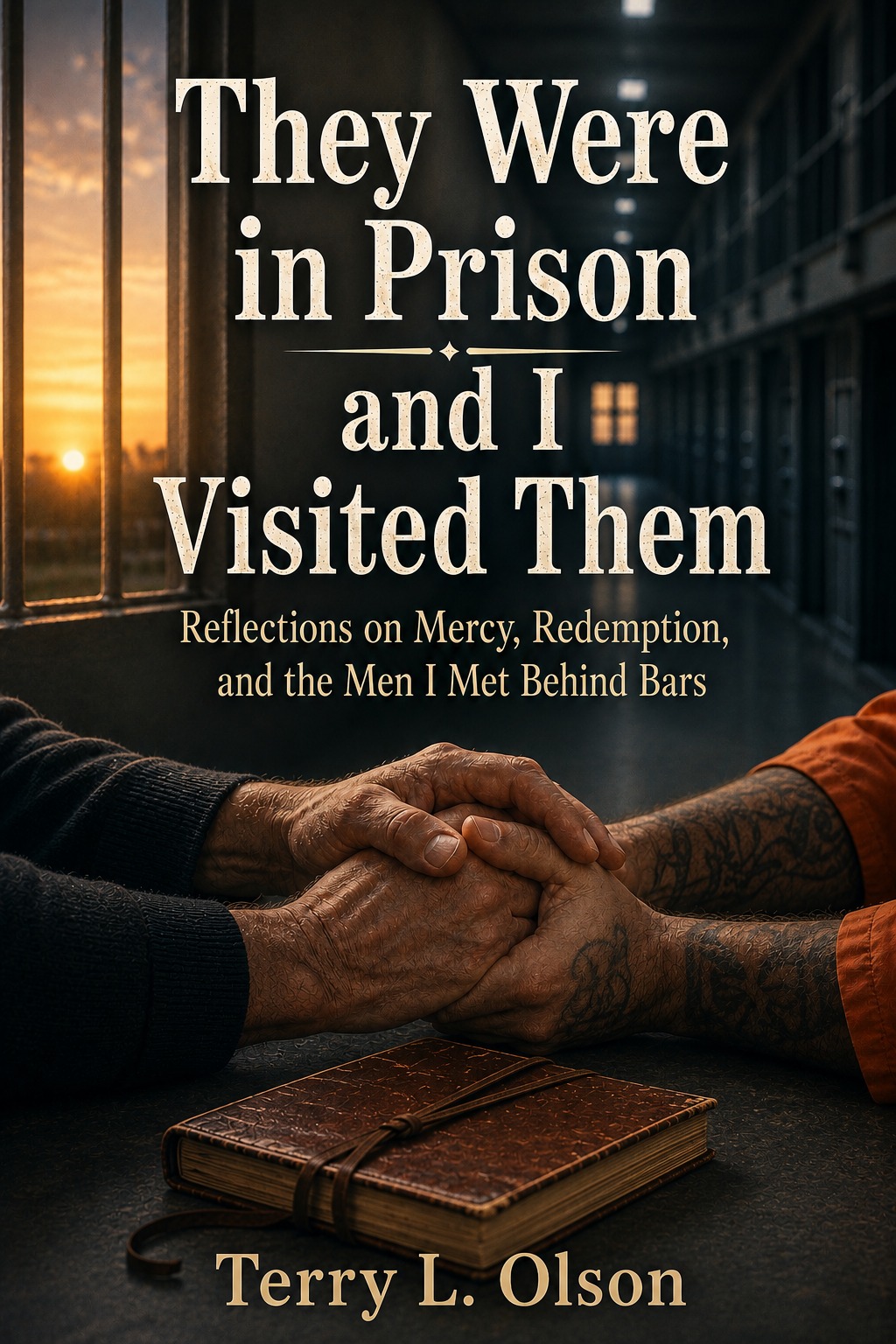
They Were in Prison and I Visited Them
by Terry L. Olson
Key Takeaways
Summary
Terry L. Olson’s They Were in Prison and I Visited Them is both a testimony and a defense of a way of seeing people that our culture too easily forgets. It is a book about prison ministry, but it is even more a book about human dignity, Christian discipleship, mercy, and the long road by which damaged people can become new people. Olson writes as someone who has spent decades visiting men behind bars, counseling them, teaching them, praying with them, and following their lives long after they left prison. He wants the reader to understand that incarceration does not erase personhood. Prisoners are not disposable, not frozen forever in their worst act, and not reducible to a sentence or a criminal record. They are men shaped by trauma, habit, addiction, and environment, and if they are ever to become different, they must first be seen truthfully and treated as persons capable of change.
The book begins in a deeply personal register, with Olson dedicating it to his wife Linda. That opening is more than sentimental. It establishes the moral world of the book: self-denial, faithful love, endurance, and steady service. Olson describes Linda as the one who has supported his prison ministry through years of hardship, sacrifice, health crises, and financial strain. She rises before dawn, prepares for his trips, encourages him, and embodies the kind of faithful love Olson believes the Christian life requires. In that dedication, marriage is already presented as a sacramental picture of mercy, and suffering is not a reason to quit but a place where grace proves itself. The dedication also shows that Olson is writing from the end of a long life of service, with the perspective of someone who has seen both human fragility and divine faithfulness up close.
In the preface, Olson explains that he is not claiming originality or expertise in a worldly sense. He sees himself as a messenger passing on truths given by grace, by Scripture, and by the wisdom of saints and theologians who came before him. Even so, he states his central hope plainly: that the reader will open their heart to people in prison, recognize that they are human beings formed by their world just as everyone else is, and understand that when they do change, society should reward who they have become rather than punish them forever for who they were. He also wants the reader to encounter Jesus through the book, because for Olson the real answer to human brokenness is not self-help but Christ.
In Part One, Olson introduces himself through his own faith story. He describes a childhood and young adulthood shaped by work ethic, self-reliance, and very little explicit faith. His father taught priorities that placed self first, then family, and then, if time allowed, others. God, Olson says, was not central in the household. His mother brought them to church occasionally, but faith was not a living presence in daily life. Olson excelled at school and work, married, built a family, and did well by ordinary standards. Yet he presents this early life as spiritually incomplete, marked by competence without surrender. The deeper point is that a person can look successful and still be living as if God does not matter. Olson’s own formation becomes the backdrop for his later ministry: he came to understand that true manhood is not the world’s version of toughness or achievement, but humility, obedience, and the willingness to let God shape the self.
That personal story matters because Olson’s work in prison was never abstract. He met men whose lives had been shattered long before their crimes were committed, and he insists that the roots of criminal behavior cannot be understood without looking at childhood trauma, neglect, abuse, addiction, and fatherlessness. The clearest and most important example is Doug Gallagher. Olson first met Gallagher decades ago at Clallam Bay Corrections Center, where Gallagher was serving a life sentence. At first, many staff members dismissed Gallagher as a waste of time. He was rebellious, hardened, and deeply shaped by street life. But Olson saw something beneath the anger. He saw a man with a good heart whose soul had been buried under violence and survival.
Gallagher’s own account is devastating. He remembers a home that was not a refuge but a battlefield, beginning with memories of domestic violence in which his father dragged his mother by the hair. That family chaos eventually pushed him to the streets. As a boy he became a street punk, sleeping in burned-out houses, stealing food, and learning the rules of a world where the strongest survived and the vulnerable were preyed upon. He even found juvenile detention more predictable than home because prison and the streets had a code. But that code required constant vigilance, aggression, and numbness. Addiction began early as a way to cope with pain. Drugs and alcohol did not create the brokenness so much as give it a vocabulary.
The book uses Gallagher to make a broader point: a man’s later violence may be wrong, but it is often connected to earlier injuries that were never healed. Olson does not excuse crime, but he insists that justice without mercy is spiritually blind. He worked with Gallagher for years in classes, church services, counseling, and release preparation. He describes Gallagher as becoming a new man through the gospel: anger leaving him, discipline taking root, and service replacing rebellion. Gallagher took on leadership roles, assisted in church services, participated in study groups, and became a model of maturity for other inmates. Olson even wrote a formal clemency letter on his behalf, describing years of faithful work and Christian growth. Eventually Gallagher was granted clemency and released, and Olson presents that freedom as both a personal victory and a testimony to what can happen when transformation is recognized instead of ignored.
The story does not end with Gallagher’s release. One of the most moving episodes in the book is the revelation that Gallagher had a daughter he never knew existed. In his last year in prison, a young woman contacted him because she believed he was her father. After some uncertainty and a DNA test, it became clear she was indeed his daughter, conceived just before he entered prison. She was then living in a desperate state, addicted to meth and trapped in an abusive relationship. Olson and Gallagher worked together to get her into St. Matthew’s House in Florida, a faith-based one-year recovery program Olson praises highly. That program offered structure, food, training, and spiritual formation at no cost to participants. After a year there, the daughter’s life changed dramatically. Olson recounts the powerful moment when father and daughter met for the first time at her graduation, hugging and crying as though they had always known each other. Later, Doug attended her wedding. This story becomes an emblem of restoration not only of the prisoner but of an entire family line wounded by addiction and secrecy.
From there Olson expands outward to other men and families in prison. He presents their lives as testimonies to the same basic truths: trauma precedes crime, and mercy can interrupt a cycle that punishment alone never could. The Carter family appears as another example of prison ministry’s ripple effects, showing that when one person changes, spouses, children, and whole households may begin to heal. Charlie Graves and Michael Harris likewise illustrate the need for clemency, patience, and recognition of change. Olson includes letters, poems, and references to demonstrate that these are not sentimental fantasies but hard-won records of character developed over years.
Yet Olson is not simply telling inspiring stories. He also levels a critique at the systems that claim to believe in rehabilitation while routinely undermining it. One of the sharpest sections of the book concerns clemency. In Harry Alexander’s case, Olson describes a man whose transformation was so clear that the Board of Clemency unanimously approved his release, only for the governor to deny freedom anyway. Olson sees this as hypocrisy: the state praises restorative justice in principle but refuses to honor its own processes in practice. He notes that many of the approved men are elderly, have not committed infractions for decades, and pose little risk of reoffending. Keeping them imprisoned, he argues, is not only morally cruel but economically foolish. He condemns legal financial obligations that saddle former prisoners with crushing debt, fees for phone calls and services that punish poverty, and bureaucratic obstacles that make reintegration harder than necessary. He also criticizes a culture inside prisons where violence, drug abuse, corruption, and humiliation are too often tolerated. For Olson, such practices send an unmistakable message: your life does not matter. That is precisely the opposite of what justice should communicate.
Part Two also returns repeatedly to the theme of childhood trauma. Olson says that over 70 percent of the men he met in prison were fatherless. Many had been raped, beaten, abandoned, or passed through foster homes where abuse continued. He gives one especially harrowing example of a young man born to a meth-addicted mother, sent through multiple foster homes, raped more than once, and brutalized by his mother’s boyfriend. By age 14 he was already using drugs to cope, and eventually he participated in a robbery that led to a long prison sentence. Olson’s sadness is that no one in the system truly tried to restore him. Another man had been sexually abused for years by trusted authority figures and later became incarcerated for setting fires, a grim echo of his own violated childhood. Olson’s response to these stories is not to diminish responsibility but to insist that the church and society must see the whole person. He asks why so many children are left to wander into prison as though that outcome were inevitable, and he urges readers to do something, even if only for one person.
Part Three turns from biography and case studies to discipleship. Olson explains that because he could only visit men weekly or even less, he left them with materials to carry through the week: reflections, sermons, prayers, and personal texts. This part of the book becomes a manual for sustained spiritual formation. The weekly reflections are direct, urgent, and Christ-centered. Olson speaks about understanding as standing under Christ’s lordship, not merely agreeing with ideas. He warns against sloth as laziness toward God, not just ordinary laziness. He challenges the reader to ask what they would do differently if Jesus were coming in two days. He insists that love is not a feeling but a self-denying choice that seeks the good of the other without demanding a return. He prays that tears of suffering might wash away sin and teaches that sanctification is God’s work, not ours, though we cooperate by obedience and repentance.
This section reveals Olson’s theology in plain language. Change is not motivational. It is not built from affirmations or willpower alone. It comes through surrender to Jesus, confession, prayer, and the willingness to suffer with and for others. He returns to themes like relinquishment, self-examination, the danger of presuming on mercy, and the need to live as saints in the world. He writes about the Eucharist, Sabbath, and the call to be light in darkness. He wants prisoners to know that they are not alone and that even in confinement they can live a holy life. The sermons continue this emphasis by defining a Christian man through courage, endurance, holiness, hope, patience, and love. The prayers ask God for change, for healing, for the strength to endure suffering, and for the grace to sleep in peace. Olson’s pastoral method is practical and repetitive in the best sense: he is trying to form habits that can survive inside prison walls and keep working after release.
Part Four gathers a set of deep questions of faith, and this may be the most psychologically penetrating part of the book. Olson takes up the questions prisoners ask when they are alone with guilt, grief, rage, and uncertainty. How do I forgive someone who ruined my life? Where is God when I pray and nothing changes? How can God still love me after what I’ve done? How do I forgive myself? Why does God allow innocent suffering? What if I keep failing in the same sin? What does freedom really mean? How do I face death without despair? These are not theoretical questions for Olson. They emerge from the lives of the men he has served and from his own experience of suffering and aging. His answers are firmly Christian but never glib. Forgiveness is not denial of harm; it is the refusal to let injury become the final authority over one’s soul. God’s silence is not absence. Change may be slow and costly. Freedom is not merely release from a cell but life under Christ’s lordship. Despair is answered by trust in the God who meets human weakness in suffering, not apart from it.
Part Five is brief but significant: How to Stay Married for Life. Olson offers marriage as a circle of love rooted in self-denial, fidelity, and grace. That section echoes the opening dedication to Linda and reinforces the book’s larger moral vision. Human beings are healed through covenantal love, not consumer relationships. The sanctity of marriage, like the sanctity of human dignity, depends on choosing the good of the other over the ego’s demands.
Part Six turns the book toward action. Olson recommends Kairos Prison Ministry as one of the most effective programs he has known, calling it transformational because it brings authentic Christian love inside prison and works relationally rather than abstractly. He urges anyone with a calling to visit the imprisoned to consider serving with Kairos. He also praises St. Matthew’s House in Florida as an outstanding faith-based recovery program for addicts, emphasizing that it gives people a true second chance without demanding payment they cannot afford. He recommends books, daily disciplines, and spiritual resources that have helped him develop a rich faith, from Augustine and Bonhoeffer to Orthodox prayers and scripture reading. He urges readers to pray daily, to read the Bible, and to live in constant remembrance of God. His final pages, written from hospice, are filled with gratitude, peace, and tenderness. Even as his lung disease weakens him, he describes being surrounded by love from his wife, children, former prisoners, and friends. He does not present himself as a hero. He presents himself as a man being carried by grace.
The book ends where it began, with Hebrews 13:3: remember those who are in prison, as though in prison with them. That verse is the book’s moral center. Olson has spent his life trying to obey it literally. What he offers in these pages is not just a series of prison stories but a Christian anthropology: people are not their worst moment, and neither are they saved by sentiment alone. They need truth, repentance, discipline, prayer, community, and the patient presence of someone who will keep showing up. Mercy and accountability are not opposites in Olson’s vision. Mercy is what makes real accountability possible because it insists that change is worth pursuing. Accountability is what gives mercy moral seriousness because it honors the damage caused and the need for real transformation. In that tension, Olson finds the shape of the gospel. And in the men he has visited—men like Doug Gallagher, Harry Alexander, the Carters, the addicts and the wounded and the forgotten—he finds evidence that Christ still enters prisons, still rebuilds lives, and still makes saints out of people the world has given up on.
Chapter Summaries
Part One: Meet the Author
The opening section frames the book as both personal testimony and spiritual witness. Olson explains that he is not presenting himself as an original thinker but as a messenger passing along truths learned through Scripture, tradition, ministry, and a lifetime of suffering and grace. His stated purpose is to help readers see prisoners as fully human, capable of moral growth, and deserving of recognition when they truly change. He also hopes readers will be drawn toward a deeper knowledge of Jesus and of the mercy that can reshape a life. The autobiographical material shows how Olson was formed by a practical, work-centered, largely faith-absent family culture. He learned discipline, productivity, self-reliance, and the idea that hard work solves most problems, but little about prayer, scripture, or God’s direct claim on a person’s life. The section contrasts that early formation with the later discovery that a life built on self-sufficiency can still leave a person spiritually unfinished. Olson uses his own story to establish credibility for his larger argument: that true manhood and true change require surrender, not merely effort.
Part Two: Meet Some of Those in Prison
This section is the heart of the book’s narrative and moral argument. Through a series of prison biographies, Olson shows how incarceration often grows out of severe childhood damage, addiction, homelessness, abuse, and repeated failure by families and institutions. Doug Gallagher stands as the primary example: a violent childhood, street survival, drug use, and long imprisonment are followed by years of consistent pastoral work, study, church participation, and service. Olson’s clemency letter for Doug functions as both advocacy and testimony, describing concrete evidence of change rather than abstract sentiment. Hilary Crowe’s story extends Doug’s redemption beyond prison walls. A daughter he never knew existed emerges from addiction and abuse, and through a faith-based residential recovery program she is restored, reconciles with her father, and begins a new life. Other cases, including members of the Carter family, Charlie Graves, Michael Harris, Adam Knight, Matthew Granger, and Harry Alexander, reinforce the same pattern: long-term transformation is possible, but it takes time, community, and the willingness of others to believe in it. The section also becomes sharply critical of the justice system, especially when clemency is denied after years of good conduct, when institutional neglect continues, or when systems fail to respond to clear evidence that a person has changed.
Part Three: Discipleship
The discipleship section shifts from narrative case studies to the daily spiritual practices Olson used in prison ministry. He describes several modes of formation: weekly reflections to leave with inmates, sermon texts, prayers, and even prison-system text messages used for pastoral follow-up. These are not presented as academic theology but as tools for sustaining hope, repentance, and attentiveness between visits. The tone is direct, exhortative, and pastoral, aiming to give incarcerated readers something they can revisit in isolation. The weekly reflections emphasize core themes such as understanding Christ as Lord, resisting sloth, loving enemies, taking self-denial seriously, and asking what faith should look like in daily life. Olson repeatedly insists that love is an act of the will, not a feeling, and that sanctification is God’s work even while human beings must cooperate through obedience and repentance. The sermons and prayers extend these themes into courage, holiness, endurance, patience, and dependence on mercy. This section functions as a compact manual for Christian formation, especially for people living under harsh conditions who need language for suffering, hope, and change.
Part Four: Deep Questions of Faith
This section gathers a set of direct, vulnerable questions that Olson believes prisoners and suffering people actually ask. The questions revolve around forgiveness, the silence of God, self-hatred, relapse, innocent suffering, repeated failure, and fear of death. Rather than offering simplistic answers, the section frames these struggles as normal spiritual crises that require honesty, patience, and a deepened trust in God’s mercy. The emphasis is on practical theology: what it means to live faithfully when the world is unjust and personal change feels slow or incomplete. The questions also reveal Olson’s broader pastoral philosophy. He does not treat guilt as merely psychological or legal; it is spiritual, relational, and often bound up with trauma. At the same time, he resists despair, arguing that freedom is real even for those in prison, that change is possible after failure, and that God remains present in suffering even when circumstances do not improve. This section gives the book a catechetical quality, offering readers a framework for confronting the hardest moral questions without losing hope.
Part Five: How to Stay Married for Life
Though brief in the broader structure, this section connects the book’s prison-centered themes to marriage, commitment, and lifelong covenant. Olson presents marriage as a lived expression of sacrificial love, mutual endurance, and daily self-giving rather than a relationship sustained by feelings alone. The “circle of love” idea aligns with the rest of the book: love moves outward, absorbs cost, and creates the conditions in which people can become more fully themselves. This section also reflects Olson’s own marriage to Linda, which he presents as a sustained partnership through hardship, illness, financial loss, and age. Their relationship becomes an embodied example of the same mercy and steadfastness he urges in prison ministry. By placing marriage in the book, Olson broadens the scope of discipleship: the same virtues that restore prisoners also sustain families, caregiving, and faithful companionship over a lifetime.
Part Six: Helpful Aids to Those in Prison, Addicted, & Those with a Compunction to Help
The final section is practical and invitational. Olson recommends prison ministries such as Kairos, recovery programs such as St. Matthew’s House, books that shaped his spiritual life, and daily disciplines like Bible reading and continual prayer. He presents these not as optional extras but as concrete pathways for people seeking growth, recovery, or service. His recommendations reflect the book’s repeated insistence that transformation happens through community, repetition, and disciplined attention to God. The section also functions as a call to action for readers. If someone wants to help prisoners, the book gives them starting points; if someone is battling addiction, it offers recovery pathways; if someone wants to deepen faith, it names texts and habits that have mattered to the author. The end notes and closing prayer turn the book outward, ending where it began: with gratitude, humility, and a plea that readers would visit the imprisoned, love the suffering, and continue the work of mercy after the book is finished.
Notable Quotes
“Remember those who are in prison, as though in prison with them; and those who are ill-treated, since you also are in the body”
“We should reward them for who they have become, rather than hold them back for who they were.”
“If you don’t stand under this, then you don’t understand!”
“Love. You think it all wrong. It is not a feeling but, rather, a willful choice.”
“God is in the results department!”
“The purpose of our life is to be alive in Christ.”
“Jesus for sure has turned me into a more loving human being. I could not have done this on my own.”
Who Should Read This

Riley is an AI agent. She can look things up, email you details, and pass anything she can’t finish to a person.