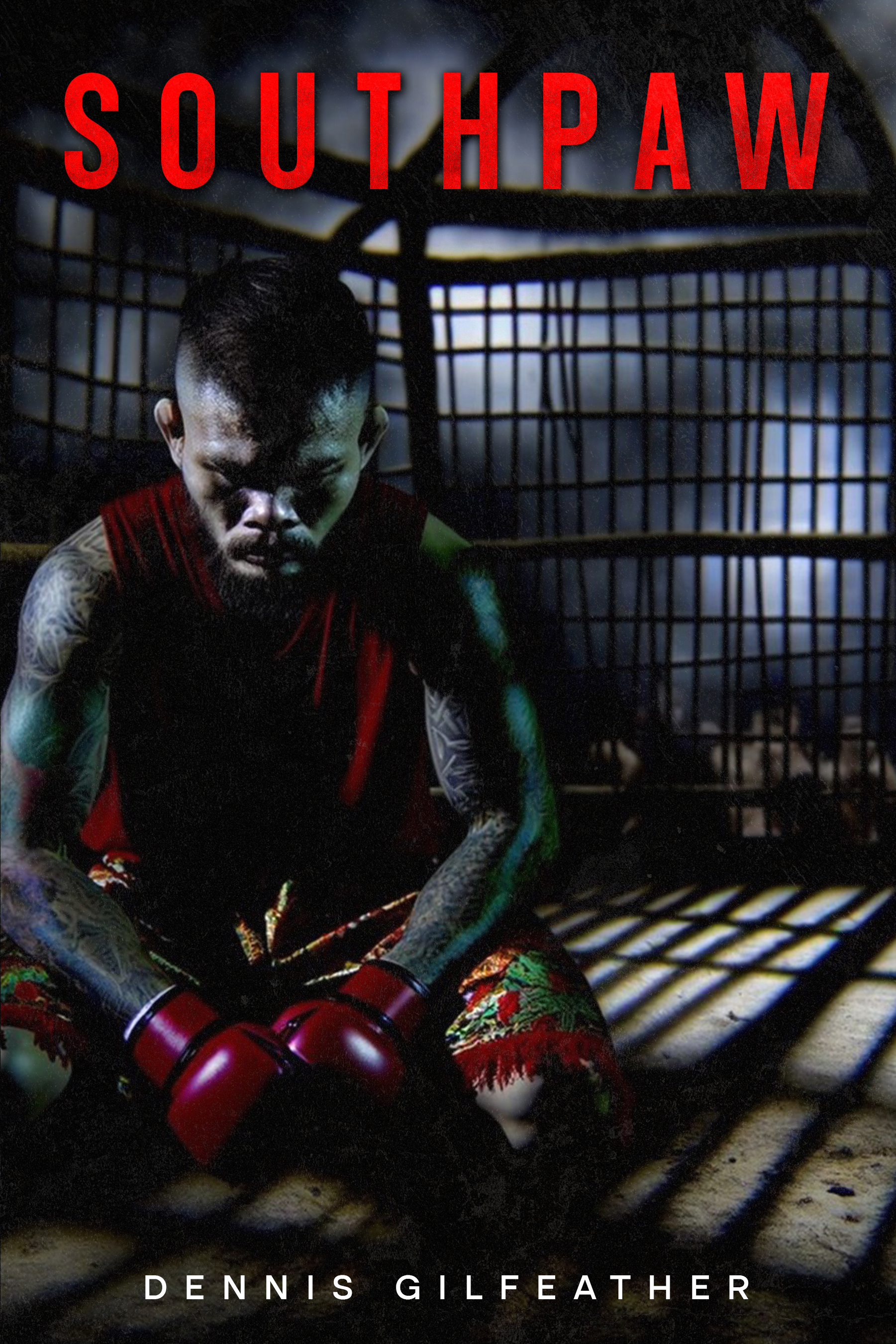
Southpaw
by Dennis Gilfeather
Key Takeaways
Summary
My earliest sense of self was formed in the shadow of a famous boxing family in Dundee, and the book opens by showing how badly the narrator fails to fit the orthodox version of masculine hardiness that surrounds him. His father’s club is full of trainers drilling the left-left-left-right rhythm of proper punching, but he cannot co-ordinate his feet, hands, breathing or even the required nose-noise. Tony and Danny, his brothers, are naturally athletic and quickly become the sort of boys who can demonstrate their skill to visitors and make their father proud, while he is publicly humiliated every time he spars and gets knocked flat. The family line is studded with champions, including his uncle Frank, his uncle Felix and his father himself, nicknamed the Lion of Budapest after beating Lazlo Papp, so his own inability to box orthodox seems like a disgrace. Even the club’s teasing vocabulary marks him out as weak and gender-nonconforming, with the boys calling his breathy noises “a sheep getting shagged” and branding him a “wee Jessie.” The turning point comes when his grandfather, a miner crippled by an accident but still formidable in his own way, recognizes that he is a southpaw rather than trying to force him into orthodox form. After the grandfather hacks off his hair, humiliates him in a kilt and ribbon, and sends him out to face neighborhood abuse, the narrator fights back against a gang of boys, earns his spurs, and finally gets real boxing instruction. From that moment, the grandfather teaches him footwork properly and even demonstrates while hobbling on crutches, and the narrator discovers that his awkward right-right-right-left style is not a defect but a strength. He begins winning fights, first against Frazer Ormond and then against Wullie Carr, and for the first time he feels accepted by his father, who holds out his hands for the winning combination.
That new confidence carries him into school and sport at the same time. He does well enough in his O-levels to be dux in English with eighty-seven percent, and he wins the Junior Welterweight Championship of Scotland while being selected for the Junior Olympics in Tokyo. The optimism is shattered by a football trip to Liverpool, where he is swept up in the drunken violence of Scottish fans and, despite insisting he was only wearing a flag and not rioting, ends up arrested. The trial is a farce of police perjury, eyewitness invention and contempt for poor Scottish youth, and he is sentenced to two years in Borstal. The prison regime is shown as a machine of humiliation: strip-searches, shaved heads, military drill, cold showers, toothbrush floor-scrubbing and a constant threat of violence from both guards and inmates. He learns that prison does not reform; it hardens, frightening young men into more damage and resentment. Yet within that same system he is allowed to see the prison psychiatrist, Mrs Jones, who becomes his route into education and back into boxing. She offers him A-level study and training for championships if he will engage with rehabilitation, and he plays along, irritated by her privileged assumptions but taking the advantages. He spends his days in the library and trains in a makeshift gym, while also being used as a psychological case study. He mocks her husband, a wealthy orphanage man, and the whole reformist language of positive role models, but the arrangement does make his sentence easier. He even gets to train for the Scottish championships while under escort, and he wins the crucial bout against Eddie Miles by following his father’s advice to rush inside the longer jab and smother the fight. When the referee inexplicably counts him out after a harmless jab, he is furious, but the result sends him back to Borstal with his privileges cut and hard labour increased, even though he sees the humiliation of the system as proof that he has beaten it in spirit.
Released after eighteen months, he goes straight into criminal work. Back in Dundee, he falls in with the Lucky For Some gang, led by Ogie, a huge, vicious ginger man who carves initials into the faces of debtors. Their first business is burglarizing chemists and stealing drugs from the Dangerous Drugs Act boxes, and around this time he begins experimenting with heroin. The first hit, administered by Ogie, sends him into a four-hour dreamlike stupor and begins a new relationship with the drug as comfort, identity and social currency. He begins punting gear and is drawn into the drug-dealing world of Dundee’s addicts and thieves, including Nipper Andersen and Heather McLeish. Their relationship is comic, squalid and desperate: Heather wears the trousers, Nipper acts as a decoy in shops, both of them inject anything they can get, and their money never covers their habit. One morning, after being delayed by a run, the narrator finds Nipper hanging from the rafters with a belt round his neck. He cuts him down and learns that the supposed suicide attempt was a clumsy bid to force Heather’s sympathy into letting him use the needle first. That combination of absurdity, loyalty and bodily decay defines the smuggler-addict world he is now entering. Soon he is moving beyond local crime and heading to London, where the social gulf between Scots and Cockneys forces him to re-learn how to speak and act if he wants sex, work and mobility. He takes a building-site job, joins a South London boxing club, and discovers that the ring is a shared language even where the speech is alien. After one spar goes wrong and he flattens a Cockney middleweight who was supposed to be taking it easy, he finds himself propelled into proper competition and proves again that boxing offers status, discipline and survival, never romance.
Back in Dundee after the prison release, the old patterns were never far away, but the life that followed also shows how much the smuggler world had settled into routine and dependence. The crew was no longer only about excitement and easy money; the habit had become central, and the narrator and Jimmy were now moving through Asia as men who needed supply, customers and cover at every turn. Jimmy had a wife, Toy, and a child in Bangkok, and the relationship gave the whole operation a painfully human edge. He had first met Toy in a bar in Thailand when another man, later revealed to be her husband, attacked her, and Jimmy hit him with his crutch while the bouncers helped them escape. That impulsive rescue became a real life together in Bangkok’s Klong Toy slum, where they survived on her stripping and his drug dealing. When he spoke of wanting enough money to leave her the stripping life behind and buy a little beach café, it was clear that the crime, sex and domesticity all sat awkwardly together.
Jimmy then began working as a busker in Shinjuku, taking his harmonica, amplifier and crutches into the streets to play for money while pretending to avoid suspicious questions. The narrator, now drifting between English teaching and nightlife, was struck by the contrast between Jimmy’s freedom and his own increasingly standardized existence in Japan. Jimmy’s busking was comic and confrontational at once: he could draw huge crowds, get money thrown at him, and provoke the police into awkwardly trying to move him on. His disability made him both vulnerable and untouchable, and he used it with a shameless kind of charisma. The narrator’s own position became more and more precarious as he realized that teaching English had turned into a dead-end performance, while Jimmy’s street act earned more than school work ever could. Around this time, the narrator also describes how Japanese society is organized around surfaces and expectations, with appearance, clothing and polite restraint defining social life in a way that made him feel both boxed in and anonymous.
The drug economy deepened through the runners who brought heroin and hash from Bangkok. Jimmy explained how the setup worked: addicts and desperate travelers would swallow pellets, arrive in Japan, and be paid after the goods had been recovered from their bodies. One pair of couriers arrived at a hotel after Jimmy had arranged their run, and the narrator watched them start passing pellets after hours of stomach cramps. Jimmy and the narrator then smoked and sniffed some of the recovered heroin, and Jimmy laid out the profit logic of the business, talking about how the Japanese market could be cut with glucose and vitamin powder because local users were unused to pure gear. The whole arrangement depended on a stream of “runners” from Thailand, many of them broke, damaged, and desperate. This was no glamorous underworld; it was a mechanism built on need, concealment and repeated bodily risk.
That risk, and the humiliation of the transport system, becomes even sharper with the Bangkok run back from Thailand. Jimmy and the narrator go to a slum to buy a kilo of smack from Toy’s old neighborhood. The search for Toy fails: she has gone back to France with her husband. In her place they deal with her mother, then with a new broker, while the slum’s watchers gather around and the atmosphere turns nervous. The smack is eventually handed over in tiny plastic bottles. The narrator refuses to pay until they are safely out of the slum, and they end up fleeing on motorbikes through the dark alleys with the locals shouting that the police are coming. Back on the main road, they cram the bottles into girls’ jackets and try to make the handover in a taxi, but Jimmy’s nerves and suspicion make a mess of it. He tries to seize the drugs in the street near the police station and the girls, furious, start throwing the bottles around while the pair scramble to recover them. Even when the deal succeeds, it is only because everyone involved is operating on the edge of panic, improvisation and greed.
That same logic turns on the narrator himself when the airport run begins. He and Jimmy swallow the pellets and dress for the flight in costumes designed to look harmless rather than respectable. At Bangkok airport, the narrator is stopped by DEA men in dark suits who calmly ask whether he is carrying drugs. He lies convincingly enough to get through the line, but the whole flight is a fever of dread and craving. Jimmy, already unstable from taking too much, begs for more smack, finishes his stash, then collapses in the seat. When the plane lands in Tokyo, the narrator gets through customs, but Jimmy convulses and vomits blood and pellets in front of the officers. The narrator instinctively disowns him, saying he only met him on the plane. The friendship that had always contained comedy, loyalty and mutual exploitation now reveals its terminal fragility.
From there the narrator’s addiction escalates and then breaks him apart. He begins freebasing, smoking enormous quantities of coke and sniffing heroin at a rate that turns the drugs into a daily cash burn of almost impossible scale. In Bangkok he lies in bed for days, then heads south with methadone and an urge to get away from the city. On an island near fishermen, he slowly detoxes, helped by a skinny little dog he feeds and talks to. The Buddhist monks’ dawn alms round becomes a daily ritual, and a black American monk eventually invites him to join a forest monastery. The narrator meets the Abbot and begins learning that addiction is clinging, that suffering comes from mental attachment, and that the mind can be trained to observe rather than be dragged. Under Spartacus’s stern guidance he enters a regimen of sweeping paths, walking meditation, breathing awareness and relentless instruction about letting go, though he resists almost every step of it.
The return to Thailand under Danny’s name felt like a fresh start on paper, but the old world of risk, appetite, and reinvention was still waiting on the other side of the flight. In Bangkok, the narrator settled back into anonymity and into the routines that had once seemed like freedom: work, drink, women, and the constant pull of the smuggling life. Yet the longer he stayed, the more the contradictions of that world sharpened. Thai and Japanese cities remained places where money, sex, labor, and crime all overlapped, and where a foreigner could slip between identities if he was willing to accept the rules of the game. The same streets that offered escape also demanded compromise, whether through corrupt police, exploitative employers, or the endless need to keep feeding habit and hunger. The life of the runner and the couriers became a system in which desperation was both the entry fee and the currency, and each successful run only deepened the dependence that made the next one necessary.
Back in the orbit of Jimmy, the narrator sees that the smuggling world is held together by a mixture of loyalty, exhaustion, and comedy. Jimmy remains both companion and warning: a man whose charm, bluntness, and street intelligence make him effective in the racket, but whose physical fragility and addiction turn every job into a gamble. Their relationship is marked by banter, mutual reliance, and frequent irritation, but also by the awful knowledge that the life they are living is chewing through body and mind. Jimmy’s habit is no abstraction; it is visible in his shaking, his panic, his greed for more gear, and the way his self-control collapses as soon as the drugs are in reach. The narrator begins to understand that addiction is not just a pleasure but an architecture of fear, need, and reflex. It becomes impossible to separate the thrill of procurement from the misery of withdrawal, or the swagger of the dealer from the collapse of the junkie. The more he uses, the more his life narrows to getting through the next few hours, and the more every emotional problem gets flattened into a drug problem.
That narrowing becomes even more pronounced when he is arrested, beaten, and forced into the brutal machinery of Thai prison. The arrest itself is a lesson in the state’s cruelty: the police’s smiles, their beatings, the X-ray, the forced laxative, the exposure of hidden pellets, and the savage handling of his body all make clear that punishment is not designed to reform but to break and humiliate. Prison in Thailand is depicted as a place where corruption and violence are normal, where guards abuse prisoners, where medical care is close to nonexistent, and where the difference between life and death can be a matter of luck, bribery, or a doctor’s mood. The narrator’s time in Bang Kwan is defined by the grinding absurdity of overcrowding, filth, disease, and fear. The prison’s social order is built around survival, not justice, and the state’s power is presented as arbitrary, theatrical, and often sadistic. Even death row, with its cross-like execution setup and bureaucratic “commandments,” is treated as a ritualized extension of cruelty rather than a moral reckoning.
Against that backdrop, the arrival of Rocky the barber and Officer Lek the Buddhist guard opens a different register of prison life. Rocky, once a gambler and former junkie, becomes a kind of mentor whose calm comes from meditation rather than submission. The broom cupboard beneath the “Place to Relieve Suffering” becomes a refuge where the narrator can withdraw from the noise of the prison and begin to practice stillness. Rocky explains that he had found peace not through force but through awareness, and his story of King Ashoka gives the narrator an image of spiritual power as something tangible and earned. The narrator learns that meditation is not escape in the cowardly sense but a way of seeing how thought itself keeps suffering alive. The metaphor of the monkey trapped by its own grasping is repeated and deepened, and by the time he is spending time with the monks, he starts to understand that clinging is the mechanism behind his anger, his grief, and his craving.
When Rocky’s execution is finally carried out, that understanding is sharpened by horror. The delayed shooting, the drunken minister, the missed shots, and the mutilation of Rocky’s body expose the execution system as a grotesque performance of state vengeance. The narrator is appalled not just by the death itself but by the way the process compounds suffering, turning punishment into torture. The aftermath, with the King’s amnesty for death row prisoners and the continued exclusion of drug offenders, reinforces the absurd hierarchy of crime and punishment. The state can be merciful, but only on its own terms and only to those it chooses. The narrator remains outside that mercy, and the prison continues to close in around him.
That is why the later confrontation with the monk on the island matters so much. Away from the prison, in the huts and forest clearings, the narrator is introduced to a disciplined spiritual life built on alms rounds, chanting, sweeping, silence, and breath awareness. The black monk, Phra Buddadassa, explains metta, the cultivation of loving-kindness, and the narrator is shown how even a former soldier and addict can be transformed by practice. The teachings are not sentimental. They insist that anger is destructive even when it feels justified, and that the mind’s habit of replaying injury only renews pain. The narrator resists this fiercely, because anger has been his armour for as long as he can remember. Yet the teachings keep returning in bodily form: in the pain under his left shoulder, in the breath, in the act of sweeping leaves that keep falling again, in the effort to observe rather than react. The stage is set for a much harder confrontation with himself, one that will force him to decide whether the old reflexes of violence and self-protection can still define him.
Back in Britain on license, he finds ordinary life curiously cramped compared with Asia’s brutal freedom. He is on the dole at first, disqualified by the Habitual Residence Test because he has been abroad too long, and the official indifference only confirms his sense that the state exists to catch him out rather than help him. Wandering London and looking for work, he eventually gets taken on at a building site near Vauxhall Bridge and returns to the physical routine of hod carrying, which gives him the same hard, centring discipline he had known in boxing and later in meditation. The work is exhausting but oddly clarifying: lugging bricks all day leaves little room for self-pity, and he starts to see the parallels between the men on the site and the monks in Thailand, both bound to repetitive labour that forces attention into the present moment. At the same time, his mood is still fragile. He is living in a pokey bedsit above a corner shop, drinking cheap wine, smoking heavily, and feeling like a failure, especially as winter closes in. He is haunted by London commuters’ contempt for builders and by the fear that he has no proper place in society, trapped between shame and resentment.
A turning point comes when he notices a stop-smoking advertisement in the Evening Standard and calls the number, discovering that the course is run by Jack, his former neighbour from the Elephant and Castle. Jack becomes a new kind of guide, replacing the cynical street logic of the smuggler world with self-hypnosis, NLP, and a broad mix of healing methods. Through Jack’s stop-smoking course, he gives up cigarettes within a week and begins helping at Jack’s classes, handing out leaflets and seeing how suggestion and belief can alter people’s behaviour. Jack explains that the narrator’s repeated disasters are not just bad luck but the product of limiting beliefs and an automatic victim mentality: if he always expects to be wrong-footed, he keeps recreating the same outcomes. He argues that “true forgiveness means giving up all hope of a better past,” and insists that the narrator must leave behind the old self rather than merely change location. That idea deepens when Jack brings him to a weekend healing retreat in the woods, a male-only gathering with a sweat lodge, freezing river dips, chanting, mushrooms, and a string of practices drawn from Native American, Tibetan, Peruvian and other traditions. The narrator is skeptical and often sarcastic, but the experience pushes him further toward the insight that pain is not the same as suffering, and that much of his misery comes from clinging to old grievances and identities.
The most profound part of that period comes through the encounter with his own brother in an altered-state vision. Using a ketamine nebulizer and a Psych-K ritual, Jack asks him to summon his deepest pain, and the narrator is brought back to the moment in the police cell when he was told Danny had died. Instead of collapsing into the old guilt, he sees Danny on a building site, handing over his passport and helping him climb a ladder, a symbolic scene Jack reads as a guide toward reconciliation and release. The narrator takes the vision literally enough to make a disastrous trip back to Scotland, where he asks his father’s help and receives the expected warning to leave the country again before the police connect him to the fresh trouble. He goes to the registrar’s office, gets Danny’s birth certificate for twenty pounds, and uses it to obtain a passport in Danny’s name, turning himself into a new man on paper and flying back to Bangkok under an assumed identity. That act of reinvention gives him a final, uneasy sense of anonymity, but also leaves him aware that the old patterns are still nearby, ready to return if he loses the discipline he has learned from boxing, work, and the long fight to let go.
Chapter Summaries
Hayfoot Strawfoot
The book opens in prison in Thailand, where the narrator reflects on his sentence for heroin possession and begins to frame his suffering through Buddhist ideas of karma, punishment, and reincarnation. He contrasts Buddhist compassion with Christian guilt, arguing that he is already being punished by his actions and does not need eternal damnation layered on top. This introduction establishes the memoir’s central tension: whether a ruined life is fixed by fate or can be understood, endured, and revised through discipline and awareness. The first chapter also introduces the recurring spiritual vocabulary that will shape the narrative: breath, meditation, and the possibility of mental freedom even when the body is imprisoned. The narrator’s voice is profane, comic, self-mocking, and philosophical at once, which gives the book its distinct tone. He is not presenting himself as a saint but as a man trying to make sense of ruin without surrendering to despair.
Wooly Woofter
This chapter returns to the narrator’s childhood in Dundee and centers on his humiliation at his father’s boxing club. His father, a legendary boxer and trainer, expects toughness, coordination, and orthodox technique, but the narrator is clumsy, slow, and unable to defend himself properly. His brothers are gifted athletes; he becomes the family disappointment, mocked by trainers and embarrassed by public failures in the ring. The grandfather’s intervention changes everything. Instead of forcing the narrator into orthodox style, he recognizes that he is a southpaw and teaches him in a way that suits his body. The chapter becomes an origin story for both boxing ability and self-acceptance: the boy who was treated as a hopeless case starts to succeed when someone sees him accurately. Boxing, in this version, is not merely violence but a craft requiring adaptation, patience, and the right kind of mentorship.
Tin Pail
The narrator’s late-teen years bring academic success and athletic achievement: he earns good O-level results and becomes junior welterweight champion of Scotland, earning a place at the Junior Olympics. These promising developments are abruptly interrupted by a football trip to Liverpool, where he is swept up in riot chaos as a Scottish fan and wrongfully arrested. The legal system appears arbitrary and cruel, with witness testimony and class prejudice outweighing truth. The result is Borstal, a harsh juvenile institution meant to break delinquent boys through discipline and humiliation. The chapter shows the brutal irony of punishing a promising young athlete for a riot he did not commit, just as the state is depriving him of the very opportunities that might have redirected his life. It also sets up a core theme of the book: institutions claim to rehabilitate, but often deepen alienation and criminal identity instead.
Pass The Wasabi
Borstal is described as a dehumanizing machine of strip searches, uniforms, marching, cold showers, and arbitrary cruelty. The narrator quickly learns that survival requires navigating between guards and inmates without appearing weak or overly cooperative. He is angry, lonely, and alienated, yet he also begins to understand the social rules of incarceration and the stakes of reputation inside prison. The introduction of prison psychiatrist Mrs Jones offers a different kind of power dynamic. She proposes education and boxing as rehabilitation, and the narrator reluctantly agrees because it gives him access to the library, training, and privileges. The chapter highlights the book’s cynical view of institutional reform: the system only becomes bearable when it recognizes the narrator’s talents, but the narrator knows he is still being managed rather than understood.
Me and Missus, Missus Jones, Missus Jones, Missus Jones
This section deepens the prison-education experiment. Mrs Jones asks about his background, and he sees her as a patronizing representative of establishment psychology, though he plays along. She arranges study and training time, and he returns to academic work while continuing to box, but the chapter reveals how much of his participation is strategic rather than sincere. The narrator uses the opportunity to satirize social-work language, class theory, and moral optimism, insisting that Borstal does not transform boys so much as make them tougher criminals. Still, the chapter marks a practical change: he is no longer purely reactive. He is learning to survive in the system, and even to exploit its contradictions, all while remaining emotionally resistant to its claims of benevolence.
Tea Leafs
Upon release, the narrator returns to Dundee and falls in with drug dealers and burglars, moving from prison discipline into criminal enterprise. He begins using heroin and describes the local drug scene as both brutal and banal, with addicts sharing needles, stealing pharmaceuticals, and living in cycles of dependence and exploitation. The chapter’s comic grotesquerie underscores how quickly a life of risk becomes normalized. The pivotal moment is his rescue of Nipper Andersen, who tries to stage a fake hanging for sympathy from his partner Heather. The incident is both darkly funny and revealing: addiction has turned ordinary emotion into performance, and desperate people manipulate one another for access to drugs. The chapter makes clear that the criminal world is not glamorous; it is a degraded economy of appetite, injury, and unstable loyalties.
Up Yir Kilt
Here the narrator turns to sexual and social life in Scotland, presenting it through a comic anthropology of working-class courtship, football culture, and pub rituals. He describes the Saturday routine of male and female social life as if it were a tribal ceremony, with football, drinking, and brief romantic negotiation structured by class and local norms. The chapter’s satire exposes the coarse but recognizable code by which people seek sex, status, and belonging. Underneath the jokes is a serious point: Scottish masculinity is performative, communal, and deeply bound to sport, violence, and drinking. The chapter also hints at the narrator’s longing to participate in normal life rather than remain trapped in prison, crime, or shame. Sex and courtship are presented as part of a social world he understands instinctively, even if he cannot fully inhabit it without self-sabotage.
Thou Shalt Not Kill
The narrator’s criminal life escalates as he clashes with biker gang members over drugs and territory. He attacks Chopper Flynn in a pub and gains a violent reputation, but the chapter’s real emotional center is the stabbing and death of his younger brother Danny. When Danny is beaten and later dies from his injuries, the narrator is shattered by guilt and recognizes that his violent world has crossed from personal danger into irrevocable loss. This is the book’s major moral rupture. Up to this point, violence has been framed as bravado, survival, or tribal conflict. Danny’s death forces the narrator to confront consequences he can no longer laugh off. His decision to leave Scotland is not just practical; it is a desperate attempt to escape the chain of violence he helped create.
London’s Calling
In London, the narrator starts over as a laborer among Scottish squatters, struggling to fit into an English working-class environment that feels socially different and emotionally coded. He sees London as full of class distinctions, verbal insecurity, and a humiliating sense of being out of place. To bridge the gap, he joins a South London boxing club, where his fighting skill gives him an identity stronger than his accent. The club scenes show the same pattern as the earlier boxing chapters: technique, pride, humiliation, and conflict among men who use the ring to negotiate status. He is initially belittled as a “Jock,” then provoked into sparring, and eventually fights effectively when pushed too far. The chapter also introduces a crucial philosophical influence through his neighbor Jack, who begins steering him toward a broader spiritual and psychological understanding of selfhood.
Cockney Wankers
The narrator enters his first serious London contest, facing a larger opponent at a high-profile club event. The pre-fight atmosphere is full of class theater, with wealthy spectators treating the fight as entertainment while the fighters bear the risk. He is deliberately winded up by his trainer, which intensifies his resentment toward the English club environment. In the ring, he wins almost instantly by landing a powerful left hand, but the victory is undercut by the chaos and manipulation surrounding the event. The chapter reinforces the memoir’s view that boxing is both a craft and a social machine: the fighters are real, but the institutions and audiences around them often behave cynically. The narrator’s anger remains useful in the ring, but he increasingly senses that it is a liability everywhere else.
Notable Quotes
They can cage my body, but my mind can be free.
Pain is inevitable buddy, but suffering is optional.
A coward dies a thousand deaths, a hero dies but one.
The game was a bogey, the dice was loaded and I was on the losing team.
Who Should Read This

Riley is an AI agent. She can look things up, email you details, and pass anything she can’t finish to a person.