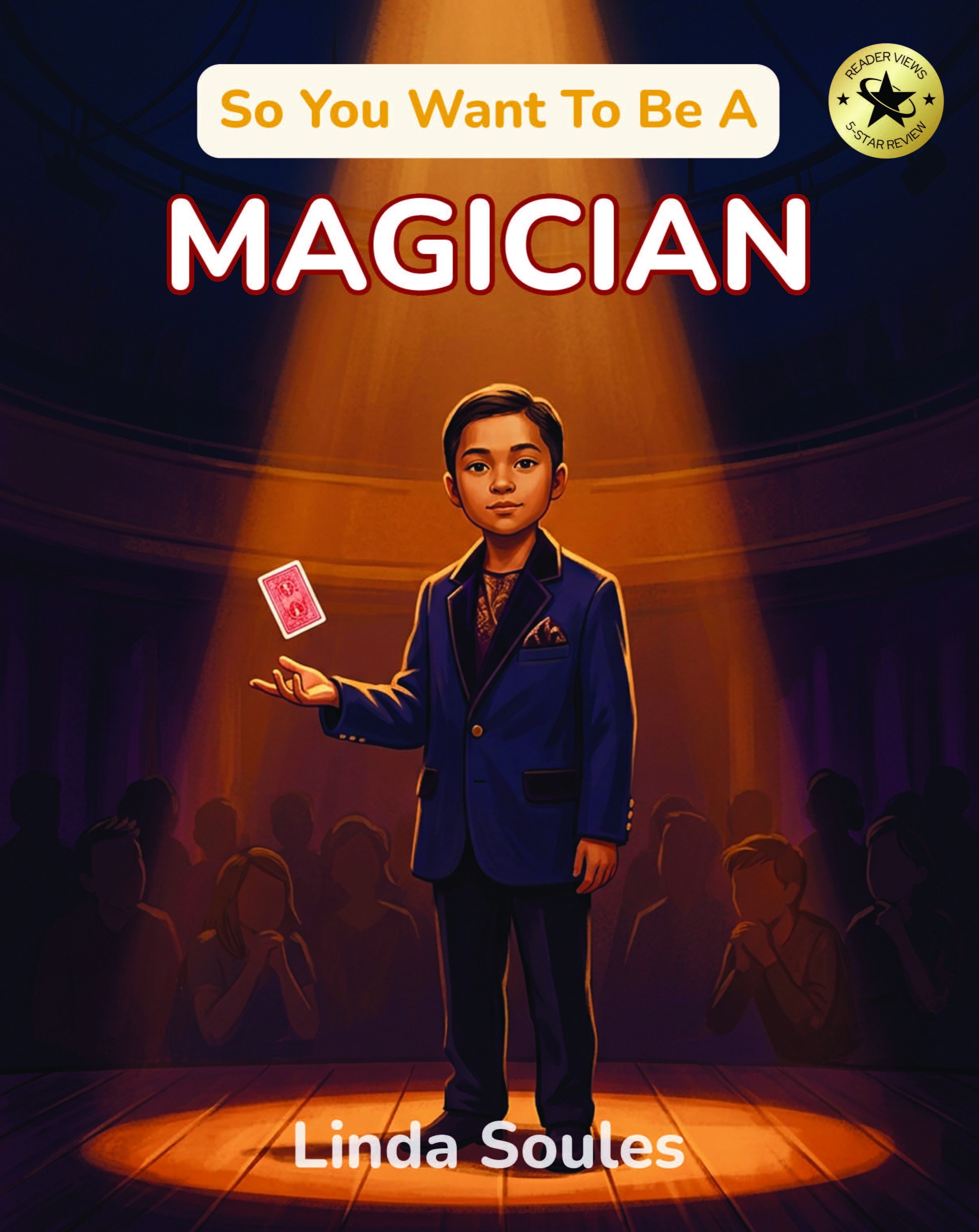
So You Want To Be A Magician
by Linda Soules
Key Takeaways
Summary
So you want to make a coin vanish, find a selected card in an impossible place, or look an audience in the eye and do something that seems utterly impossible. The first secret is that it is impossible: coins do not truly vanish, and cards cannot read minds. Magicians have no supernatural powers. But the feeling they create is real: the gasp when a card appears where it cannot be, the shiver when a closed hand opens empty, the instant when what you know clashes with what you just saw. That experience is wonder, and creating it is a magician’s work.
The craft rests on four skills working together, none of them simply the trick itself. Misdirection means controlling where the audience looks. While eyes follow a raised left hand, the right may be working invisibly in plain sight. The secret is not necessarily hidden; it happens where nobody is paying attention. Psychology is the second skill. Magicians have spent centuries studying how the mind perceives events, makes assumptions, and overlooks information. If you see a coin in a hand, watch the hand close, and then see it open empty, your brain may assume the coin was inside all along—even if it was secretly moved before the fist closed. You did not witness a vanish so much as see an empty hand and supply the missing event yourself.
The third skill is practice. A two-second coin vanish may take years to master, and sleight of hand must be repeated thousands of times until the movement is smooth enough to disappear from notice. The fourth is performance. Even a technically remarkable trick can feel like a mere puzzle if it is presented without personality, story, or connection. The method is the skeleton; the audience’s experience is the art. A magician has to make people care about what is happening, not simply show them how puzzling it is.
The mind’s shortcuts help explain why this works. The brain processes far more information than conscious attention can handle: it takes in about eleven million bits every second, while the conscious mind can manage only about fifty. So the brain filters, fills gaps, makes assumptions, and ignores what seems unimportant. Magicians shape their performances around those habits. Change blindness, for example, makes people poor at noticing changes that occur while they are distracted. A red card can be switched for a blue one in front of spectators, yet they may not register the change if their attention wanders for half a second. False memory is another opening. The mind does not preserve events like a camera; it reconstructs them, sometimes adding details that never happened. A spectator can later remember seeing a coin in a hand that was empty from the beginning. Magic uses these ordinary failures of perception to make the impossible feel real.
Magicians perform in very different settings. Close-up performers work at intimate range, with their hands visible only a few feet from the audience and spectators convinced they will catch the method. Stage magicians work in theaters, where controlled lighting, trap doors, and backstage infrastructure can support larger illusions. A theater show depends on careful organization as much as spectacle: props must be in their places, assistants must be briefed, and the whole system must run with discipline and precise coordination.
The practice space is usually quieter and smaller. It may have mirrors on three walls so a magician can check a move from every angle, a velvet-topped close-up mat to soften the sound of dropped coins, and frequently used props close at hand. The work there is repetitive and private, far removed from stage lights and applause. The difference is like the distance between a gym and a championship game: the performance is what the audience sees, but the preparation is where the skill is built.
A magician’s most important tool is misdirection: directing attention to the right place at the right moment, so the secret action remains unnoticed. Physical props work in partnership with that skill. A standard deck of fifty-two cards is among the most versatile tools of close-up magic. False shuffles, palms, forces, and controls can produce thousands of effects, but making them appear effortless takes years of daily practice. The deck may look ordinary; what matters is the magician’s practiced handling and the attention being guided around it.
Stage performers may use props with hidden mechanisms: boxes fitted with false panels, tables with concealed compartments, or cabinets that appear solid but are not. Smaller apparatus can be just as useful. A thumb tip is a hollow fake thumb that helps make small objects appear or disappear. Gimmicked coins may be double-sided, attached by thread, or designed to nest inside one another. These tools provide mechanisms, but a mechanism alone does not make an audience experience magic. The performer must know how to use it without drawing attention to it.
Performance itself is therefore another irreplaceable tool. A magician’s character, words, and theatrical skill can make spectators want to believe in what they are seeing. The same trick can remain a puzzle without that human connection, or become an experience when the performer gives it shape and meaning. The props may be hidden in a case, the method carefully concealed, and the movements polished through repetition; what the audience encounters is a moment arranged to feel impossible.
For magicians, the job’s greatest reward is the instant an audience experiences something impossible. They learn to recognize the difference between a polite “wow” and a genuine, involuntary gasp: the laugh that escapes, the hands flying to someone’s mouth, the expression of baffled delight before the mind catches up. That reaction cannot be faked. Creating it again and again, even after a thousand performances, remains thrilling.
There is pleasure, too, in the intellectual game behind the apparent ease. A magician must manage attention, execute technique, read the audience, and adjust in real time, all while seeming to have an ordinary conversation. And magic can cross barriers of language, age, and culture. The same astonishment can reach a five-year-old, a ninety-year-old, or a roomful of scientists, because the joy of being honestly surprised is shared.
The hard part is that a performance lasts only minutes while the preparation may take years. A sleight of hand lasting fifteen seconds can demand hundreds of hours of practice, and a professional’s repertoire holds many such techniques. The audience sees a thirty-minute show; behind it are years of solitary repetition, undertaken on faith that the work will eventually pay off. Practice continues until the method is invisible, not merely competent.
Even then, magic can fail in public. A trick may not work, a secret move may almost be seen, or a spectator may announce the method. Professionals develop ways to salvage a failed effect, sometimes turning the wrong outcome into a different right one. But recovery takes experience; a performer who handles a mishap gracefully has usually encountered failure before.
One surprise about the job is that spectators are not simply fooled by a trick. They are fooled by their own brains. Magicians developed techniques for exploiting attention centuries before neuroscience became a profession, learning through close observation of audiences what researchers later studied in laboratories. Modern psychology labs sometimes consult magicians about perception. In some card effects, moreover, mathematics does the work: an arrangement can retain predictable properties through a shuffle, allowing the magician to calculate the result while the audience feels the drama. The most astonishing-looking trick may require no sleight of hand at all.
A working day balances private practice, research, preparation, and performance. At nine in the morning, a magician may work on a move until no observer could spot it. By eleven-thirty, attention shifts to a new effect that has been in development for four months. If a secret move flashes, the performer tries a different grip, compares the result, and records what changed. The process is patient troubleshooting, not a sudden flash of inspiration.
At one, the work may turn to research: reading old magic books or studying recordings of earlier performers. A performance from 1973 might reveal a subtle handling the magician has never tried. At three, props are built or maintained. A gimmick that fails onstage is treated not as a technical problem but as a failure of preparation. At six comes a private event for one hundred guests, with a forty-five-minute performance. The audience sees someone for whom everything appears simple; the simplicity rests on thousands of private hours. During the drive home, the performer reviews what worked and what nearly did not, ready to take the near-miss back into practice the next morning.
A full show often depends on a team. A director helps develop and stage it; a prop maker builds apparatus that must withstand close inspection; a costume designer shapes the performer’s visual character. Stage managers handle technical coordination, while lighting and sound designers create the atmosphere. These collaborators share an unusual responsibility: they know methods the audience must not discover. The circle of people who build, light, dress, and run a magic show keeps its secrets together, a shared silence that connects magicians and their colleagues across generations.
The audience, however, is not merely watching. Its reactions help create each moment of wonder, and the performer responds to those reactions as the performance unfolds. In this way, spectators are co-creators of the experience. Magic can also offer people a temporary return to childhood’s sense that the world remains mysterious. A story told among magicians describes a performance for someone with Alzheimer’s disease, whose illness had made it increasingly difficult to remember conversations, names, and even loved ones’ faces. Simple tricks—a card appearing in the wrong place, a coin jumping between hands—brought laughter. For a moment, wonder seemed to reach a place that forgetting had not dimmed.
The work calls for obsessive attention to detail, because a trick can fail at the one element that was not practiced enough. It also requires composure under scrutiny: a magician may be only two feet from spectators actively trying to catch the method, yet must keep a steady voice, relaxed hands, and conversational pace. Technical precision alone is not enough. Presence and personality make the audience feel something, while the performer’s delight in that response must stay alive even after countless shows. Keeping secrets with integrity matters as well: secrecy protects the audience’s capacity to be surprised, rather than serving as a way for the magician to show off.
Some necessities are less obvious. The job’s public face is lively, but much of its labor is quiet solitude: one move repeated thousands of times before a mirror, with no applause. Storytelling gives tricks shape, turning a puzzle into an effect with a beginning, a middle, and a moment of astonishment. And behind the performance there can be serious engineering and craft: constructing custom props, understanding the physics of an effect, and making mechanisms work reliably under pressure.
That care begins with a distinction between what the audience experiences and what the magician secretly does. The effect is the vanishing coin, the changed card, the impossible revelation; the method is the hidden machinery that makes it happen. A strong magician designs from the effect backward, asking what the audience should see and feel before deciding how to achieve it. A method can be ingenious, but ingenuity alone does not make an experience memorable. The audience must be drawn into the moment, and the secret must remain invisible without making the performance feel like a demonstration of technique.
Misdirection is not simply a matter of distracting people with a flourish. It is the deliberate shaping of attention. If the audience follows a raised left hand, the right hand may act in full view and still go unnoticed, because people do not absorb everything their eyes encounter. The brain filters most incoming information, prioritizing what seems important and filling in what it expects to find. A magician can exploit that tendency: if spectators see a coin, then a hand close, they may later remember that the coin remained there until the hand opened empty. In fact, the secret move may have happened before the fist closed. The audience’s mind supplies the continuity that the eyes never actually witnessed.
That process is part of why a trick can feel more impossible than it is. Change blindness makes people poor at spotting a change that occurs during a brief lapse in attention. A red card can become a blue one while spectators are looking directly at the cards, provided their attention has shifted at just the right instant. Memory, too, is not a recording that can be played back exactly. It reconstructs events, sometimes adding details that seem to fit. A magician can therefore influence not only what people notice, but what they believe they noticed. The secret is not always concealed in the hands; sometimes it is concealed in the audience’s own reconstruction of what happened.
Even the tools of magic matter chiefly because of how they work with attention and expectation. A standard deck of fifty-two cards is extraordinarily versatile, but its possibilities depend on false shuffles, palms, forces, and controls made convincing through practice. A force, for example, guides someone toward a particular card while preserving the feeling that the choice was entirely free. Onstage, hidden panels, compartments, and carefully designed cabinets can support larger effects. Small objects may be managed with a hollow thumb tip, or with coins made to nest together, attach to thread, or show the same face on both sides. These objects do not create wonder on their own. They give a performer a method to conceal while the audience watches the story unfold.
The difference between a secret move and a finished performance is measured in practice. In a private practice room, mirrors on three walls expose a move from angles that a performer cannot easily see unaided. A velvet-topped mat muffles the sound of dropped coins, while frequently used props remain close at hand. The work may be silent and repetitive: a grip adjusted, a move tried again, a small flash noticed and corrected. The standard is not merely that the move works, but that it cannot be seen even by someone paying close attention. A two-second vanish can demand hundreds of hours; a brief performance is often the visible tip of years of private repetition.
The performer must also learn to make that labor disappear from the performance. In a show, a technically exact move has to coexist with a steady voice, natural pacing, and attention to the people watching. A magician may be executing a precise action while appearing to have an ordinary conversation. The words, known as patter, can tell a story and keep attention directed, but they also help establish the character and stakes of the effect. Without that human connection, even a flawless trick can seem like a puzzle offered for inspection. With a story and a performer the audience wants to follow, the same method can become an experience.
Audiences contribute to that experience in ways the magician cannot simply script. Their eyes, expressions, and reactions tell the performer whether a moment has landed. A gasp, a laugh that escapes before anyone can suppress it, or hands flying to the mouth are different from a polite “wow.” The performer learns to notice that difference and adjust in real time. Magic can work across age, language, and culture because the basic pleasure of being surprised needs little explanation. A five-year-old, a ninety-year-old, and a roomful of scientists may respond to the same impossible moment, though the performer still has to read each particular group.
The setting changes the demands of the craft. In close-up magic, the audience may be only a few feet away, watching hands and objects with the confidence that they will catch the secret. There is no stage to hide behind. In a theater, controlled lighting, trap doors, and backstage infrastructure can support larger illusions, but that scale requires discipline and coordination. Props must be in their places, assistants briefed, and the sequence of technical cues reliable. Directors, prop makers, costume designers, stage managers, and lighting and sound designers can all contribute. Each person involved may know methods that remain hidden from the audience, and the show depends on their shared care as much as on the magician’s performance.
No amount of preparation can guarantee that every effect will work. A trick may fail, a method may nearly be seen, or a spectator may announce a suspected secret. Recovery is itself a learned skill: the magician must find a way to turn a wrong outcome into a different right one without abandoning composure. That ability comes from having encountered failure before, then returning to the work to understand what went wrong. In the daily rhythm of practice, the almost-failed moment is not discarded; it becomes a problem to examine, adjust, and try again. A performer’s confidence onstage is built not by pretending nothing can go wrong, but by preparing for the moment when it does.
Magic has a long history of people learning how to make the impossible feel real. The oldest known written description of a trick appears on an ancient Egyptian papyrus from around 1700 BC. It describes a performer apparently cutting off a bird’s head and reattaching it, though the method is not recorded. Centuries later, Harry Houdini made escapes a worldwide obsession. He freed himself from handcuffs, water-filled milk cans, sealed crates lowered into rivers, and straitjackets while suspended upside down from skyscrapers. As a boy, he practiced picking locks with a pin; the skill that seemed supernatural to audiences was a physical ability he had learned and honed.
Houdini was also part of a tradition in which magicians pass knowledge from one person to another, while guarding the methods that make astonishment possible. One of the most influential teachers in that tradition was Dai Vernon, known as The Professor. The famous story says he fooled Houdini seven times with the same card trick, after Houdini had claimed he could catch any method in three attempts. Vernon’s deeper influence came from a different choice: for sixty years, he turned down lucrative big stages and instead taught at a small table in the Magic Castle in Los Angeles. Three generations of close-up magicians learned from him for free, and much of modern hands-across-a-table magic traces back to his devotion to the craft.
Adelaide Herrmann helped reshape who could claim a place in that craft. In the 1890s and early 1900s, she was already a spectacular magician; after her husband, the famous Alexander Herrmann, died, she took over his entire show. She performed the Bullet Catch, made full-grown horses appear and disappear, and toured for thirty more years as the Queen of Magic. At a time when magic was almost entirely a man’s profession, she ran one of America’s largest stage shows herself. Her career demonstrated that mastery came through practice, not permission.
The art continues to evolve as audiences and technology change. Canadian-American magician Shin Lim reached millions when he won America’s Got Talent in 2018 with card effects so clean that professional magicians watched the broadcasts in slow motion to search for their methods. He later won AGT: Champions and headlined his own Las Vegas show. In an age when viewers can pause, replay, and zoom in, his success showed that close-up sleight of hand has not faded; it has become even more exacting.
Magic’s traditions include formal communities as well as personal mentorship. London’s Magic Circle requires an original-act audition and a formal oath of secrecy, and members can be expelled for revealing methods. The Society of American Magicians, founded in 1902 in the back room of a New York magic shop, once had Houdini as its president. Its local assemblies bring magicians together to share, perform, and mentor beginners. The International Brotherhood of Magicians, the world’s largest magic organization, has local rings in more than eighty countries and publishes The Linking Ring. For younger performers, the Society of Young Magicians offers meetings, workshops, and chances to perform alongside professionals; members can graduate into the Society of American Magicians at eighteen.
For anyone eager to begin, the advice is to learn one trick and learn it well. A simple card effect offers a first lesson. Secretly note the deck’s bottom card before starting. Have someone choose a card, remember it, and place it face down on top. Ask them to cut the deck by lifting off a portion and placing the rest on top. When you spread the cards face up, find your secret card: the selected card will be next to it. The cut seems random, but it brings the two cards together. The point is not to collect impressive-sounding tricks; a simple effect performed perfectly is worth more than a complicated one performed carelessly.
Practice in front of a mirror, checking whether the move is visible from an audience’s perspective. Then perform for family and friends, beginning with people who will be kind. The first hundred performances are practice, not a final display. Books can teach more than the motions: they explain the principles behind effects, and the library’s magic books can be found at 793.8. Studying old performances and the history of the art helps deepen a performer’s understanding, while watching people closely reveals where their attention goes and how they respond. Keeping a notebook for trick ideas, even impossible ones, gives curiosity somewhere to grow.
A magician’s guiding questions are practical and imaginative at once: What does the audience expect, and how can that expectation be used? Where is everyone looking, and how can the secret happen elsewhere? How might a performance create a moment someone remembers for years? These questions point to whether the work might suit a person: it calls for curiosity about how things work and how to make them mysterious, along with the patience to repeat a skill until it looks effortless. A child who performs a trick for one friend and sees that first astonished gasp has already touched the heart of the profession. The card is only the method; the wonder is the purpose.
That purpose makes the ethics of magic unusually important. Most professions depend on telling the truth, while magic deliberately creates a temporary false belief. A performer therefore holds power over an audience, and the responsibility is to use it gently. Never make someone feel foolish, use a spectator’s trust for personal advantage, or expose a secret simply to prove that you know it. Secrecy is not a boast or a way to elevate the magician above the audience. It helps preserve the audience’s ability to stay open to surprise. The deception is meant as a gift, not a trick played at someone’s expense.
There are many ways to keep learning. David Kwong’s How to Fool Your Parents offers beginner tricks and advice about what to do when one goes wrong. Richard Kaufman’s Knack Magic Tricks uses photographs to explain a broad range of effects, while Harry Lorayne’s The Magic Book is a classic to grow into, with card and coin magic using ordinary objects. For online lessons, Vanishing Inc. Magic offers free beginner videos, and Theory11 provides tutorials that break sleight of hand into individual moves. Magicpedia, the free encyclopedia maintained by Genii magazine, is a place to explore performers, books, and the art’s history.
Seeing magic live offers something a screen cannot: no pausing, replaying, or slowing the moment down. A local show, library program, street performance, or professional theater can make the form feel immediate. A magic shop may connect a beginner with a working magician who can suggest an appropriate book or starter set, while a young magicians’ club offers peers to learn and practice alongside. The craft has been taught hand to hand for centuries, and there are people ready to teach it now. The work begins with learning the method, but it becomes magic only when practiced with care and offered with generosity.
Chapter Summaries
What If You Were a Magician? — The Craft Behind the Wonder
The book begins with the appeal of making an impossible event seem to happen: a coin vanishes, a chosen card reappears in an unexpected place, or an audience sees something its instincts say cannot be real. It clarifies that magicians do not use supernatural powers. The reality they create is the audience’s experience of wonder—the gasp or moment of disbelief when what people know seems to conflict with what they just saw. The craft rests on four connected abilities. Misdirection steers attention away from the secret action; psychology uses the brain’s habits of filtering and filling in gaps; practice makes technical moves smooth enough to escape notice; and performance gives a trick personality and emotional meaning. The book uses concepts such as change blindness and false memory to explain why spectators may overlook a switch or later remember an event differently from how it occurred. The method is only the mechanism; the experience is what the magician designs.
Where Magicians Work and What They Use
Magicians perform in settings ranging from close-up tables, where spectators are only inches away, to theaters equipped for large illusions. Close-up performers have little room to conceal their actions, while stage magicians may rely on lighting, backstage systems, assistants, and carefully engineered apparatus. Whatever the venue, successful work depends on preparation and organization: props must be in place, assistants briefed, and the show coordinated precisely. The book emphasizes that a magician’s practice space is often private and practical rather than glamorous. Mirrors help test how a move looks from different angles; a close-up mat softens the sound of dropped coins; frequently used props stay close at hand. Cards are especially versatile, supporting techniques such as false shuffles, palms, forces, and controls. Other tools include gimmicked objects and stage props with hidden mechanisms—but every physical tool depends on the performer’s ability to direct attention and make the audience care.
The Rewards, Difficulties, and Surprises of the Job
The most satisfying reward is the involuntary reaction of an audience: a gasp, laugh, or hands flying to the mouth before people can decide how to respond. Magicians learn to distinguish that genuine astonishment from a polite compliment. They also enjoy the demanding mental work of performing several tasks at once—managing attention, executing technique, reading the room, and adjusting while appearing relaxed. Because surprise does not depend on a shared language or age, a performance can connect with a child, an older adult, or a roomful of scientists in much the same way. The job’s less visible side is the amount of solitary practice behind a brief effect. A short sleight may take hundreds of hours to master, and a performance can fail publicly: a trick may not work, a method may nearly be exposed, or a spectator may identify the secret. Professionals learn recovery techniques, but those come from having experienced mistakes. The book also highlights a surprising point: the audience’s own brain is often what makes the deception work. Some card effects rely on mathematical properties rather than sleight of hand, showing that a seemingly impossible result may come from an arrangement or calculation hidden inside the performance.
A Magician’s Working Day and Team
The sample day shows how a professional’s polished performance grows out of routine. The morning begins with practice, judged not by basic competence but by whether any method could be noticed. The magician then works on new material, testing different grips to eliminate a visible “flash,” researches old books and recordings for ideas, and maintains props so they will not fail onstage. A private event in the evening may last less than an hour, while the work behind it represents years of preparation. Afterward, the performer reviews what succeeded and what nearly went wrong, turning the latter into tomorrow’s practice. A full show may involve a director, prop maker, costume designer, stage manager, and lighting and sound designers. Each person contributes to the experience, and the team shares responsibility for keeping methods secret. The audience is also more than a passive observer: its attention and reactions help shape each moment. The book presents this combination of teamwork, secrecy, and audience participation as distinctive to magic, with a shared professional culture built around protecting the illusion.
How Magic Helps and What the Magician Needs
The book describes magic as a way to restore a sense of possibility and delight. It recounts a story of a magician performing simple tricks for a person with Alzheimer’s: a card appearing in the wrong place and a coin seeming to jump from hand to hand prompted a real laugh and a moment of connection. The story is offered as an example of how wonder can reach someone even when memory is affected. More broadly, a performance gives children and adults a chance to be surprised together and briefly feel that the world is not completely explained. To create that experience reliably, a magician needs more than nimble fingers. The essential qualities include close attention to detail, composure while being watched, stage presence, respect for professional secrecy, and continued delight in the audience’s response. The work also calls for patience with long periods of solitary practice, storytelling that gives tricks a beginning and climax, and engineering or craft skills for building and maintaining props. These less obvious requirements help turn a technical puzzle into an engaging performance.
Magicians Through History and Magic’s Traditions
Profiles of famous performers show several paths through the art. Harry Houdini became renowned for escapes from handcuffs, water-filled containers, sealed crates, and straitjackets. Dai Vernon, nicknamed “The Professor,” is remembered not only for fooling Houdini with a card trick but also for teaching generations of close-up magicians. Adelaide Herrmann took over her husband’s show after his death and built a long career as a major stage performer at a time when the profession was largely dominated by men. Shin Lim’s success on television demonstrates how highly refined close-up magic can still astonish audiences who can replay performances in detail. Historical and behind-the-scenes facts underline magic’s long evolution. The book points to an ancient Egyptian papyrus, Houdini’s childhood lock-picking, the contested secret of the Chinese Water Torture Cell, and David Copperfield’s televised disappearance of the Statue of Liberty, achieved through staging and audience perception rather than moving the monument. It also describes the Magic Circle’s formal secrecy rules and notes that magicians can use audience blinking as part of misdirection. Together, these examples show how performance, invention, technical skill, and guarded knowledge have shaped the profession across centuries.
Getting Started, Professional Ethics, and Next Steps
For beginners, the book recommends learning one trick thoroughly rather than collecting many tricks without mastering them. It gives a starter card effect: remember the deck’s bottom card as a key, have a spectator place a chosen card on top, and use a cut to bring the two cards together; finding the key reveals the selected card beside it. Readers are encouraged to practice in front of a mirror, perform first for supportive family and friends, read books to understand principles, observe how people direct their attention, and keep a notebook of ideas. The book also offers questions a magician can use when developing an effect, such as what the audience expects and how to guide its attention. The closing sections define terms such as effect, method, force, palm, patter, and sleight of hand, then connect technique to responsibility. A magician’s deception should be a gift rather than a way to embarrass or exploit someone; secrecy helps preserve the audience’s trust and capacity for surprise. The book encourages aspiring magicians to see live performances, visit magic shops, find a youth club, and explore books and organizations. Its central invitation is to learn both the craft and the gentleness that makes wonder safe to share.
Notable Quotes
“A magician's job is to create that feeling.”
“The method is just the skeleton. The feeling is the art.”
“The secret isn’t hidden. It’s simply happening where no one is watching.”
“The standard is not competence, but invisibility.”
“The audience is not at all passive. They are the co-creator of every moment of wonder, the reason the art exists at all.”
“A simple trick performed perfectly is worth ten impressive-sounding ones done sloppily.”
“The magician deceives in order to give.”
“The real craft of magic is not fooling people. It is taking care of the part of them that still wants to believe.”
