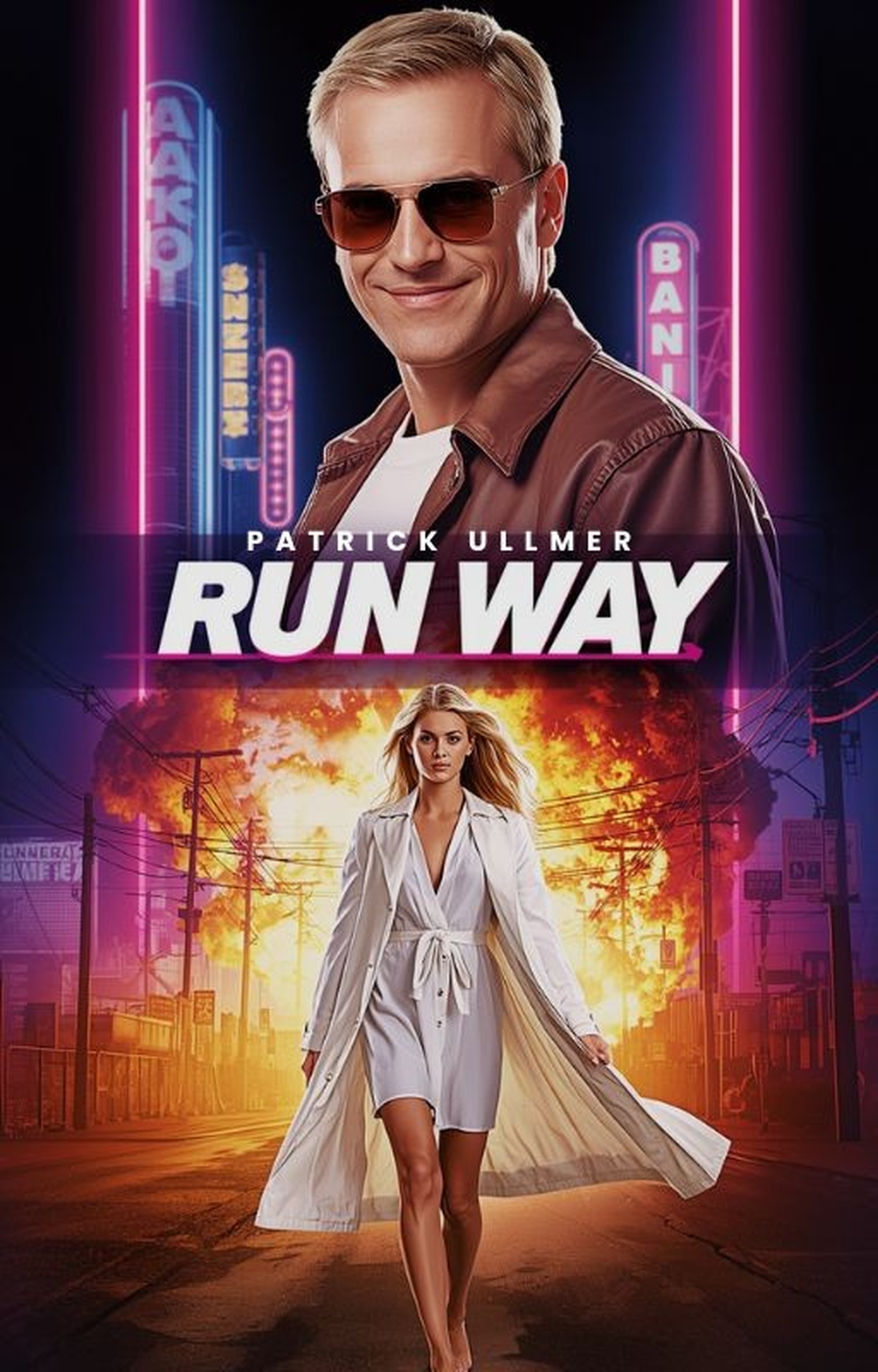
Run Way
by Patrick Ullmer
Key Takeaways
Summary
On the night of Juliette Wilde’s abduction at the runway show, the pageantry of fashion is shown as a brutal machine that turns a person into an object while smiling at the audience. Juliette walks the show in white, with her hands in her coat pockets and no smile on her face, while Chuck Bogartis watches her with hard managerial scrutiny. In the dressing room, one of Chuck’s trusted associates slips inside under the cover of legitimacy, finds Juliette crying before a mirror, and notices Rappacini’s Daughter and other Stories by Nathaniel Hawthorne on her table. He asks if she is all right, then abruptly chloroforms her and carries her out to a waiting van, where four grimy men load her in and vanish into the city night. The kidnapping is presented not as random crime but as an extension of the industry’s logic: Juliette’s body has already been treated as a commodity, and now it is simply taken one step further.
A month earlier, Mitch Corvin is introduced as a man on the margins trying to live straight after a criminal past. He is watching Juliette on television while playing pool with Ralph when the Smashers gang approaches him. Grady, the gang’s physically imposing leader, wants Mitch back because Mitch’s real value is not brute force but instinct, nerve, and street sense. The offer comes with the recurring challenge that defines the novel’s moral pressure points: “The ball’s in your court.” Mitch refuses to rejoin a gang that has gone from reckless teenagers to people who exploit the Stigeons for money and violence, insisting that any return would have to involve charity, community service, or recompense for crimes. Even before his life intersects directly with Juliette’s, his character is established through action: he calmly scares off a gas-station robber by noticing the camera and police response, then goes home to his mother and explains his failed job hunt, his criminal record, and his modest effort to survive through photography and poetry. His mother lets him stay only if he keeps applying for honest work.
Mitch’s first real connection to Juliette comes through his eye as a photographer. Sitting on a park bench, he sees a woman who resembles the blonde in the magazine on his lap. He follows her, pretends she dropped a handkerchief, and then asks to photograph her. She is wary, but he disarms her by saying she looks like her own person, not a generic beauty. He does not flatter her with empty glamour; instead he notices her walk, her eyes, and her individuality. He jokes with her, gets her to laugh, and takes images that reveal something real. When the photos are processed and he later sees Juliette’s face on a Run Way billboard, he is stunned. Soon afterward, Juliette calls him for a job as personal photographer, and although Mitch assumes he has failed the interview because of his record and his awkwardness, he is hired anyway, with strict conditions: no leather, no jeans, no smoking, no mullet, and total availability whenever she moves. Their working relationship begins under that pressure, and the title phrase of the novel’s moral world becomes literal as well as metaphorical: her time, movement, and even his own choices become subject to the question of what he will do when it is his turn to decide.
Juliette’s perspective reveals the cost of the glamorous image. At Blandisar Suites, she signs endless photographs of her smiling face while sensing the business slipping out of her hands. On a white villa photo shoot, the cameras and flowers are beautiful, but she feels herself shutting down, starved and exhausted, and an older professional photographer refuses to shoot her because she has “dead eyes.” Chuck tries to “fix” her with pills, then reminds her that image is everything, comparing politics and television as if public likeness were the only reality. He also tells her she may face a choice she will not want to make someday, a warning that hangs over everything that follows. When she meets Mitch in the park, his refusal to recognize her as a packaged celebrity gives her something rare: a brief encounter in which she is seen without being consumed. Later, when he photographs her with both instinct and humor, he makes her laugh genuinely, tells her she has beautiful eyes, and gives her the feeling that someone is noticing her inner life instead of using her as a billboard.
The most consequential part of this early relationship is the way Mitch’s roughness conceals principle. Juliette reads his rap sheet and learns he once went to jail for assault and battery, but he explains that he was defending himself from a dealer who controlled a dangerous area of the city called the Stigeons. He describes the police there as useless and explains that he gave himself up only because he was outnumbered. He also shows a strange philosophical precision, distinguishing between “I apologize” and “I’m sorry,” and answering hard questions directly rather than cosmetically. Juliette asks why he wants the job, and he says simply that the ball is in her court. When she eventually hires him, his professionalism is mixed with his blunt code: he is willing to work, but he will not flatter authority or pretend that image is morality. That becomes clear when he intervenes in the office after Ritchie grabs Juliette by the neck and hair. Mitch slams Ritchie against the wall, questions his name, and leaves only when Juliette orders him to back off, showing that his loyalty is to her safety, not to bureaucratic etiquette.
Once aboard as Juliette’s photographer, Mitch proves that his eye is different from the industry’s usual mechanical glamour. During a test shoot he explains that Run Way does not sell clothes so much as the idea of a lifestyle and the illusion of looking like Juliette. He and Juliette discuss the body as billboard, the magazine as image machine, and the model as the face through which others monetize desire. Mitch then refuses to be passive when Juliette is mistreated. He defends her against a pair of French brothers making filthy comments, and later slaps Ritchie after Ritchie insists that one night with him would advance her career. Juliette is horrified by Mitch’s violence, but she is also relieved, and he can tell. Their connection deepens around ordinary things too: lunch at Green’s with a simple salad, an argument over food and weight, his crude jokes, and her candid admission that models drink coffee and smoke because they are diuretics. When Juliette finally confesses that modeling feels like cutting off pieces of herself and that she fears being pushed toward sexual compromise, Mitch does not dismiss her complaint. He calls it a Faustian favor, then tells her dignity matters and that she is more beautiful because she refuses to put a price on it. When she breaks down, he carries her to the mirror and makes her look at herself as a person, not a product, until she sees what he sees.
Juliette’s confidence in Mitch deepens at the same time that the studio’s atmosphere grows more openly hostile. Chuck notices how quickly Mitch has become useful, not just because his photographs are unusually alive, but because Juliette is visibly happier around him. On the drive to Hawaii, Mitch keeps making outrageous comments about aging movie stars, praising Helen Mirren’s beauty and insisting Juliette will age like Ann-Margret, like a bottle of wine getting better with time. When Juliette asks whether he can picture her as an old woman, his immediate, sincere answer makes her smile in a way Chuck cannot control. Even his offhand grumbling has an odd effect on her; when he wonders aloud what Vanna White will look like in fifty years, the joke becomes part of their easy rapport. The underwater shoot that follows is physically brutal, but Mitch refuses to let her endure it alone. When Juliette starts to panic after her hair catches on coral, he follows her up, sees her fear, and keeps her calm long enough to try again. He chooses to take the same strain she does rather than act like a detached professional, and that shared ordeal matters more than the finished images.
The bond between them becomes even more personal when Mitch, wrecked by the long shoot and alcohol, shows up at Juliette’s door in a drunken spiral of self-loathing. He talks himself into a confession that he has wasted his life and left nothing behind, then collapses into repeated, slurred variations of “literably nothing.” Juliette doesn’t laugh at him; she corrects him gently, tells him he is wrong, and insists that working for her is not nothing. When he asks why she hired a “grody, wild-card, third-rate Clydesdale,” she answers, with complete seriousness, that he saw her when everyone else only looked at her. Mitch is stunned by the admission. Juliette strips off her robe and goes back to work, but the emotional fact of what she has said stays with them.
That fragile trust is immediately tested by the return of Chuck’s pressure. Juliette learns she has been offered an acting role in a Cannon production, and Mitch’s instinctive reaction is bluntly protective; he says Cannon is not B-movie material but Z-movie material, and warns her that if Charles Bronson is involved she may regret having a female role at all. Juliette is hurt by how easily he sees the danger she is trying to ignore, but that is exactly what she later needs when she finally confronts Chuck in his office. The script he shows her demands too much exposure, and when he pushes her toward it with the same old logic about image and career advancement, she finally refuses outright. She tells him it is not happening. Chuck’s answer is colder than before: not yet. The threat is unmistakable, and Juliette leaves feeling sick. Mitch, who can see what she cannot say aloud, reads the room instantly when she comes to him and calls Chuck “Up-Chuck.” Juliette tries to hide her distress, but Mitch clears the studio, sits her down, and asks her to spill everything.
She does. Juliette admits that modeling no longer feels like glamour but like dismemberment; she is cutting off pieces of herself to satisfy other people’s expectations. She starves herself, keeps up a family-friendly image, and feels that her body belongs to an audience that doesn’t know or care who she really is. She speaks about the fear of being pushed into more and more compromising situations, until she might end up on a spread or committing a favor she does not want to commit. Mitch recognizes the phrase at once and calls it a Faustian favor, fame and fortune at the expense of the soul. Then he says the important thing: she is not complaining, because she has earned the life she built, and she does not put a price on her dignity. To him, that refusal is what makes her beautiful. When she mentions that Chuck told her to lose thirty-five pounds after he first signed her, Mitch’s face says enough. Juliette has never told that story to a man before, and his reaction proves he understands the cruelty of the business without needing every detail. Their banter turns briefly risqué, then turns inward again when Mitch asks whether she even likes modeling. Juliette answers with bitter humor that a blue-ribbon winning cow probably doesn’t enjoy being meat. She starts laughing and crying at once, and Mitch responds by holding her, carrying her to the makeup room, and setting her in front of the mirror. There, he forces her to look at herself the way he does: not as a product, but as a person. She sees the reflection of his reverence and, through it, her own humanity. The weight lifts.
After that, Juliette rewards him with payroll and then with the sort of day she herself has long been denied. She gives him a check with an extra zero, then later spends the day with him in his newly bought red Corvette. They go to a fair, ride roller coasters, steal a donut from each other, lie in the grass, and watch the sunset. At the cinema, Juliette reacts to the Stallone movie like a trapped animal turning into a cheering child, and Mitch enjoys her joy more than the film. Even when she asks him not to smoke because she doesn’t want to taste smoke if their lips ever meet again, he immediately obeys, chewing Altoids instead. The next day, however, Chuck intervenes again. He tells Juliette that Mitch has become a distraction and orders her to fire him. She is trapped by the old ultimatum: her employee or her career. When she calls Mitch in and tells him he is terminated, his face goes blank with disbelief and hurt. He sees through the lie at once, understands that Chuck forced her hand, and leaves with dignity after saying only that it was nice working with her.
Juliette wakes to find the Honda being driven by two strangers, still speeding through the night with Mitch in pursuit in a stolen sedan. Panic gives way to quick thinking when she realizes the car is being pushed toward danger by Mitch’s attack from behind, and she instinctively buckles her seat belt as the chase turns into a terrifying scramble through traffic. The delinquents nearly kill pedestrians and themselves as they swerve across streets, but Mitch keeps pressing them until he forces the Honda toward a bluff. Juliette escapes the wreck just as the car tips and tumbles into a ravine, and when she and Mitch are reunited on the roadside she sees again how completely he is willing to put himself in harm’s way for her. As they flee on foot, chased now by angry Yellowjackets, Mitch explains more of what happened to the Smashers, revealing that he had founded the gang when it was still just a group of leather-jacketed boys interested in racing, beer, cigarettes and trouble, not organized crime. It went bad, he says, when the wrong people got involved and started chasing money through dope peddling, robbery and the like. Jonathan, his best friend, had once taken part in the street-race initiation that ended in his supposed death, and Mitch admits that Jonathan’s loss was what drove him away from the gang’s old life. Juliette begins to understand that Mitch’s roughness has always been wrapped around a code of loyalty and responsibility rather than cruelty.
Their flight leads them into another confrontation with a trio of Breaknecks, who try to close in on Juliette with a bat, a chain and a knife. Mitch beats them off with grim efficiency, then notices that the true danger is not just the violence but the way men keep trying to claim Juliette’s body as public property. On the subway platform, Juliette suddenly recognizes the man who kidnapped her: Arthur Duddle, which Mitch realizes in horror is Jonathan, alive after all. Jonathan reveals that he faked his death after growing tired of Mitch’s refusal to turn the Smashers into a real criminal enterprise. He had wanted money, not shenanigans, and he had spent years setting up a new identity and a careful long game with Chuck Bogartis. The kidnapping, he explains, was always meant to be a publicity stunt that would keep Juliette in the spotlight while he and Chuck profited and the Smashers took the fall. But Mitch’s presence has already complicated everything, because he and Juliette are no longer strangers. Jonathan points a gun, but Mitch shouts that Jonathan is armed and leaps into the subway car with Juliette just as the doors close. Jonathan is left behind on the platform while police move in on the Smashers, and he escapes by car, determined to intercept them at the next station.
Inside the train, Mitch and Juliette have a brief moment of exhausted honesty. Juliette tells him the kidnapping felt planned in a way that made no sense for ordinary criminals, and she realizes that Chuck’s whole operation is built around protecting the image while discarding the person. Mitch is devastated by Jonathan’s betrayal, but Juliette comforts him by saying she knows who her friend is. She admits that she was wrong when she said they could never be friends, and he gives her the same quiet, startled recognition he has been learning all along to trust. The station stop at Evansen Street ends in more violence: Jonathan shoots Mitch, but the bullet is stopped by the antique watch Juliette gave him, lodged in his chest pocket. Juliette attacks Jonathan in a rage, but he shoves her into his car and drives onto the bridge with Mitch clinging to the windshield. As the sedan crashes against the bridge railing and teeters over the river, Mitch fights through gravity and panic, while Juliette distracts Jonathan long enough for Mitch to pull himself aboard. Jonathan falls into the water and disappears, and the car plunges after him. Mitch wakes in the river with Juliette kissing him awake to give him air, and the two finally understand that Jonathan is truly gone. They open the briefcase recovered from the riverbank and find the ransom money and Jonathan’s tape recorder, which contains the scheme in Chuck’s own voice. Mitch sees the whole thing at once: a fake kidnapping, a stolen career, a business model that treats a woman as an object to be managed and monetized. Juliette says she had not known what she wanted from her contract, but now she does. Mitch refuses the money as theirs and frames the moment as another turn of the moral test the story keeps returning to: the ball is in her court now. They bring the evidence to Run Way, where Mitch hands the tape recorder to the press and walks away from the chaos, leaving Chuck to face the consequences.
Juliette and Mitch part amid reporters, but their separation does not feel final to either of them. At first she lets Chuck think she will return to the old arrangement, hugging him just long enough to steal his keys, then she takes his Rolls-Royce and races after Mitch. She cuts in front of his red car and steps into the headlights, recreating the pose from the park that began their connection. Mitch recognizes what she is doing, and the two mirror each other again, each settling into the same composed, angelic posture they once made during their first photo session. The gesture confirms what has been building all along: he saw her when everyone else only looked at her, and she finally sees him not as a liability or a rough man with a record, but as the person who kept choosing decency over comfort. Their relationship has never been built on polished romance or status, but on vulnerability, rescue, and the willingness to act when the choice is hard. In that last exchange, with Mitch smiling back at her across the hood of the car, Juliette has chosen herself as much as she has chosen him, and he has chosen to meet her there.
Chapter Summaries
Chapter 1 — Kidnapper
The novel opens at a glamorous Run Way runway event in the summer of 1986, where Juliette Wilde is presented as the “hottest face of Innocence.” The setting is all spectacle: lights, music, makeup crews, and social elite crowding the lobby. Juliette’s walk is controlled and perfect, but unlike the other models she does not smile, immediately signaling emotional distance from the industry and its expectations. The chapter quickly pivots from pageantry to abduction. A man posing as a trusted associate slips past security and enters Juliette’s dressing room, where her copy of Hawthorne’s Rappaccini’s Daughter sits in view, subtly connecting her fate to themes of beauty, corruption, and control. He chloroforms her and carries her into a waiting van, establishing the kidnapping plot as both criminal act and symbolic theft of identity. The chapter frames Juliette less as a celebrity than as someone already trapped by others’ designs on her image and body.
Chapter 2 — Mitch
One month earlier, the story introduces Mitch Corvin in a bar with his friend Ralph, where he is approached by the Smashers, a former street gang he once led. They want him back because of his driving skill and organizational ability, but Mitch refuses any return to criminal life. Their conversation reveals his guilt over his friend Jonathan’s death in a race and his lingering discomfort with the gang’s drift toward more serious crime. The chapter also establishes Mitch’s working-class struggle: he cannot keep jobs because of his record, lives with his mother, and survives through odd work and poetry submissions. Yet he is observant, clever, and unexpectedly principled, as shown when he calmly foils a gas-station robbery. Later, he meets a disguised blonde woman in the park and photographs her with care and humor, asking to capture her as herself rather than as a generic beauty. That woman turns out to be Juliette Wilde, and his photographs impress her enough to hire him as her personal photographer. Juliette sets strict rules—no leather, no jeans, no smoking, no late arrivals, constant proximity—signaling both her control and her desire for a photographer who will function as a true shadow, not just a technician.
Chapter 3 — Juliette
This chapter shifts to Juliette’s perspective and makes her dissatisfaction with the modeling world explicit. During a photo shoot, the older professional photographer declares that she has “dead eyes,” confirming her fear that her public image is hollow. Chuck Bogartis, her manager, responds by trying to medicate the problem rather than address her emotional state, revealing his belief that image is everything and that her discomfort is irrelevant as long as the brand survives. Juliette’s encounter with Mitch becomes the turning point. In the park, he photographs her as an individual, not a mannequin, and his questions and jokes make her laugh and open up. When he later interviews with her for the photographer job, he explains his criminal record, his code of self-defense, and his understanding of language and apology with surprising depth. Their exchange makes it clear that Mitch sees the world in moral terms, not just practical ones, and Juliette hires him for his eye and his honesty. The chapter closes with their first professional friction and mutual fascination, especially after Mitch defends her from Ritchie’s unwelcome physical advances and later takes her to dinner, where she lays out the limits of their relationship: he is her employee, not her friend. This boundary is painful, but it also defines the emotional stakes of the story.
Chapter 4 — Mitch
Mitch begins settling into his new role and enjoys the status boost of working for Juliette, but the chapter quickly shows that his loyalty to her is not merely professional. He clashes with Chuck, who threatens him after the earlier confrontation with Ritchie, and Mitch answers with blunt contempt that Chuck cannot really intimidate him. On the flight to Hawaii, his reading of Juliette’s books and his commentary on actresses, authors, and film create a comic but revealing portrait: Mitch uses pop culture to express admiration, values, and judgments about character. The Hawaii shoot is physically punishing, especially the underwater work. Mitch chooses to endure the same conditions Juliette does, which becomes a form of solidarity rather than simple duty. When Juliette panics underwater, he adapts to her needs and refuses to take a regulator if she must breathe through a pole. The near-drowning that follows leaves Mitch physically broken and emotionally exposed; later, drunk and miserable, he confesses to Juliette that he feels he has done nothing with his life. Juliette’s response is crucial: she tells him that working for her is not nothing, and when she later invites him to dance at a club, the two finally relax together. The chapter ends with the first real crack in Juliette’s professional walls and hints that her growing connection to Mitch will complicate her future decisions.
Chapter 5 — Juliette
This chapter deepens Juliette’s internal conflict. Mitch continues to make her laugh and to defend her against people like Ritchie, even slapping Ritchie when he refuses to back off. Juliette is both horrified and secretly delighted by Mitch’s willingness to act on her behalf, but because she remains trapped inside the rules of the business, she must order him to apologize. The chapter makes clear that she values his protection but also fears what his behavior might cost her professionally. Later, when Chuck pressures her about a script involving exposure, Juliette realizes that her career may require her to cross moral lines she refuses to cross. In a quieter but emotionally significant scene, she finally opens up to Mitch about her discomfort, her fear of losing herself, and the humiliating demand that she lose thirty-five pounds when she first began modeling. Mitch responds with respect rather than manipulation; he insists she is not complaining and that dignity is beautiful. He then carries her to the makeup mirror and helps her see herself differently, not as a piece of meat but as a real person. This mirror scene is one of the book’s thematic centers: Juliette learns to see her own image through a humane gaze, and Mitch’s admiration gives her back some self-worth. The chapter ends with Juliette paying Mitch generously and then taking him out for a carefree day together, suggesting a tentative shift from employer-employee dynamics toward something more personal and joyful.
Chapter 6 — Kidnapper
The perspective shifts to the Kidnapper, revealed as Arthur Duddle, a fabricated identity built by a man who came from the Stigeons and reinvented himself to enter high society. His background underscores the novel’s recurring obsession with masks, performance, and social mobility. He is now one of Chuck’s trusted allies, and together they discuss how to boost Juliette’s image when she begins to seem less effective for the brand. Their conversation becomes chillingly pragmatic as they outline a sham kidnapping for publicity and money. Chuck is primarily concerned with attention and control, while the Kidnapper sees the scheme as a way to profit and disappear if things go wrong. This chapter explains how the abduction is not a random crime but a corporate strategy, one that depends on Juliette being treated as a marketable object rather than a person. It also confirms that Mitch’s presence is a threat to the plan; his attachment to Juliette could prevent the easy, controlled exploitation Chuck wants. The kidnapping at the runway event then plays out as a repeat of the opening chapter, but now the reader understands it as part of a larger conspiracy rather than a simple surprise attack.
Chapter 7 — Juliette
Juliette wakes in captivity inside the Stigeons, a dangerous district where gangs, rivalries, and brutal street codes govern everything. The Smashers discuss ransom, and Juliette realizes she has been turned into a commodity. Her thoughts move from fear to self-reproach as she recalls firing Mitch and wonders whether she deserves this fate. The chapter is emotionally heavy, but it is also the point where Juliette’s understanding of Mitch deepens: she realizes he was the only person who truly saw her, and losing him may be worse than losing her freedom. The scene becomes more complex when Mitch secretly enters the hideout and frees her. Their escape through the catwalk and dumpster is chaotic and physically absurd, yet it reinforces the novel’s pattern: Mitch repeatedly risks himself to protect Juliette, even when she resists him. Juliette initially runs from him, only to find herself in even more danger when she is intercepted by the Yellowjackets and thrown onto a gang bus. The chapter ends on crisis, with the bus taking a fiery hit from outside. The plot escalates from kidnapping to gang warfare, but the emotional throughline remains Juliette’s dawning realization that Mitch’s warnings were sincere and that the world she had been sheltered from is far more violent than her career had let her see.
Chapter 8 — Mitch
Mitch’s side of the rescue mission shows the full extent of his anger, grief, and loyalty. After learning Juliette has been kidnapped, he remembers Jonathan’s death and the collapse of the Smashers’ original ideals. His resentment toward Chuck and his willingness to act outside the law are driven by a code of loyalty that he believes was already broken by others. The chapter also reveals that Jonathan faked his death and built the kidnapping scheme with Chuck, making the earlier betrayal more personal and more tragic. Mitch’s rescue of Juliette in the Stigeons is a sequence of escalating action: he arms himself, tracks her down, fights gang members, and destroys the Yellowjackets’ bus with a flaming bottle. Yet the important element is not just violence but his insistence on protecting Juliette’s dignity. When a thug tries to harm her, Mitch makes Juliette sit down and not watch before beating the attacker so badly he warns him off permanently. He then tells Juliette she is not his boss in this environment, that he is the only law and order there, and that she should stay with him to get home safely. Their conversation in the car becomes intimate and confessional, with Juliette admitting she wants to see him again and Mitch revealing the gang’s moral decline. The chapter ends with them running toward the subway while Breaknecks give chase, setting up the final confrontation.
Chapter 9 — Juliette
The chase through rival gang territory is one of the novel’s most chaotic and action-heavy sequences. Juliette experiences repeated danger as Mitch outmaneuvers car crashes, gang ambushes, and hostile neighborhood territory. The subway station and gym sequence in Breakneck territory forces Mitch to rely on both his fighting instincts and his improvisational confidence, especially when he uses a card trick to distract the gang leader and escape with Juliette. His improvisation is less about magic than about nerve and timing. At the chapter’s emotional center, Mitch and Juliette discuss their pasts while taking cover. Juliette asks about the Smashers’ fall into crime, and Mitch explains how his best friend Jonathan’s death and later betrayal changed everything. Juliette admits she may not return to modeling, sensing for the first time that she has choices. Their conversation is interrupted by more Breaknecks, whom Mitch defeats before the pair finally reach the subway. There, Juliette recognizes the kidnapper as Arthur Duddle and realizes he is connected to Chuck. The most shocking reveal comes at the end: Mitch recognizes “Arthur Duddle” as Jonathan. This sets up the final revelation that the supposed dead friend is alive and has been orchestrating the whole scheme from the shadows.
Chapter 10 — Kidnapper
Jonathan, under the Arthur Duddle identity, continues the conspiracy from Chuck’s office while maintaining the appearance of a polished insider. He and Chuck celebrate the publicity spike caused by Juliette’s kidnapping, but Jonathan quickly realizes the plan may be collapsing because Mitch is still active. He understands Mitch’s loyalty to Juliette better than Chuck does and warns that firing him may have given him freedom to intervene rather than keep him contained. The chapter reveals the full mechanics of the scheme through Jonathan’s flashback and internal reasoning. He had faked his death years earlier, adopted a new identity, and intended to let the Smashers take the fall while he escaped with the ransom money. Now, however, Mitch’s involvement and Juliette’s bond with him threaten everything. Jonathan rushes to intercept them at the subway, and the confrontation escalates into gunfire and pursuit. He reveals himself to Mitch, forcing the emotional betrayal into the open. The chapter’s final gunshot and chase turn the story from romantic thriller into a near-death battle for survival, with Jonathan trying to reclaim control over both the money and the narrative.
Chapter 11 — Mitch
This chapter is the climax of the novel’s emotional and action threads. Mitch and Juliette escape onto a subway car, where Juliette reassures him that Jonathan’s betrayal and the kidnapping are not his fault. In a key exchange, she admits she now knows who her friend is, and Mitch recognizes that she is choosing trust. Their relationship shifts from guarded attraction to explicit mutual recognition. Jonathan’s attack on the bridge leads to the most dangerous sequence in the book: the car hangs over the river, Mitch nearly falls, and Juliette ultimately helps turn the tables by throwing the ransom money out of Jonathan’s reach. The car plunges into the river, but Mitch survives because Juliette’s watch stops the bullet. He and Juliette recover the briefcase and the tape recorder, which exposes the entire fake kidnapping scheme. Mitch chooses not to exploit the money, returning it to the authorities and refusing to profit from the mess. He also protects Ralph by crediting him as the hero, showing that his morality has become more generous, not less. The chapter ends with Mitch driving off alone, emotionally changed but still unable to commit openly, leaving Juliette to make her final choice.
Chapter 12 — Juliette
The final chapter resolves the kidnapping and the romance. Juliette rescues Mitch from the submerged car and revives him, making clear that their mutual care now runs both ways. He confirms that Jonathan is dead and asks whether she tasted smoke, a callback to their earlier chemistry and to the smoking boundary she once set. The two then talk honestly about what comes next, with Juliette recognizing that her career choice and her feelings for Mitch are inseparable from her need to reclaim her life. Back at Blandisar Suites, Juliette refuses Chuck’s attempt to reassert control and instead takes his keys and his car. She drives to Mitch and offers him the symbolic opportunity he once gave her: she appears in the headlights in the first pose he ever photographed, asking him to decide whether to say goodbye. Mitch does not. Instead, he hugs her and whispers “Never,” and she understands that he has chosen to stay emotionally present even if he cannot yet commit openly. The ending mirrors their first artistic exchange, but with roles reversed and the balance of power changed. Juliette has chosen herself over Chuck, and Mitch has chosen honesty over escape. The final image suggests that what began as a professional arrangement has become a genuine partnership built on recognition, trust, and mutual respect.
Notable Quotes
“The ball’s in your court, Corvin.”
“Fame and fortune at the expense of your soul.”
“Coffee is a diarrhetic.”
“I like my women like I like my Scotch, 21 years old.”
Who Should Read This

Riley is an AI agent. She can look things up, email you details, and pass anything she can’t finish to a person.