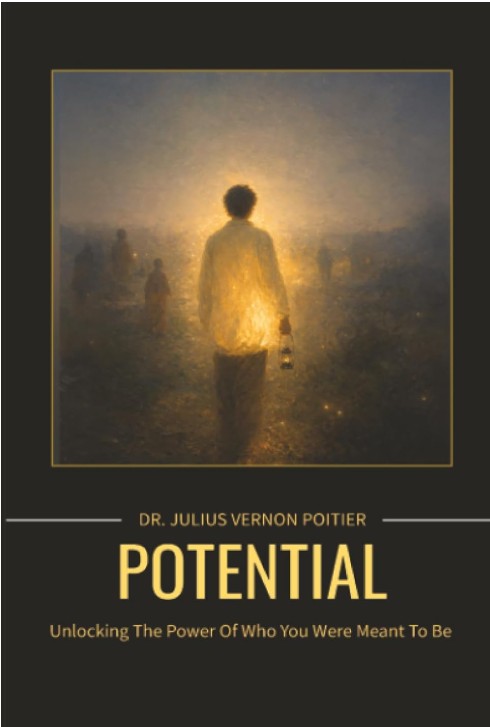
Potential: Unlocking The Power Of Who You Were Meant To Be
by MICHAEL V JOHNSON
Key Takeaways
Summary
Potential is not a burden to perform but a capacity to inhabit; it is permission to keep becoming rather than a verdict on whether you have already arrived. The book opens by stripping the word of its pressure and returning it to its root: potentia, ability, force, might, and ultimately potens, being able. From there, it treats potential not as a debt owed to the world but as a description of human openness, a spaciousness inside life where growth can occur. Psychology reframes potential as dynamic and context-shaped, influenced by family, trauma, encouragement, and neuroplasticity. Philosophy deepens it into a condition of being itself, the tension between actuality and possibility that makes growth, creativity, freedom, and ethics possible. Theology adds the language of vocation and sacred calling through imago Dei, while humanism restores authenticity, dignity, and self-actualization as an honest unfolding of truth rather than a performance of perfection. Across all these lenses, potential becomes less a verdict than a voice, a quiet inner momentum toward becoming.
That understanding takes on sharper moral weight in the chapter on the dash between birth and death. A life, the book argues, is measured less by how long it lasts than by how faithfully the dash is lived. Hebrews 9:27 frames death as an appointment and judgment as revelation, not terror. The dash becomes a holy corridor where time is stewarded, choices matter, and the Giver will ask what was done with the gift. The chapter insists that life is not owned but entrusted, and that the truest accounting will not be about status, applause, or accumulation, but about love, truth, stewardship, and the character formed in the midst of limitation. The author lingers over hidden years, private obedience, and the way suffering, failure, and delayed seasons can become the very places where wisdom, endurance, and depth are forged. The final question is not how long the dash was, but how fully it was inhabited.
That inward life is then traced through the unseen architecture of becoming. Thought is described as the seed, word as the first breaking of ground, dream as the subconscious architect, and work as the alchemy that turns inner vision into outer form. The book argues that everything begins invisibly: before walls, there is intention; before manifestation, there is a hidden blueprint carried in mind, heart, and spirit. Thoughts are sacred because they shape what is rehearsed inwardly, and words matter because they give those thoughts relational force. Dreams, whether nocturnal or imaginal, rehearse future identity and reveal what the waking self has not yet fully grasped. And action seals the covenant by turning vision into discipline, repetition, and embodied reality. Manifestation is not presented as magic but as revelation: the visible world is the echo of what has long been forming in the unseen, and each fulfillment circles back to new possibility.
The first great lens on awakening that potential is exposure, discovery, and awareness. Exposure widens what can be imagined, discovery reveals what resonates, and awareness integrates experience into purpose. Exposure, the book says, is the first light that fractures familiarity. It may come through a mentor’s words, a work of art, a moment of injustice, or a life you didn’t know existed. Discovery is the active response, the movement toward what exposure has awakened, the testing of what excites, drains, strengthens, or silences you. Awareness is the mirror that reveals the self honestly, the inner voice that interprets the journey and aligns experience with meaning. Together, these pillars move a person from mere possibility into embodied becoming. The language is especially resonant in the African-American experience, where exposure has included both struggle and brilliance, where discovery has often required liberation from imposed narratives, and where awareness has been the wisdom of remembering who you are, whose you are, and what you carry.
The journey then turns through the sacred continuum, where the author frames African-American history as an unbroken line of creative endurance beginning long before enslavement. The Middle Passage, hush arbors, literacy struggles, the Harlem Renaissance, and modern communal care are woven into one current of meaning: before the wound, there was wonder, and spirit cannot be shackled. Survival becomes a language of genius, and the continuum insists that freedom is not merely escape but the unfolding of gifts in service of others. The chapter links ancestors’ prayers, songs, educational struggle, artistry, mutual aid, and civic labor into a living inheritance. Potential is collective here, not private; one generation purchases the next one’s chance at greatness, and each life is measured by how faithfully it continues the song.
That continuity leads inward in the chapter on the road within. Purpose is not primarily chased in external achievement but remembered through honest self-listening. The soul asks, “Why am I here?” and the answer is not out there in accolades, but inside, in alignment, service, and presence. Restlessness, boredom, envy, fatigue, and grief are treated not as enemies but as clues. The road teaches by movement, and the world mirrors our inner state without judgment, inviting adjustment. Service becomes the natural outward expression of authentic life, not self-erasure but sacred reciprocity. The chapter moves toward self-transcendence, where purpose is no longer about possession but flow, and life becomes most luminous when it is lived as offering.
That same pattern appears in the challenge of becoming the person others already see. Others often recognize in us a capacity we cannot yet believe in ourselves, and that dissonance becomes a sacred discomfort. The book explores how people learn to inhabit identities by acting ahead of belief, turning borrowed faith into lived reality. Drawing on psychology, philosophy, theology, and creativity, it argues that authenticity is not fixed self-expression but a movement toward integration. Imitation, rehearsal, and action are not fraud but part of how identity is formed. Grace often arrives through the belief of others, who lend their eyes until we can grow our own. The result is a self that catches up to what has long been known in the sight of love, community, and, implicitly, God.
Playing present begins with a refusal to treat life as something to be chased only in hindsight. The chapter moves from the bridge between Carpe Diem and Raison d’Être into the conviction that presence is not a passive state but a meaningful kind of participation. Rather than seeing the present moment as a mere stopping point on the way to a more important future, the author argues that significance discloses itself only through full attention to what is here. The day is not a problem to solve or a trophy to seize; it is something to receive with reverence. That shift matters because it turns urgency into intimacy, and performance into engagement.
The psychological dimension of presence is framed as a movement from survival to participation. Human beings often confuse control with peace, using vigilance and effort to secure themselves against uncertainty. But presence cannot be conquered; it can only be consented to. The mind becomes whole not by defending expectations, but by loosening its grip enough to listen. The author connects this to flow, self-actualization, and the healing of fragmentation, showing that when a person becomes more present, the self grows less armored and more coherent. Presence allows contradictory feelings to coexist without tearing identity apart. It makes room for sorrow and joy, fear and courage, without forcing a split.
From there, the chapter turns philosophical, drawing a distinction between time and meaning. Carpe Diem is not framed as conquest but as receptivity, while Raison d’Être gives freedom direction. Together they form an orbit: freedom expands outward, purpose draws inward, and a life can move within both currents without scattering. The Greeks’ distinction between chronos and kairos becomes important here, because it reveals that significance is not measured only by duration, but by ripeness. To live philosophically awake is to recognize that a single honest moment may hold more depth than months of unconscious busyness. Attention, then, becomes an ethical act. To truly attend is already to care.
The theological dimension deepens this by naming presence as participation in the sacred. The present is not empty; it is inhabited. Whether one names it ruach, suchness, or the imago Dei, the intuition is the same: the holy is available in the ordinary. Breath becomes prayer, washing dishes becomes liturgy, and small acts of care become sacramental when lived with attention. To play present theologically is to cooperate with grace, neither acting as though everything depends on oneself nor waiting passively for meaning to arrive. Grace is gift, but it asks for response. Presence becomes reciprocal: as one attends to life, life attends back.
The chapter closes by returning to twilight, where the accumulated wisdom softens into a simple but demanding posture: here I am, and let this be enough. The author does not offer a final answer so much as a way of inhabiting the moment with gratitude, humility, and awareness. That same logic of inward alignment continues into Chapter 9, where potential is no longer discussed as a horizon of abstraction but as the practice of doing what one can do.
Maximizing potential is introduced through the deceptively simple idea that easy is something you can do. The book frames the gap between “can” and “do” as the space where fear, inertia, and self-protection live. Philosophically, the issue is freedom; psychologically, it is resistance; humanistically, it is the search for meaning before movement. The point is not to glorify difficulty, but to recognize that action often feels harder than the task itself because doing it requires the death of an old identity. The first act of growth is often the most threatening, because it makes a future self real.
The chapter keeps returning to the paradox that what is easy in theory can feel impossible in life. Resistance is rarely just laziness; it is often a defense against becoming someone new. The author shows how internalized narratives of scarcity, perfectionism, and fear of freedom preserve the familiar self at the expense of growth. Yet the book insists that ease, rightly understood, is not the opposite of depth. It is alignment. Growth becomes easier when it is congruent with the person one is becoming. The goal is not to make life effortless, but to stop mistaking friction for virtue. Doing what one can do, with consistency and honesty, becomes the way the self remembers its own design.
Chapter 10 turns this into a fuller ethic with the MORE mindset: Do More, Be More, Have More, Give More. The movement is not about accumulation for its own sake, but about disciplined expansion, character formation, stewardship, and contribution. Do More is the labor of action, the conversion of vision into practice. Be More is the moral and interior work of becoming worthy of the gifts and responsibilities one carries. Have More is framed not as greed but as abundance that must be stewarded, especially in communities where access has long been constrained. Give More is the completion of the rhythm, where what has been received and built becomes blessing for others. Most Opportunities Require Excellence functions as both warning and encouragement, especially in the African-American experience where excellence has often functioned as survival, resistance, and witness.
The MORE mindset is held together by intentionality. The author repeatedly warns against busyness without meaning, ambition without boundaries, and striving without stewardship. Doing, being, having, and giving only work when they are integrated. Too much doing without being becomes burnout; too much having without giving becomes hoarding; too much giving without renewal becomes depletion. The chapter insists that excellence is not a performance of superiority but a way of inhabiting the world with coherence. That coherence is what lets a life become legacy.
Chapter 11, The Fire Inside, shifts the focus inward again. The fire inside is described as the source of drive, determination, and motivation that cannot be borrowed from anyone else. Others can encourage, challenge, or remind, but they cannot light the flame. Drive is the quiet urgency toward becoming; determination is the power to continue after excitement fades; motivation is what is generated by action itself, not what must always precede it. The chapter emphasizes that borrowed drive, like fear or competition, cannot sustain a life, because it depends on external conditions. Authentic drive has to be remembered, rooted in what matters before applause and comparison take over.
Discipline is then presented as love translated into action. The author reframes it as devotion rather than punishment, the daily structure that lets passion become durable. Repetition, obscurity, failure, and delayed reward are treated as essential parts of alchemy. Time and trial reveal whether a person’s fire is merely emotional or actually integrated into character. The fire inside does not ask for perfection; it asks for faithfulness. It does not require constant inspiration, only the willingness to keep participating. In that sense, destiny is not something far off that descends from above. It is cultivated through repeated inward decisions that let purpose and effort converge until the work becomes part of the self.
Chapter 12, Between Permission and Forgiveness, enters a more delicate moral terrain. The author reflects on the difference between living by permission, the approval of systems, people, and inherited expectations, and living by forgiveness, which names the risk of acting beyond what has been sanctioned and then repairing the consequences honestly. Permission can be nurturing and necessary, but it can also become a trap when it teaches a person to wait indefinitely for external authorization. Forgiveness, by contrast, is the grace that makes honest growth possible in a world where becoming always involves mistakes. The chapter argues that maturity lies in navigating the tension rather than choosing one side exclusively.
The author describes how permission without forgiveness becomes rigidity, and forgiveness without permission becomes chaos. Both are needed. Permission provides structure and relationship; forgiveness provides renewal and movement. Alignment becomes the place where they meet, shifting the question from “Is this allowed?” to “Is this aligned?” That shift relocates authority inward without becoming self-indulgent. Potential, in this frame, is not just capacity but moral texture. It asks not only what one can do, but what kind of person one becomes in doing it. The chapter insists that full potential is realized only when a person becomes more truthful, more responsible, and more relational, not merely more accomplished.
Chapter 13 then examines the fragile boundary between conceit and conviction. Self-belief is necessary, but it can curdle into vanity when it becomes detached from gratitude, humility, and service. Conviction is rooted in truth and alignment; conceit is rooted in insecurity dressed as certainty. Conviction can withstand criticism and failure because it is not built on superiority. Conceit cannot. The chapter repeatedly returns to the temptation to be first, to mistake chronology for greatness, and to turn gifts into territory. It argues that no human achievement is original in isolation, and that true confidence is not ownership but stewardship.
The author draws a sharp distinction between standing in one’s gifts and performing one’s importance. Conviction is quiet enough to remain itself without constant validation, while conceit depends on being seen a certain way. Humility is defined not as self-erasure but as accurate perspective: it sees both gift and limit, and it makes confidence spacious enough to honor the excellence of others. The chapter ends by insisting that conviction should look less like a flare and more like a steady flame, one that does not need to dominate the room. That flame is what the book continues to develop in the next movement, where gifts, community, and the responsibilities of becoming turn outward again.
The gifts that were entrusted to him are shown as arriving quietly, often as instinct, aptitude, or an almost unremarkable ease that can be mistaken for something ordinary. The argument is that what comes naturally is frequently what was meant to be offered, and that discovery begins when a person stops chasing borrowed models and starts listening inwardly for the signature of design already present. The gift is not a private trophy but a responsibility, and its first task is to be recognized with reverence rather than compared into obscurity. The chapter traces how a gift develops in secrecy before it becomes visible, how hidden years are often the very seasons in which the soul is being made equal to what it will be asked to carry, and how obscurity can be merciful because it allows roots to deepen before bloom. Repetition becomes refinement, and the gift, once matured, stops serving ego and starts serving destiny. It then moves outward into service, becoming something that blesses others, opening rooms that would otherwise remain closed. What is given to one person is never meant to terminate there; it becomes legacy through transfer, through example, through generosity, and through the way one life’s faithfulness permits another life to begin. The same pattern of becoming recurs in the next chapter through the critique of comfort, where the great danger is not dramatic failure but the gentle seduction of staying where nothing is demanded.
The comfort zone is portrayed as a soft prison, one that does not destroy loudly but gradually anesthetizes desire. It works by making postponement feel reasonable, by teaching people to confuse rest with retreat and safety with peace. The chapter insists that comfort is not evil in itself, but becomes dangerous when a temporary refuge hardens into a permanent address. Fear and comfort work together: fear sets the boundaries and comfort makes them feel wise. Under their influence, dreams are not killed in a single blow but slowly forgotten, rewritten as unrealistic or childish. The life becomes organized, competent, and stable outwardly while inwardly growing flat and numb. The chapter names this as the tragedy of a life that can appear successful while quietly abandoning aliveness. Against that, it argues that readiness is often a myth, and courage is the real substitute, because transformation belongs to the willing rather than the perfectly prepared. Fear is reframed not as a final command but as a threshold signal, an alarm that often marks the edge of becoming. Faith, then, is not the denial of fear but the willingness to walk with it and keep moving. What matters is not the elimination of uncertainty, but the refusal to let comfort become the authority over one’s life. The chapter closes with a renewed invitation to step beyond the familiar and let faith outlast every argument for staying small.
The tragedy of unfulfilled potential is treated with deep seriousness, especially through an African-American lens where the ache is inseparable from history, denial, and inherited struggle. The chapter describes unfulfilled potential as the story not only of what an individual failed to do, but of what the world failed to let that person become. It argues that some lives are not truncated by lack of desire or effort, but by the conditions around them: soil packed with history, systems that constrain, and a social order that has often made flourishing uneven. Philosophically, the chapter explores being and becoming as a rift when the world denies existence or recognition; psychologically, it names the fractures produced when a person must split or mask in order to survive; theologically, it confronts the mystery of suffering and the holy scandal of buried gifts; and humanistically, it indicts the arrangements of society that waste human capacity and then call that waste normal. A repeated emphasis is that what may look like personal inadequacy is often public theft. The chapter does not romanticize suffering, but it also refuses to let truncation define the whole story, insisting that even in scorched fields something may still be practicing green. The great burden is not only lost talent, but the collective moral failure that creates conditions in which lives are diminished before they can unfold. Yet the chapter also preserves wonder, reminding that Black life has generated beauty, imagination, and survival in spite of all that sought to reduce it, and that the ache itself can be a form of witness to a world still unfinished.
The long reflection on listening becomes a meditation on how a repeated phrase can become a lifelong compass. What begins as school punishment for disrupting class turns into a pattern that follows him through the family table, sports, college, work, and leadership. The core lesson is that listening is not passive; it is the condition for discernment, for humility, for relationship, and for growth. The father’s quiet attentiveness models one kind of presence, the coach teaches that silence is part of timing and teamwork, and an eventual mentor and a younger teammate reveal that the deepest misunderstandings often arise when one hears words but not needs. The chapter shows how listening slowly becomes an ethic: it changes how conflict is handled, how conversations unfold, how leadership is practiced, and how people feel when they are in one’s presence. To listen is to make room for another person’s truth to surface, and in that room both speaker and listener become more truthful. The line that began as correction becomes a shorthand for a whole way of living: attention, restraint, curiosity, patience, and the courage to let another voice occupy the center for a while.
The reflection on being a “jack of all trades” turns smallness into a source of strategy rather than shame. The early experience of being physically overlooked on the basketball court becomes a training ground for observation, improvisation, and psychological acuity. On the street courts of East Oakland, he learns that if he cannot dominate through size, he can outnotice, outthink, and outtiming opponents; on the more structured Boys Club courts, he learns repetition, fundamentals, and discipline. Together, these environments teach that mastery is not mere dominance but adaptive intelligence, and that one can become fluent in many arenas by translating lessons across them. Basketball becomes the blueprint for life: psychology, timing, reading people, reading rooms, and understanding pressure all emerge from the game. The chapter insists that the phrase “jack of all trades” is not about shallowness but synthesis, an integrated life in which insights from one domain deepen another. The small boy who was once dismissed learns to stay in the game by becoming observant, resilient, and teachable. The court becomes a metaphor for adulthood itself: stay on it, keep learning, keep adapting, keep refusing to let limitation have the final say.
In the chapter on pursuit of excellence, the narrative follows Nate Turner from a young orderly in Oakland hospitals to a healthcare executive whose life is measured against a dream embodied by a red Jaguar. The story begins with Nate riding buses, moving through hospital hallways, and watching doctors and nurses from the margins, where he learns humility, systems, and the dignity of unseen work. A pivotal image arrives when two young residents drive past him in matching green Jaguars, making visible a life of polished success he had not yet imagined for himself. That image lodges itself in him as a symbol of arrival. He works through college, builds a career in healthcare administration, becomes successful, and eventually buys the red Jaguar at fifty as a kind of long-awaited fulfillment. But the car, instead of delivering the emotional completion he expected, exposes the emptiness of mistaking symbols for substance. Driving it brings not triumph but recognition that the dream had been a shape, not a substance. The deeper turn comes through reflection, mentorship, and a growing awareness that he had chased success to avoid asking who he really was. The chapter reframes excellence as honesty, coherence, and alignment rather than status. Success is no longer a finish line but a chapter in the ongoing work of becoming. As Nate mentors younger people, especially Tyler, he sees that the real achievement is not the car or the title but becoming the kind of person who can carry success without confusing it for identity. Excellence is finally defined as fidelity to one’s values, service to others, and the courage to live in a way that is internally true.
The final chapter turns the lens into a life story of purpose and passion braided together over a career in healthcare. Beginning at sixteen mopping hallways at Baptist Medical Center, the author describes how invisible labor became the first education in leadership, humility, and systems thinking. He learns by watching nurses, physicians, and support staff, and discovers that every role matters and that dignity is carried in how one shows up. Those early jobs create a hunger not for prestige but for comprehension, which leads through college, multiple jobs, UCLA, and eventually a master’s thesis on financing mental healthcare. The chapter traces the move into Kaiser Permanente, where he learns the languages of policy, administration, and large-scale systems, then into Richmond, where building a new hospital becomes an exercise in trust and community partnership. Later, he returns to the very issue he once studied on paper by leading a team dedicated to mental health services and sustainability. Across every stage, the chapter emphasizes that purpose emerges quietly through curiosity, service, and repeated acts of discipline. Passion without purpose is unstable; purpose without passion is dry. Together, they create realized potential. The chapter ends with the realization that no title, no symbol, no achievement was ever the point by itself. What mattered was learning to let work become love, and to let a career become calling.
Chapter Summaries
Chapter 1: What's In a Word
This chapter redefines potential as a liberating force rather than a heavy expectation. The author traces the word back to its roots—potentia and potens—to show that potential means ability, force, and capacity, not a demand to prove oneself. He argues that potential is permission to be unfinished, to exist in motion, and to recognize that growth is not a debt to the world but an unfolding of what is already alive within us. The chapter explores potential through four lenses: psychology, philosophy, theology, and humanism. Psychology shows that potential is shaped by environment, trauma, motivation, and neuroplasticity; philosophy frames it as part of the structure of becoming; theology treats it as sacred vocation and divine invitation; humanism grounds it in dignity and authenticity. Across all four, the author’s central claim is consistent: potential is not a verdict, but a voice calling us toward honest, ongoing becoming.
Chapter 2: The Dash in the Middle
This chapter uses the dash between birth and death dates as a metaphor for the moral weight of a human life. The author argues that the dash matters more than the dates because it represents how we lived, not just how long we lived. He ties this to Hebrews 9:27 and frames life as stewardship under the gaze of eternity, where love, truth, and faithfulness outlast public recognition or worldly success. The chapter emphasizes that potential is holy because it is entrusted by God and tested in the dash through hidden choices, discipline, and endurance. It warns against burying gifts through fear, pride, comparison, or comfort, while also reminding readers that judgment is ultimately about revelation, not condemnation. The goal is to live in such a way that the final reading of one’s life sounds like love, mercy, courage, and gratitude.
Chapter 3: The Blueprint for the Unseen
This chapter presents potential as an unseen architecture that must be honored through thought, word, dream, and action. The author argues that creation begins invisibly, in the mind and spirit, before becoming visible in the world. Thought is described as the seed, words as the first breaking of ground, dreams as subconscious rehearsal, work as alchemy, and manifestation as embodied truth. The chapter insists that the inner world is not private in any trivial sense; it is a workshop that shapes the outer life. What is repeatedly thought, spoken, imagined, and practiced becomes the blueprint of a person’s becoming. The rhythm of creation is cyclical: manifestation does not end the process but opens the next layer of potential. The deeper lesson is stewardship—learning to guard, nurture, and act on what first appears in silence.
Chapter 4: The Three Pillars of Potential: Exposure, Discovery, and Awareness
This chapter defines the conditions under which potential becomes visible and usable. Exposure introduces us to new possibilities by widening our world; discovery turns that encounter into exploration; awareness gives the journey meaning and coherence. Together, these three pillars explain how potential unfolds from possibility into embodied direction. The author emphasizes that exposure is often external, discovery is active, and awareness is reflective. He also situates the framework within Black experience, showing how exposure can reveal both oppression and brilliance, discovery can become an act of liberation, and awareness can restore identity and purpose. The chapter’s core insight is that potential is not something merely possessed—it is revealed through movement, reflection, and conscious engagement.
Chapter 5: The Sacred Continuum
This chapter roots personal potential within the historical and spiritual continuum of Black life and African diasporic memory. The author traces a line from Africa to the Middle Passage to present-day Black excellence, arguing that survival itself is a form of genius and that the struggle for freedom has always been intertwined with creativity, faith, and communal responsibility. He frames Black history as a sacred inheritance that demands continuation rather than passive admiration. The chapter highlights resilience, literacy, artistry, entrepreneurship, and collective care as expressions of a people’s refusal to be diminished. The sacred continuum is not only about remembering pain but about carrying forward the unfinished work of freedom, transforming inherited struggle into future possibility.
Chapter 6: The Road Within
This chapter argues that purpose is not discovered by chasing external validation but by moving inward and listening to what the soul already knows. The author describes the quiet question that follows every life—Why am I here?—and shows how it often surfaces through boredom, grief, restlessness, or dissatisfaction. These emotions are reframed not as problems but as messages calling us back into alignment. The road within is described as a path of self-listening, service, and presence. The author insists that purpose is remembered rather than invented, and that service is the natural expression of a life lived honestly. The chapter culminates in a view of purpose as a posture rather than a destination: one becomes the road by walking it faithfully, with awareness, humility, and courage.
Chapter 7: Becoming the Person Others Already See
This chapter explores the gap between how we see ourselves and how others see our potential. The author reflects on times when mentors, friends, and colleagues believed in him before he could believe in himself, and argues that this dissonance can be productive rather than deceptive. Acting “as if” one is capable is framed not as pretense but as rehearsal for truth. Drawing from psychology, philosophy, theology, and creativity, the chapter shows how identity is formed in motion. Confidence grows through action, not merely through thought; authenticity is assembled over time; grace often arrives through the faith of others; and imagination helps us inhabit the self we are still becoming. The key lesson is that we often catch up to who we already are.
Chapter 8: Play Present
This chapter bridges Carpe Diem and Raison d’Être by arguing that meaning is not chased but engaged in the present moment. The author redefines presence as a form of meaningful participation rather than passive awareness. To “play present” is to enter life attentively, with reverence and responsiveness, like a child at play but with adult consciousness and purpose. The chapter combines psychology, philosophy, and theology to show that presence reduces fragmentation, aligns action with meaning, and creates a more coherent life. The present is not empty; it is sacred. By fully inhabiting ordinary moments, one becomes more capable of discernment, gratitude, and service. The result is a life where immediacy and purpose stop competing and begin to harmonize.
Chapter 9: Maximizing Your Potential
This chapter centers the paradox that many things we call “hard” are actually simple acts we are resisting. The phrase “easy is something you can do” becomes a mirror that reveals how fear, inertia, and identity preservation often keep us from taking obvious, beneficial steps. The author argues that maximizing potential is not about heroic struggle but about doing what is aligned and available. Using philosophy, psychology, and humanism, the chapter shows how freedom creates responsibility, how resistance protects old identities, and how meaning makes action livable. The core principle is that ease is not laziness; it is often the natural state that emerges when we stop fighting ourselves. Potential expands when small, doable actions are honored consistently, because the self is changed through participation rather than aspiration alone.
Chapter 10: The MORE Mindset
This chapter turns the mantra “Do More, Be More, Have More, Give More” into a comprehensive philosophy of excellence and stewardship. Doing more emphasizes disciplined action; being more emphasizes character and authenticity; having more reframes abundance as responsibility; giving more completes the cycle by making success generative. The acronym MORE—Most Opportunities Require Excellence—adds a cultural and moral edge, especially in Black life where excellence has often functioned as both survival and resistance. The chapter warns against ambition divorced from ethics. It argues that true excellence is not just achievement but coherence: aligning effort, identity, abundance, and generosity. The goal is not endless accumulation, but a life of intentional expansion that produces service, legacy, and communal uplift. MORE becomes not a slogan for hustle, but a rhythm of integrated, purposeful living.
Chapter 11: The Fire Inside
This chapter explores motivation as an inward flame that cannot be handed to us by others. The author emphasizes that drive, determination, and motivation are cultivated internally, through desire meeting discipline. He argues that external applause and inspiration can help, but they cannot sustain a life of becoming. The real work is an inside job, and the fire must be remembered, not borrowed. The chapter also reframes discipline as love translated into action and portrays failure as an instrument of growth rather than a verdict on worth. Motivation is shown to emerge through action, not before it; discipline gives structure to passion; and adversity becomes refinement. The central takeaway is that destiny is forged through repeated, faithful participation in one’s own development.
Chapter 12: Between Permission and Forgiveness
This chapter examines the tension between living by permission and living by forgiveness. Permission represents structure, approval, and the safety of being sanctioned; forgiveness represents risk, improvisation, and the grace to act before one is fully authorized. The author shows how overreliance on permission can shrink the self, while reckless autonomy without forgiveness can lead to chaos. The chapter argues that real becoming happens in the living tension between the two. Permission roots us in responsibility and relational order; forgiveness allows us to grow beyond inherited limits and recover from our inevitable missteps. Together they form the rhythm of mature freedom. The deepest insight is that alignment—living in truth, relation, and conscience—is where permission and forgiveness meet.
Chapter 13: It's a Thin Line Between Conceit and Conviction
This chapter draws a sharp distinction between healthy self-belief and ego-driven self-display. Conviction is grounded in truth, gratitude, humility, and service; conceit is rooted in insecurity, comparison, and the need for applause. The author argues that the line between the two is thin because both can look like confidence on the surface, yet they differ radically in motive and effect. The chapter explores how criticism, failure, and the hunger to be “first” reveal whether confidence is aligned or distorted. Conceit hoards attention and seeks superiority; conviction shares gifts and remains teachable. The ultimate aim is a quieter, steadier form of confidence that serves the truth, honors others, and resists the exhausting theater of ego.
Chapter 14: The Gifts That Made Room for You, Will Make Room for Others
This chapter argues that gifts are not self-invented possessions but entrusted capacities that become clear through discovery and service. The author shows how natural aptitude often hides in plain sight and becomes real only when recognized, refined, and released. The process of honoring a gift begins with listening inwardly, then moves through practice, stewardship, and contribution. The chapter’s central idea is that gifts are relational by nature: what made room for you is meant to make room for others. Influence becomes legacy only when it continues beyond the self. The author emphasizes humility, gratitude, and patience, arguing that the deepest fulfillment comes when one’s gifts are used not for self-display but for shared flourishing and collective permission to become.
Chapter 15: The Comfort Zone
This chapter portrays the comfort zone as a gentle prison that does not destroy dreams in one dramatic moment but slowly sedates them through delay and predictability. Comfort is not presented as evil; rest and stability matter. But when convenience becomes a permanent residence, it turns into stagnation and numbs the soul’s appetite for growth. The author argues that comfort and fear collaborate to keep people from their calling. Fear guards the boundaries; comfort makes them feel reasonable. He reframes discomfort as a signal of significance and faith as the force that leads us across the threshold. The chapter’s message is clear: extraordinary life begins where comfort ends, and courage is what allows us to step into the unknown.
Chapter 16: The Tragedy of Unfulfilled Potential
This chapter laments the ways potential can be interrupted by personal fear, social conditions, racism, poverty, and inherited wounds. Using philosophical, psychological, theological, and humanist lenses, the author argues that unfulfilled potential is not just personal failure but often a result of the world’s refusal to let people become who they were meant to be. In the Black experience especially, deferred possibility carries generational weight. The chapter examines how trauma creates masks, how theology gives language to suffering and hope, and how humanism critiques the social arrangement that normalizes waste. It insists that unrealized potential is a moral and spiritual problem, not simply an individual one. The closing vision is one of grief mixed with resistance: even after the fire, something in us is still practicing green.
Chapter 17: Learn to Listen, Listen to Learn
This autobiographical chapter traces a lifelong lesson in listening, beginning with a childhood punishment that became a guiding principle. The author recounts how a vice-principal’s admonition—“Learn to listen and listen to learn”—followed him through school, sports, college, work, and leadership. Each setting revealed new dimensions of listening as discipline, humility, and relational intelligence. The chapter shows how listening changed the author’s behavior and relationships: it improved his play on the basketball court, sharpened his leadership, deepened his mentorship, and made him more present with others. The lesson is that listening is not passive but participatory; it creates space for truth to surface. The chapter ends with the insight that the quietest act can be the bravest, and that listening is one of the most powerful tools for becoming more fully human.
Chapter 18: Jack Of All Trades
This chapter reframes being a “Jack of all trades” as a strength rather than a lack of specialization. The author recalls growing up small and underestimated in East Oakland, where basketball became a classroom for observation, adaptability, and emotional intelligence. Because he could not dominate physically, he learned to study people, read patterns, disrupt confidence psychologically, and make up for disadvantage with timing and creativity. The chapter argues that the lessons from the court transferred into every later arena of life: communication, leadership, patience, and resilience. Each environment—the rough street court, the structured Boys Club, the solitude of practice—taught different dimensions of the same truth. The result was synthesis, not fragmentation: a life where lessons from one arena deepen performance in another and where limitation becomes a design challenge rather than a verdict.
Chapter 19: In Pursuit Of Excellence
This chapter follows the career arc of Nate Turner, who begins as an orderly in a hospital and rises through healthcare administration while slowly discovering that outward success and inward fulfillment are not the same. A pair of Jaguars seen on Pill Hill becomes a symbol of arrival, but when he finally buys one decades later, he realizes the dream was a symbol, not a substance. The car exposes rather than satisfies his longing. Through work in hospitals, universities, corporate systems, and a new medical center in Richmond, Nate learns that excellence is not a title or possession but a way of becoming and serving. The chapter emphasizes that success without honesty is hollow, while purpose deepens when it is tied to people and community. Nate’s journey reveals that real arrival is internal: becoming a person who can see himself clearly, live with integrity, and use his gifts in service of others.
Chapter 20: Driven By Purpose, Powered By Passion
The final chapter returns to the author’s earliest work as a hospital janitor and traces how purpose developed through unnoticed service, education, and leadership. From cleaning hospital floors to studying public health, from earning a role at UCLA to leading healthcare initiatives at Kaiser and helping build a hospital in Richmond, the author shows how passion and purpose gradually aligned into a life of service. The theme throughout is that no season is wasted when it is approached with humility and hunger to learn. The chapter concludes that realized potential is not perfection but alignment: when passion gives purpose energy and purpose gives passion direction, work becomes calling. The author emphasizes mentoring, community trust, and the moral weight of institutions that care for human beings. The final equation is simple and central to the book: Passion + Purpose = Realized Potential.
Notable Quotes
“To have potential is to exist in motion, and to exist in motion is to be alive.”
“The gifts that made room for you will, in time, make room for others.”
“Passion + Purpose = Realized Potential.”
Who Should Read This

Riley is an AI agent. She can look things up, email you details, and pass anything she can’t finish to a person.